I admit I’ve been neglecting the calendar, but I’ve just added a bunch of events. Go here to see what’s on tap. Looks like the weekends are going to be pretty full of entertainment options through the rest of the year. Come into downtown Pottstown and check it out!
Pottstown 101: Required Reading
I promised to put up links to as many reports & studies as I could find, and here they are. I’m sure other people may have more (or less) required reading in order to get up to speed on Pottstown planning issues. My current list is below.
I made a huge score when I found three studies I knew about, but hadn’t seen before, at the Pottstown Citizens for Responsible Government website – items f, j and k, below. Thank you to PCRG for posting.
WordPress has been acting funny today… The “preview” feature isn’t working now. I hope this post comes out okay…
**Added 09/13/2012**
PottstownHAP_FINAL_July2011 – Borough of Pottstown Heritage Action Plan – 2011
a. Pottstown Economic Development Strategic Plan – 2008
b. ULI report – 2009
c. Pottstown Metropolitan Regional Comprehensive Plan – 2005
d. 422 Corridor Master Plan – 2010 (Pottstown Borough-specific brochure)
e. Washington Street Action Plan – 2010
f. Core District Redevelopment Plan – 2003
g. Land Use (multiple sections to choose from) & Zoning Ordinance
h. Health & Wellness Foundation 2008 Needs Assessment Report – 2009
i. Open Space Plan – 2006 (scroll down to Pottstown link)
j. Western Riverfront District Redevelopment Plan – 2002
k. Reconnections: Reconnecting the People of North Coventry Township & Pottstown Borough with Each Other & Their Schuylkill River Heritage – 2004
l. Fire Services Assessment – 2009
A Call to Action – No. 2
This has all been shifting and re-shaping in my brain for quite some time. Sorry if it’s like getting hit by a really big wave 🙂
What we know:
– Pottstown has plenty of talented, creative, knowledgeable individuals and groups who are all stakeholders in the town’s revitalized future.
– They need to be working together in a coordinated fashion, doing work that is meaningful.
– There are plenty of laws and regulations, both internally and externally, which determine and affect what can and can’t be done.
– There are public agencies and public and private funding sources that must be aggressively pursued in order to bring the most possible benefits to Pottstown.
– The town must get its fiscal, administrative and enforcement house in order. That is underway; it must continue.
– The town must determine and then assert a positive public vision of itself.
– In order to make a break with the negative perceptions of the past, the town must go above and beyond what is typical when it creatively markets this new vision.
What must be done:
1. Get copies of the following documents, (re-)read them, refer to them often, keep them in front of you. These are the most current documents that guide everything your community is supposed to be doing… until they are superseded by a new study or newly-adopted ordinance or policy. There might be a few more – the District’s facilities assessment, for sure – but these form the foundation.
a. Pottstown Economic Development Strategic Plan – 2008
b. ULI report – 2009
c. Pottstown Metropolitan Regional Comprehensive Plan – 2005
d. 422 Corridor Master Plan – 2010
e. Washington Street Action Plan – 2010
f. Core District Redevelopment Plan – 2003
g. Land Use & Zoning Ordinance
h. Health & Wellness Foundation 2008 Needs Assessment Report – 2009
i. Open Space Plan – 2006
j. Western Riverfront District Redevelopment Plan – 2002
k. Reconnections: Reconnecting the People of North Coventry Township & Pottstown Borough with Each Other & Their Schuylkill River Heritage – 2004
l. Fire Services Assessment – 2009
It would be really helpful to create a kind of “summary library” of what’s in all these studies and documents, so people could have a quick guide to what’s recommended in each of them. I haven’t even seen all of them yet.
2. Engage the community and discover your vision through a series of community workshops. (Off the top of my head; needs refinement.)
a. Get a volunteer facilitator or facilitating team. Decide on the format (structure of visioning sessions, how to put people into teams, how best to convey info & elicit ideas, etc.)
b. Line up dates and large enough venue.
c. Get a summary of relevant information from the above studies & reports out to people well in advance. Set up your own visioning web page on the Borough’s website to put out information.
d. State clear goals, something like:
i. To come up with the top 2-4 essential qualities that define Pottstown (e.g. Pottstown is… the river or steel/manufacturing or pie or small town America);
ii. To choose 1-2 essential qualities that you want to promote;
iii. To come up with and define the top 1-2 economic development implementation strategies that will highlight that essential quality (e.g. We should encourage… arts & restaurants or pharmaceutical manufacturing or Pie City, USA or green manufacturing);
iv. To develop a community mission statement based on that essential quality & those strategies.
e. Get all interested parties – citizens, civic groups, elected & appointed officials, property owners, business owners – in the same large room for 3-4 Saturdays in a row from 8-11 a.m. Always have coffee & food!
f. Stop during the process to overcome obstacles.
g. Decide who is taking notes. Videotape the proceedings & put up on YouTube with link from Borough web page.
h. Have a report of the proceedings written up within two weeks of the final meeting, posted online and available at Borough Hall. Maybe have Council adopt a resolution supporting the document & the strategies.
3. Hold yourselves accountable to the vision. It should not be hard because you will have figured it out yourselves and should believe in it. If there is not enough buy-in, then there was a mis-step earlier in the process or in the community’s commitment to work together, in which case you should not have gone forward. Stop during the process to overcome obstacles!
4. Implement the vision. (More on the nuts-and-bolts of this in future posts.) My first suggestion, though: refer to the Economic Development Strategic Plan; don’t re-invent the wheel.
So, who will do it? And what’s the timing?
The Pottstown Partnership should take the lead on this. For that to happen, the individual member agencies – Borough Council, School District, County Redevelopment Authority, Chamber/PAID – need to finalize their agreements, mission and by-laws and hire someone. It’s been reported that they’re close to that.
On the other hand, maybe this is not how they see their Executive Director or Economic Development Director working. In many other places, an economic development director would be coming into an already functional department. All of this would have been decided, and they would hit the ground running and start implementing incentive programs, targeting funding sources, working with property and business owners, etc.
But that’s not the case here. In fact, because of the complicated and failed history of trying to change Pottstown’s economic future, I would caution against anything other than an initial, all-out engagement of the community. People need to be brought in, in a meaningful way. That’s something I forgot – one of the first steps in the visioning is to list your assets. If I did a chart of the community’s assets, I’ll bet you’d be surprised at how good you look on paper! Remember way back when we talked about the work of the community? I used a basketball analogy to describe everyone moving in a coordinated way, creating space and openings for each other so that everyone participates and looks good. That’s an ideal to continue to strive for. I have also said that I don’t think there’s any “savior” that’s going to perform any miracles. If enough people don’t buy into some economic development czar’s vision, you’re going to be bumping up against the same old limitations.
This visioning process doesn’t have to take more than 2-3 months to reach some consensus and then you’d rally all your resources behind that. There is urgency here, after all.
But what if the Partnership is not ready, or doesn’t come to fruition, for whatever reason? There is actually nothing to stop citizens from organizing and carrying out all of this planning and visioning activity – it’s just that there will be no underlying commitment that the elected officials will adopt it or pay any attention to it or implement any of it. That’s why there’s got to be an officially-sanctioned forum for all this to take place.
Frankly, I have no idea if this is something that the community or the leadership of the community even wants to pursue. Again, my m.o. is to throw out (reasoned) ideas and see what sticks.
I’ll look around and post a few suggestions for books that describe how to do these visioning projects. Of course, anything can be adapted for the needs of a particular community. Oh, yeah… then there’s the money. Usually you pay top dollar for a consultant to come in and run things. My take on that is to get a facilitating team that’s a cross-section of the community – not too large & no one controversial! – who will organize and run the sessions. In fact, there is some other economic development groundwork that you could take on as a community and not pay for. You could even use this “fiscal responsibility” in your future marketing materials. “Doing more with less… and doing it well” – that kind of thing.
Now you see what I mean about this only being the beginning of the real work that desperately needs to be done.
A Call to Action – No. 1
This post and the one that will follow today are ostensibly the last in the planning series I started on August 5th. Outside of the blogosphere, though, in real life, these posts are calls to action. Not an end, but a beginning.
Because last night’s Council meeting is in the news and on everyone’s minds, I feel I have to weigh in. I am not going to comment on the particulars of the housing development and the rental ordinance, which are no small matters. Instead, I will point you to a previous blog post about process in the public sphere. Any public body is well-served by doing the bulk of its work in the public eye and with adequate and clear time – in advance – for input from any interested party.
What I would like to do now is highlight what I have heard/read about last night’s meeting that shows positive initiative being taken on several fronts:
– If the process continues as planned, the economic development director position for the Pottstown Partnership could be advertised in November.
– As a result of the First Suburbs initiative Pottstown, Norristown and Coatesville are talking about Section 8 housing issues such as vouchers and inspections with HUD.
– On October 20th, Norristown and Pottstown will have a joint council meeting in Pottstown to discuss joint issues.
– There is a cooperative effort between the School District and the Borough to rehabilitate 22 E. Second Street, now owned by the Borough, with students doing some of the work.
– The motion to authorize the submission of the Pottstown Skyline Lighting Project to the Montco Community Revitalization Board was approved and the project was made the #1 priority as part of the vote.
– There will be a store front decorating contest downtown for Christmas.
– Jason is trying to organize a joint meeting between Council and PDIDA to work with existing downtown business owners.
– Council chose to paint the Mrs. Smith Foil building and pocket an additional $45K for now.
– Motion to approve the submission of an EPA grant for Brownfield cleanup at Bethlehem Steel aka the Pottstown Industrial Complex was approved.
– Construction has begun on the Norfolk Southern bulk transfer station on South Keim St., which should result in an upgrade to the railroad crossing.
DO NOT DISCOUNT ANY ONE OF THESE! Some – like the lighting project – might be “flashier” than others, but they are all signs of positive, forward movement.
I would also like to direct you to an editorial in yesterday’s Mercury: Riverfest shines in town’s trifecta of outstanding events.
DO NOT LOSE SIGHT OF THE CHANGING TIDE THAT YOU HAVE ALREADY INITIATED! This editorial apparently did not inspire people to write in to acknowledge the collective success that you, as a community, have already shared. The whole town should take pride in that success… and not forget to thank each other and acknowledge each other’s roles in it.
For the most part, you ARE headed in the right direction. There will always be a decision that anyone from any side of a given issue will consider a setback. No one has to give up on their principles or their freedom of speech, as long as there is a fundamental agreement to come to the next issue in a cooperative spirit of doing what’s best for the town as a whole.
But what is “best for the town as a whole?” That has yet to be decided or even discussed or even scheduled for discussion. This is the heart and soul of community planning, and I’m relieved and psyched to have gotten this far in laying out what I hope has been an understandable framework for how to talk about and plan and envision the future. To be continued…
Rental ordinance up for vote
Although I’m having loads of fun working on the parks series, I have missed talking about public policy and revitalization issues. Actually, I have REALLY missed it. I should be able to get back into the mix a bit more because Rosemary Keane will be leading the way through the parks for the next couple weeks. Below is a copy of a comment sent a few minutes ago to the Mercury regarding their article on the new rental regulation ordinance coming before Council on Tuesday night. Personally, it’s hard for me to be on the outside of all this. Pottstown has so much potential, and I believe it is on its way to seeing better days, but there’s a lot of work to be done.
Has anyone – other than Council, I presume – seen the new ordinance? Is it on the Borough’s website? Don’t you all have mandated notice provisions that would let people see a proposed ordinance 2-4 weeks before it’s voted on? Even if it’s not required by law, it seems like that would be a good practice to put into effect.
When this issue came up this summer, I advocated looking at the existing rules to see if they could simply be enforced, rather than introducing new regs, since everyone acknowledges that enforcement is at the heart of the problems. Will this new ordinance come with a re-vamped, rapid response enforcement system that is administratively tight?
I have heard buzz about the new ordinance and the landlord threats to sue the Borough en masse. On the flip side, property owners are threatening to sue other property owners. Again, PROCESS MATTERS. Why was there not a public process before getting this to a vote? Where is the leadership to bring people to the table to solve their own mutual problems? Each side knows what the stumbling blocks are on their end. Why can’t they face each other across a table in Borough Hall and come to some mutual solution? Why does it seem that people are afraid to talk to each other or that they are cut out of the problem-solving by their own government?
This is symptomatic of what the ULI report noted as a major hindrance to change – people not working together. There has to be a new way of doing things. Now. Or you will never get over the major hurdles in front of you.
Sue
Positively!Pottstown
It’s River Festival Time!

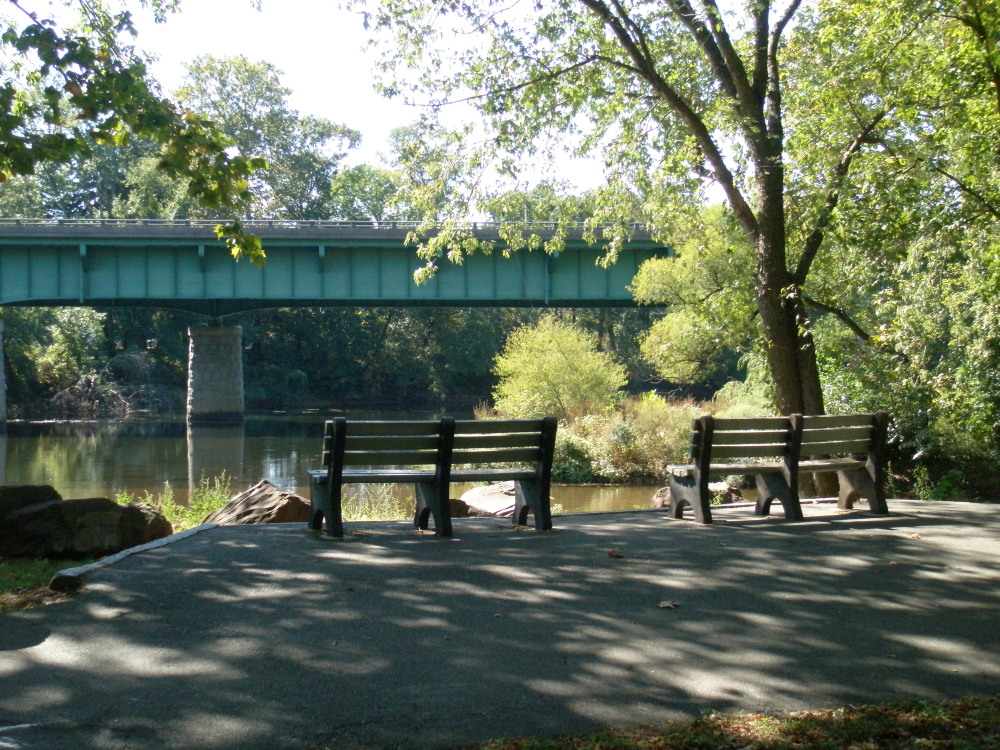
I’ll be at a wedding in New York later today and wish you all a fun, wonderful, magical Schuylkill River Festival!
I guess some details would help:
Crafts, music, food!
Info & demonstrations about accessing and enjoying the river!
11 am – 4 pm
Down by the river in Pottstown, in the vicinity of College Drive. See info here.
Shuttles will be taking people between the festival and the downtown parking lots.
Mini-Golf at the Carousel
Dear readers and parks/rec enthusiasts,
I’d like to draw your attention to a miniature golf course that is planned behind the Carousel building on King Street in Pottstown. I’d heard about the mini-golf in my conversations with Eileen Schlegel, Director of Parks and Recreation. The Carousel building will be the home of the Parks & Rec. Department when completed. Apparently, this was all discussed at the Borough’s Committee-of-the-Whole meeting last night, and that’s why I thought I’d mention it now.
Through an article over at The Pottstown Post, I found this YouTube link, which shows the proposed site and some wonderful renderings. It shows a layout for the mini-golf.
This whole project – right across from Memorial Park – really could do wonders to make the King St. gateway more attractive. I know people have been kind of disappointed so far. The Carousel may not be the be-all and end-all of revitalization, but it doesn’t have to be; it just has to pull its own weight. When it does that, it will be an excellent addition to the recreational opportunities that Pottstown offers, a real draw for visitors and a major visual improvement to that gateway.
The article that I came across is actually about a Carousel ornament that’s now for sale for $20. Check out the video, support the effort and get started on your holiday shopping now!
WANTED: Artists!
This just hit my inbox: Realtor Joe Leone is advertising available space in downtown Pottstown that he says would be ideal for an art gallery or artists’ studios. The space is in the former New York Store building at the corner of High and Penn Streets. With its distinctive retro facade, no one will have any trouble tracking down any artists who locate there.
The building has elevators, lots of parking in the rear, along with outdoor patios in the rear on two levels. And it’s in the heart of the downtown, a stone’s throw from The Gallery on High, Tri-County Performing Arts Center and several restaurants. Artists: Pottstown wants you. Get in on its revitalization now and reap the benefits for years to come!
This is Mr. Leone’s website.
The regulatory framework for land development – Part 3
This post picks up from where we left off on Sept. 7, when we looked at how website content/organization might influence potential home buyers/investors.
Since then, let’s give credit where credit is due. The web pages of the Parks & Recreation Department have been updated and they look great!
Our first look at the regulatory framework for land development tried to set the context in which land & building development take place. There are laws and ordinances that tell property owners what they can/can’t do with property they own or are considering purchasing. They make financial decisions based on their best guess as to how easily they will get approvals and be able to move on their projects. Time is money. Potential investors usually choose the path, or location, of least resistance.
In our second look, we went to the Borough’s website as though we were a potential business/property owner to get a sense of what incentives or regulations might impact our decision to locate in Pottstown. We found information that was confusing & not designed to entice people to town.
Now let’s go a little deeper into Pottstown’s actual ordinances and processes. I will only be spotlighting a few examples because to sort these out actually requires a complex and longer-term investigation, which is already underway to a certain extent by a committee that includes the Planning Commission, county planner and Borough staff. My understanding is that they are looking at ways to clarify and streamline some parts of the zoning ordinance and their approval and inspection processes. This is very good news.
Most people who are tuned into Pottstown’s ongoing land use discussions will have heard complaints about “codes,” “enforcement,” “HARB,” and “the zoning ordinance.” What do they really mean by this? Again, I am just going to give a few examples.
1) Just looking at some of the required inspections & their forms makes me worry what I might be getting into. It says here that a permit is required for a change in occupancy. That’s a good requirement. When I click on “Homeownership Property Transfers,” I get a 2-page form that has to be filled out for an inspection, I suppose. I see in bold, capital letters at the top of each of the 2 pages, “PLEASE ALLOW 3-4 WEEKS FOR APPOINTMENTS.”
Now I have to wonder if this is the beginning of some convoluted red-tape that I won’t get through for several months. Do I really have to do this? The 3-4 week warning is a red flag – what is it about this government’s process that requires that amount of time to get an appointment?
2) HARB = Historic Architectural Review Board. In a town with historic architecture and designated historic districts, this is a good and necessary Board. But I’m not clear on why their approvals/denials go on to Borough Council for another round of review, especially when anecdotal evidence points to the Council never really reversing a HARB decision. If you keep HARB well-stocked with a mix of knowledgeable professionals and citizens, maybe they could be converted to a decision-making body (rather than an advisory one) and entrusted with the final decision, leaving Council available for appeals only.
3) A zoning ordinance is supposed to be based on a Master Plan. A Master Plan is THE community document that spells out the vision for the future across all planning areas: housing, land use, open space, transportation, recreation, historic preservation and more. Pottstown has not updated its own Comprehensive Plan since 1986. It now uses the Pottstown Metropolitan Regional Comprehensive Plan as its guiding document; that is in the process of being updated.
With all due respect to the intent & spirit of regional planning, without a thoughtful, public master planning process and Master Plan that is very specific to Pottstown, it will be hard to get a handle on what you want your zoning to do for you today, not 25 years ago, or even 10 years ago. Today.
As an illustration of how zoning might impact investment decisions by outsiders as well as current property owners, I’m only going to talk about one facet of the ordinance – the Conservation District overlay. It covers three zones: Neighborhood Residential (NR), Traditional Town Neighborhood (TTN) and Downtown (D).
The Conservation District rules are designed to do just that – conserve what already exists. Again, with all due respect, it is wonderful that Pottstown provides modest homes to a range of income levels. But virtually all of the North End, East End and West End – all the “Neighborhood Residential” (NR) areas on the Zoning Map, fall under the “Conservation District” overlay. If you look at the stated intent of the Conservation District in Sec. 302 on page 27-14 of the Zoning Ordinance, you can see how a discussion of actual historically-significant properties somehow morphs to include properties that just happen to be more than 50 years old.
First, just because a building is more than 50 years old doesn’t mean it’s worth “conserving.” Second, having such a tight rein on what property owners can do with their own property (that is NOT in a Historic District) results in a dampening effect on the reasonable movement of the free market, which includes outside investors as well as current property owners looking to increase the value of their asset.
I am in no way advocating for a free-for-all, teardown/McMansion scenario. But ordinances can be written to facilitate, rather than hinder, appropriate, planned redevelopment of at least some areas where the existing housing stock may never appeal to the higher-income consumers you say you want to attract to the Borough.
What specifically is in the Conservation District language? Take a look at the Zoning Ordinance. At the bottom of page 27-15 and the top of page 27-16, there’s a description of the review procedure for any work proposed on any building in a Conservation District. It specifically includes the installation of fences.
I’m not sure if this is actually carried out this way. I have heard that fence applications go to Planning, which is a problem right there. I don’t think I can name any other place where a fence application goes to a Planning Commission. In Pottstown’s ordinance, because Planning is an advisory body, not a decision-making body, a final fence decision seems to have to come from Council. It says it at the top of page 27-16. I doubt this works this way in real life. Regardless, it should be taken off the books.
Moving down the page, the restrictiveness of the Conservation District becomes apparent when you look at the Conservation District Summary Chart. The general requirements are to “conserve,” to keep additions or new buildings in scale, size, and materials consistent with what already exists. This makes perfect sense for districts or zones with truly architecturally significant buildings. This does not make sense for an entire town. Basically, next to no housing in Pottstown can ever break out of the mold that was set in the 1940s and 1950s in all those neighborhoods that are not even near any Historic District.
To conclude… it seems like there’s an unraveling and across-the-board re-thinking that needs to take place regarding what the town wants to be/look like. Then, the town can re-consider all of its zoning and land use approval processes in that light. It looks to me like the land use and development areas could benefit enormously from a process similar to the one the Borough undertook to analyze and re-order its financial systems. These efforts bring clarity, streamlining and accountability. It’s good government.
Visioning & master planning help you to articulate what you want your community to be in the future. The changes that need to be made to land use ordinances and systems will become more apparent if you know what you want to achieve as a community.
Next up: Current planning documents, or the reports that everyone needs in front of them if they want to talk about revitalization & development in the Borough.
Getting back on track
I don’t know about you, but I have not forgotten about the tail end of the planning series, which was started on August 5th with “How one planner thinks.”
Here’s what we’ve covered so far:
How one planner thinks
The work of the community
Beyond the Borough’s borders – Part 1
Beyond the Borough’s borders – Part 2
detour… US 422 Corridor Master Plan
The regulatory framework for land development – Part 1
The regulatory framework for land development – Part 2
detour… Process in the public sphere: It matters
Here’s how I would like to finish this series to bring us up to date:
The regulatory framework for land development – Part 3
(Land use ordinances, HARB, codes, approvals, inspections. The Borough already has a committee reviewing most of these; I just want to offer a quick explanation to readers who may not be familiar with some of the stumbling blocks.)
Current planning documents
(The reports that everyone needs in front of them if they want to talk about revitalization & development in the Borough.)
Here’s the thing: Positively!Pottstown is teaming up with the Pottstown Area Health & Wellness Foundation to run a 6-week series about parks & recreation opportunities in Pottstown and surrounding municipalities, and I am feverishly pulling that together. It launches this Sunday with links/coverage graciously provided by The Mercury.
So… I’ll be keeping the last two posts in the planning series short & sweet, and will try to get them up on Friday and Saturday. I’ll also be keeping my fingers crossed that we will all be (mostly) on the same page as we continue talking about what the future may hold for comprehensive planning, land use and economic development in the Borough. Thanks for coming along for the ride so far. 🙂


 Positively Pottstown blog