Another First Saturday on tap!

If you’re in town for the holiday weekend, be sure to cruise over to Smith Family Plaza this Saturday from 10am – 2pm for the final First Saturday of the season, brought to you by the Pottstown Arts & Cultural Alliance.

Entertainment
10-11 am: Pottstown Dance Theatre – Hip-Hop performance
11am-12pm: High Street Music – Jazz
12-2 pm: Music by acoustic roots rocker Dina Hall

Men in Spikes fundraiser

Men: there’s still time to find two friends who will race in spikes to raise money for your favorite charity. The race starts at 1 pm.

Here’s how it works:
Pay a $200 entry fee, or get in touch with Mike Holliday at actone19464@aol.com regarding possible sponsorship.
Bring your own spikes or choose from the assortment at Smith Plaza.
Teeter and totter your heart out.
Cross the finish line.
It’s winner-take-all. If your team wins, you get all the proceeds donated to your favorite charity.

There will also be a 50/50 raffle going on. Tickets are $1, and purchasers get to cast a vote for their favorite team. The raffle proceeds will be split between the charity of the favorite team and the winning team’s charity. If you’re confused, don’t worry about it — all proceeds go to good causes! So… who will survive Men in Spikes?? Tune in for the action at Smith Plaza tomorrow!

The regulatory framework for land development – Part 1

Planning and land development take place within a regulatory framework. There are federal, state and local laws regulating a spectrum of issues, from environmental clean-up standards for a former industrial site to how high a fence can be in your front yard.

If there’s too little regulation, or not the right kind, consumers and communities suffer the consequences, most notably around issues of safety and the environment. If there’s too much regulation, the private sector goes elsewhere, or may selectively build where it can pass the additional costs of regulation onto well-to-do consumers who can afford it. For our purposes: the regulatory environment in any given state or locality plays a huge role in what kind of market activity happens there.

I’ve worked and volunteered largely in the public and not-for-profit sectors. However, I learned early on in my work in affordable housing that municipal and non-profit developers have to think and act like private sector developers if they want to achieve their mission. If a project fails, they may never get another chance. Also, they are not using their own money and have to carefully consider what level of risk is appropriate to assume on behalf of their public funders/taxpayers or private donors. But no matter what your end product, you have to be savvy if you’re getting in the game. Land development is not for the faint of heart.

When my kids were young and attending a small Montessori school in central New Jersey, I took a spot on the board as this 20-year-old organization was re-negotiating a lease and found itself with a healthy surplus. When faced with the question of how/if the school wanted to grow, we decided to consider all possibilities: renovate and continue to lease at the current location; purchase and renovate a building nearby; or look for land and build a new school. Within a 3-year period, I led the school – with a lot of help from staff and other parent volunteers! – through the analysis, planning and construction of a new 10,000 square foot facility just about a mile from the old location. It involved negotiations with the current landlord, working with a realtor, scouting properties and options, constantly running in-house financial analyses and income/expense projections, lining up an architect experienced in designing pre-schools, getting a land use lawyer, a builder, and securing construction financing and permanent tax-exempt bond financing through a local bank, with the services of a bond lawyer.

I tell you all this to establish some degree of “street cred” when I say: land development is a risky, expensive, gut-churning business, in which “time is money.”

Developers put money into escrow with a municipality when they put in an application for approval. The town’s engineers, codes staff and planners are all getting paid from that escrow account when they do their reviews of the application – all those nit-picky details that are supposed to ensure the “health, safety and welfare” of the eventual users of the buildings, roads, parking lots, etc. And every time a developer has to talk to his own lawyer, architect, planner or engineer, the meter is running.

Once the project starts, municipal inspections have to be timely; enforcement can’t be arbitrary. Because construction financing is typically at a higher interest rate than permanent financing, if a project’s timeline keeps getting extended, it could sink the project, or at least result in serious losses for the developer. A clear, streamlined set of regulations, consistently enforced in a timely manner, is critical for enticing the private sector to choose your town over another town for the location of their buildings and business.

The logic is similar for potential home buyers and small business owners, whose budgets have an even smaller margin for error. No one is going to put their hard-earned money into play – whether it’s for a home in the historic district or for retail space on High Street – if there’s a great deal of uncertainty and wasted time in the land use approval and enforcement processes. Who needs it, if things are likely to go smoother elsewhere?

Next up: The regulatory framework– Part 2: Walking a mile in a property owner’s shoes

And the beat goes on…

Whew. I’m back. Still not 100% healthwise, but I met my creative writing homework deadline of Sept. 1st, and there’s now enough space in my head, and my back is allowing me to sit at the computer long enough, to start blogging again about planning, redevelopment and interesting happenings in Pottstown.

Next up: The Regulatory Framework for Land Development – Part 1

Just checking in…

Hi, dear readers! I threw my back out a couple days ago and haven’t been able to spend a lot of time at the keyboard, but things are improving and I hope to post again before the weekend is out.

In the meantime, mark your calendars for the community events scheduled for Saturday, September 11. I think I’ve come up with a cool community building activity; I just have to talk to a few folks to see how/where we can set it up.

And for things to do this weekend, check out the calendars at the Pottstown Arts & Cultural Alliance and The Pottstown Post.

The Arts and Community & Economic Development

Here’s the pre-requisite for this blog post… Please read Evan Brandt’s excellent article about Bethlehems’s highly successful, long-running Musikfest, run by the not-for-profit ArtsQuest. I was among the group that visited, hoping to glean some insights that might benefit Pottstown.

First, the basic assumption – and it has been shown in numerous studies – is that arts and cultural development provides economic benefits, sometimes in a very big way.

Second, the following discussion assumes that Pottstown wants to consider an economic development strategy that involves the arts and culture. From what I can tell, there is a core group of folks who would like to see this happen, but I’m not sure there’s consensus.

Third, each community is different and, therefore, each community needs to come up with its own “authentic” strategy. Musikfest works in Bethlehem because of their Moravian heritage. In 1993 ArtsQuest also instituted a successful annual Christkindlmarkt, modeled on the outdoor Christmas markets in German villages and towns. As Amy Francis said in The Mercury, “We can’t recreate what you’ve done here… We need to figure out what we are.”

I confess: I had a head-start because I took a class in Cultural, Community & Economic Development last year as part of a continuing education requirement. In that class we looked at the case studies in Tom Borrup’s The Creative Community Builder’s Handbook: How to Transform Communities Using Local Assets, Arts, and Culture. Musikfest would be a fine addition to Borrup’s book, although I’m anxiously awaiting the book that Jeffrey Parks said he hopes to write some day soon about his experiences in Bethlehem. 🙂

Below is an overview of Borrup’s book to help put Bethlehem’s success and Pottstown’s challenges in context.

Borrup categorizes ten arts and culture strategies that various communities have used to achieve economic or social development goals, and he gives examples for each.

Building Strong Economies through Arts and Culture
1. Create Jobs
2. Stimulate Trade through Cultural Tourism
3. Attract Investment by Creating Live/Work Zones for Artists
4. Diversify the Local Economy
5. Improve Property and Enhance Value

Building Social Connections through Arts and Culture
1. Promote Interaction in Public Space
2. Increase Civic Participation through Cultural Celebrations
3. Engage Youth
4. Promote Stewardship of Place
5. Broaden Participation in the Civic Agenda

Of course, most of us might say that we want to do all of these. And the reality is that while a community may focus on one or two of these strategies, there can/will be benefits that flow into some of the other areas as well.

The rest of the Borrup book goes through a very detailed process that communities can follow to reach consensus on what they want their particular arts and cultural plan to look like and accomplish. Under each of these steps, there are set tasks. Go here if you want to see them in the Table of Contents.

Steps for Creative Community Builders
1. Assess Your Situation and Goals
2. Identify and Recruit Effective Partners
3. Map Values, Strengths, Assets, and History (My note: This is where you figure out who you are and what’s your story.)
4. Focus on Your Key Asset, Vision, Identity, and Core Strategies
5. Craft a Plan That Brings the Identity to Life
6. Securing Funding, Policy Support, and Media Coverage

Take this process with a grain of salt: there are examples in the case studies, where an entrepreneurial, charismatic artist or community leader came up with an idea, took a risk and helped turn a community in a new direction, and I would put Jeffrey Parks and Musikfest in this category. The example from the Borrup book that remains most vivid in my mind is Waterfire in Providence, RI. This public lighting of fires on the river was started by the artist Barnaby Evans as a one-time event in 1994, and now it happens several times throughout the summer and fall. I’ve never been to see it, but it gives me chills just looking at the website. It seems like such a powerful ritual and it attracts hundreds of thousands of visitors.

But, barring an Arts and Cultural Superhero, Borrup provides a useful guide for communities to undertake this work together. It’s something for Pottstown to consider because there’s a history of the community not working together and skepticism around new ideas. Mr. Parks and his “Friends of Jeff” volunteer posse made Musikfest happen as soon as Bethlehem Steel closed, and it was pretty much a success from the start. They weren’t trying to make a comeback from a long-term economic slide. They weren’t operating in an atmosphere of cynicism and apathy. If a vision, goals and a plan for Pottstown come out of a collaborative process, you will by definition “broaden participation in the civic agenda,” and you would be repairing the way the community functions, which I think is a critical steppingstone to finally improving the local economy.

Another important note: The ArtsQuest organization has three goals.
1. Arts access for all
2. Urban revitalization
3. Organizational sustainability

While “economic development” is part of urban revitalization, note how their main mission is the arts. The economic benefits flow from their carrying out their arts mission in an ever-evolving, sustained way. They have renovated and occupy a building called The Banana Factory, which led to the eventual private sector renovation of nearby buildings. (Mr. Parks said, “Government is not the vehicle. You need the entrepreneurial activity of investors and NGOs.” That’s non-governmental organizations/non-profits.) The Banana Factory includes 28 artists’ studios, digital photo classes and programs for at-risk youth. They have the only hot glass studio in the Lehigh Valley. And, as mentioned in Evan’s piece, they are embarking on the SteelStacks project, which will provide entertainment and community gathering spaces for a year-round program of events, sealing Bethlehem’s identity as the arts and culture hub of the Lehigh Valley.

I think Pottstown’s economic future lies in an arts and cultural strategy, tied to sustainability and its industrial past. This is why I get excited about pie, or green manufacturing of hip stuff, or – I don’t know – the thought of an industrial-sized, noisy atelier filled with blacksmiths, welders, and stone and steel artists/sculptors, creating massive installations that will end up all over the world. I think the elements are there for a good story, by which I mean: there’s something authentic and real there that residents, visitors and investors could believe in. As to the specific form of that strategy – I don’t presume to have the answer. But I know it’s there, within Pottstown’s borders, in its history and its people, just waiting to be discovered.

Benefit Concert Tonight at Tri-PAC

If you’re looking to kick off your weekend with some pizazz and a gift from the heart, get to the Tri-County Performing Arts Center at 254 E. High Street tonight for SONGS THAT GO LIKE THIS . …. . A BROADWAY REVIEW. Proceeds from the evening will benefit the local Habit for Humanity and the Tri-PAC.

This musical performance is brought to you by Maggie & Mark Moliterno and Friends. Maggie is an award-winning dramatic coloratura soprano, Pottstown native and a versatile actress, who has appeared in principal roles in opera, operetta and musical theater in the U.S. and Europe. Mark, is a bass-baritone, who has performed throughout the United States, Canada, Great Britain, and the Far East, with numerous opera companies, symphony orchestras and festivals. He is also an Adjunct Associate Professor of Voice at Westminster Choir College of Rider University in Princeton, NJ.

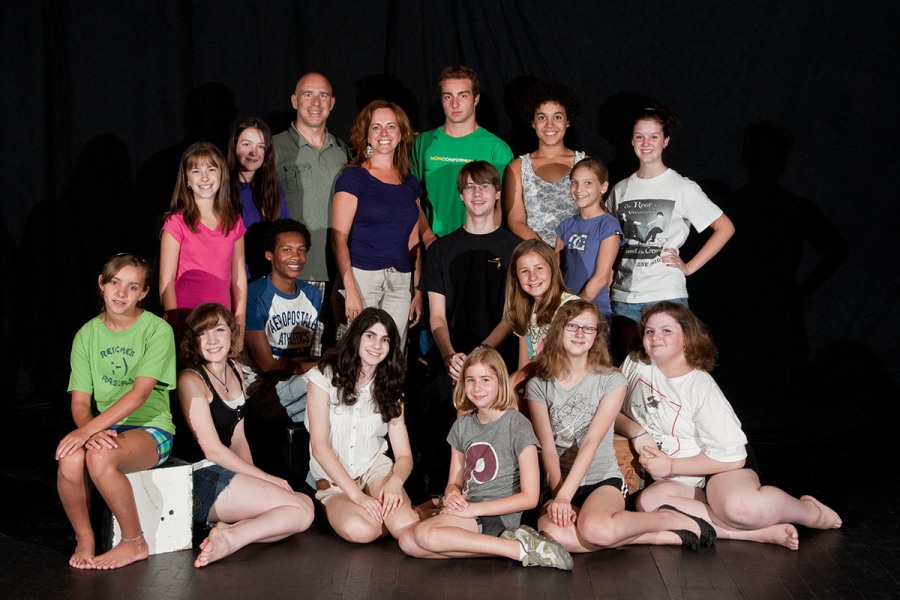
The “friends” part of the evening’s performance includes approximately 25 young vocalists from the area.

Photo courtesy of Village Productions
Tickets are $20 for children 12 & under and $30 for adults. A wine and cheese reception is included. The show starts at 8 pm. For more info, check out Tri-Pac’s Facebook page, their website, or call 610.970.1199.

The new Tri-County Performing Arts Center is the home of Village Productions. Village Productions is a dynamic nonprofit performing arts organization that seeks to strengthen community, inspire creative exploration, educate, and entertain, through the presentation of quality performing arts events and educational opportunities geared toward a diverse audience.

Positively Pottstown makes the Sanatoga Post

The Sanatoga Post today mentions Sunday’s article, “Pottstown as Fashion Hub??” in its post, “We Made Tires, Steel Here. Why Not Paper Clothes Too?”

Below is my comment/reply. Please note that the one sentence I questioned has since been removed from the article. I do appreciate the continuing conversation with Joe Zlomek, publisher of The Sanatoga Post, and the rest of the community. Also, here I’ve added links within my comment that did not appear on the Post’s site so people can learn more, if they wish.

“Sue Says:
August 19, 2010 at 9:49 am
Hi, Joe – thanks for the feature! Just wanted to clarify your last sentence: “Those firms were less environmentally sensitive than green fashion is sure to be, she notes.” While the assertion may be true, I never did note that! Your last paragraph implies that my post was critical of the area’s industrial past and those employers, whom I never mentioned, thus giving the wrong impression. One of my grandfathers worked in the mines upstate and then for Bethlehem Steel; another for the Reading Railroad; a grandmother worked in a mill. They were living the American dream, as difficult as it was. That’s part of Pottstown’s heritage, I’m proud of it, and I think the town should embrace it with a modern twist.

I’d also like to reiterate that the green fashion idea is just one of several sustainable, green avenues the Borough could consider… along with still trying to attract more conventional manufacturing jobs, if the opportunities present themselves. Tim Phelps, Tri-County Area Chamber of Commerce President, recently had an opinion piece in The Mercury (Aug. 14) about the U.S. Air Force KC-X aerial refueling tanker project that Boeing is vying for. From my understanding of the piece & some other online reading, it seems that contract would be especially valuable to specific manufacturing hubs in Michigan, North Carolina and Johnstown, PA (perhaps other U.S. locales as well). The work in Johnstown is expected to result in jobs/orders for subcontractors in the manufacturing and supply sector here in the Pottstown area. That would be a good thing, too.

While I think Pottstown would do well to go all-out with a forward-thinking economic development and marketing plan built around sustainability and the arts, we have to keep in mind that jobs are jobs, and the area needs them… as long as they are not of a potentially hazardous or noxious nature. (I had to add that caveat because I came out against a “green” recycling plant/landfill proposal several weeks ago that I believe falls into that category.)

Best,
Sue
Positively!Pottstown

Joe Zlomek Says:

August 19, 2010 at 10:11 am
Sue, your point about the story’s “environmentally sensitive” sentence is understood. It was an interpretation and not your direct statement. Consequently, I have removed it in its entirety.

Your other points are well made. Thanks both for correcting and commenting!

Sue Repko Says:

August 19, 2010 at 10:12 am
Thanks for the edit, Joe 🙂

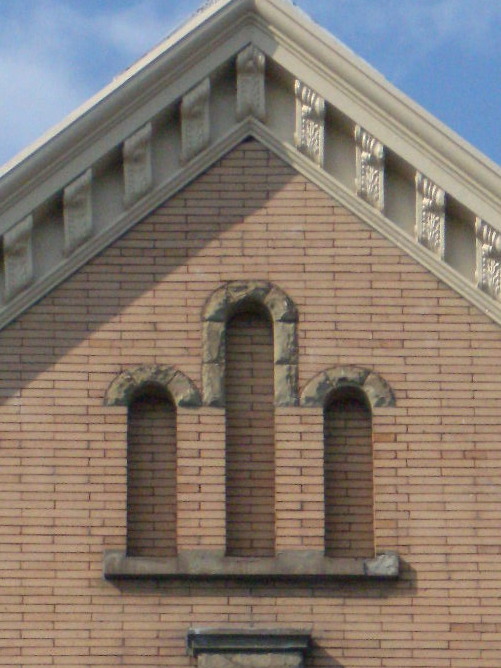
Name That Building (#2)

The first person to correctly guess the name/location of this building will get $20 in gift certificates for Grumpy’s Handcarved Sandwiches.

Hint: It’s on High Street.

Operators are standing by to take your – uh – emails and Facebook posts. Don’t delay!

Incorrect Guesses coming in on Facebook:
St. John’s Byzantine Catholic Church
St. Peter’s Church
old Police Station (was on King St., yes?)
Christ Episcopal Church
The Mercury
Grumpy’s (ANOTHER HINT: No, but you’re getting warm.)
Former senior center
Bridal Salon & bakery

ANOTHER HINT: It’s not a church.

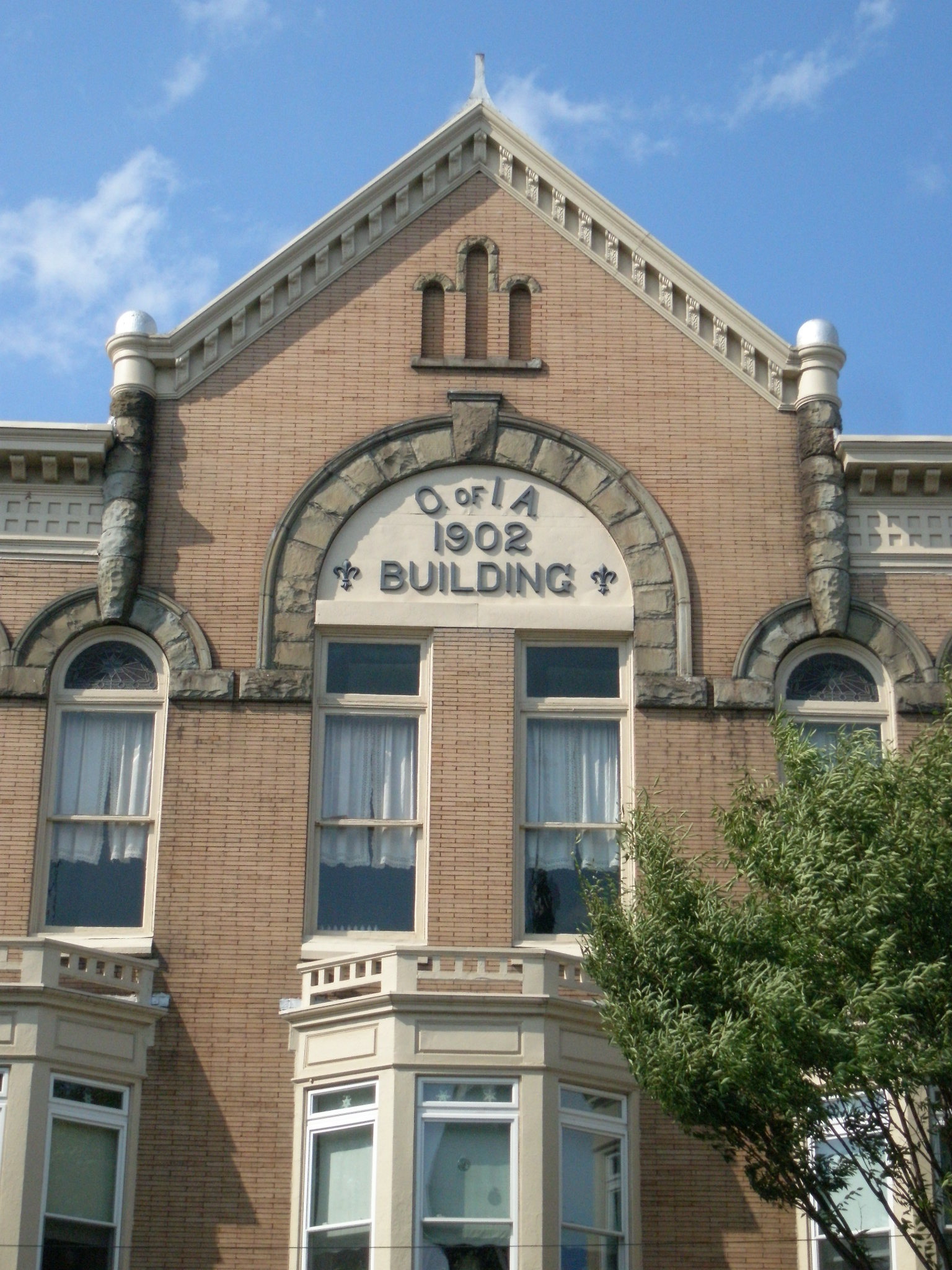
WE HAVE A WINNER: DEBBY WEBER of Pottstown. She correctly guessed 311 E. High Street. There was a fierce competition between Debby and Becky Koniow-Marvel. I just realized that Debby was the winner of our last “Name that Building” contest , so I’m going to ask that she hang back on the next one, although I admire her enthusiasm for Pottstown’s buildings!

Here’s another photo of the Order of Independent Americans 1902 building at 309-313 E. High Street.

And another view from the photographer “road_less_trvld” on flickr.

I hope I have this right and this is what “O. of I. A.” stands for! The Order of Independent Americans was a fraternal organization from the 19th and 20th centuries. They seem to have had several councils in the region. Here’s a photo from one in Chester, and an article about a group in Hamburg. Does anyone know anything about the Pottstown council? Is the Order of Independent Americans still active today?

US 422 Corridor Master Plan

Earlier today, Andrew Kefer posted the following question under the post, “Beyond the Borough’s Borders – Part 2.”

“I was wondering if you can comment on the news of Borough Council’s voting of 5-2 against the comprehensive plan to improve US 422 and restore commuter rail service in the Schuylkill Valley?”

I replied that I wasn’t up to speed on that, but I’d find the study/plan and get back to him. So, here we go.

Caveat: I wasn’t at any of the meetings where the Plan was presented by Montgomery County planners, Delaware Valley Regional Planning Commission planners or consultants, so this first pass comes from online material. I’m glad to share the official information and resources provided by the 422PLUS Steering Committee at their website, which is separate from any of the involved agencies’ websites. They are obviously making an effort to keep the public informed at one central location and with a clear, unified message.

Here’s the upshot of the US 422 Corridor Master Plan from their website:
“Deteriorating travel conditions, sprawling and uncoordinated land develop[ment] patterns, and limited funding for transportation improvements plague the 422 Corridor. The Master Plan identifies 10 strategies for managing growth, development, and travel demands, and illustrates a “Sustainable Scenario” that encourages more compact development, maintenance of open space, and more mobility choice within the 422 Corridor.”

Basically, the plan incorporates the most up-to-date thinking about how to influence and control development patterns so we can stop gobbling up open space, start re-using existing town centers and more urbanized areas like Pottstown, and give people more travel choices than just their cars.

And then they go and steal some of my thunder for the build-up and grand conclusion of my planning series! But, hey, they say – and illustrate – it much better than I ever could. Check out their “Sustainability Strategies” brochure specifically for Pottstown. Everyone should become very familiar with this brochure, especially if you can’t make it through the entire Master Plan. And please, please check out the Strategies and Assets & Opportunities/Key Recommendations near the end of the brochure. This brochure just made it into my final line-up of VERY IMPORTANT DOCUMENTS CONCERNING POTTSTOWN’S FUTURE, along with the recent ULI Report and the 2008 Economic Development Strategic Plan.

In the 422PLUS Project section, the website provides info. about further study that will take place regarding the funding strategies for improving the 422 Corridor and possibly extending passenger rail service using existing freight lines. This is a follow-up study to two studies already completed in 2009: the US 422 Master Plan and the R6 Norristown Service Line Extension Study. No one’s being the least bit impetuous here. This is being studied, people are being surveyed and then they’re studying it again. This is what the planning process looks like.

Regarding the tolling issue: As we all know, funding is being slashed left and right. These agencies & planning bodies have to find money somewhere. While no one wants to hear about raising the cost of anything, frankly, the idea of having users pay for the maintenance and upgrading of roads they travel on just makes sense. I’ve sat in traffic on 422 going west plenty of times. I don’t live in the area, but if I’m using the road for frequent visits, shouldn’t I also contribute to its upkeep? Hitting up my EZPass is a simple, sensible solution.

And if some of that money goes toward making some existing freight tracks suitable for passenger rail (which people would have to purchase tickets to use), all the better.

And if there’s money for planning/constructing a passenger rail station in Pottstown, that’s the best yet.

If people don’t want to sit in traffic and don’t want to pay tolls, maybe they will want to live in a place like Pottstown (with its lively arts scene, new housing on the Mrs. Smith’s site, massive, beautiful single-family Victorians, cool restaurants and shops) and get to work by hopping on the train with their cappuccino from Churchill’s every morning. In fact, maybe fewer people would be commuting at all because Pottstown would become a place where larger corporations would want to locate and their employees might be able to get to work without even getting into a train or a car.

Andrew also asked if Pottstown’s vote would kill the project. Not at all. “Even Keel” described it pretty well in a comment on The Mercury article: “This plan will still be adopted and put into effect as there are 23 other municipalities who have a say. A majority of these will support it, or parts of it, and it will be adopted in some form at the County level. It will still have a benefit to Pottstown when adopted.”

Just look at the brochure for Pottstown. I know it must seem like an alternate reality – in a way, it is. But it doesn’t have to be. All these agencies and governmental entities want this to happen. They are asking Pottstown to join other towns, counties, planners and the business community, to participate, to make small area master plans (around a train station for instance), and to be an advocate for this and other regional efforts… that will benefit Pottstown. This is the kind of thing I’ve been talking about. Pottstown can and should be a part of this. Pottstown can do this.

“Name That Building” postponed ’til tomorrow!

A photo of a building in downtown Pottstown will be posted tomorrow, here and on Facebook. The first person to correctly guess the building and its location will get $20 in gift certificates to Grumpy’s Handcarved Sandwiches at 300 High Street. Tune in tomorrow for your chance to win!

Blog at WordPress.com.

Up ↑