The pocket parks of central Pottstown

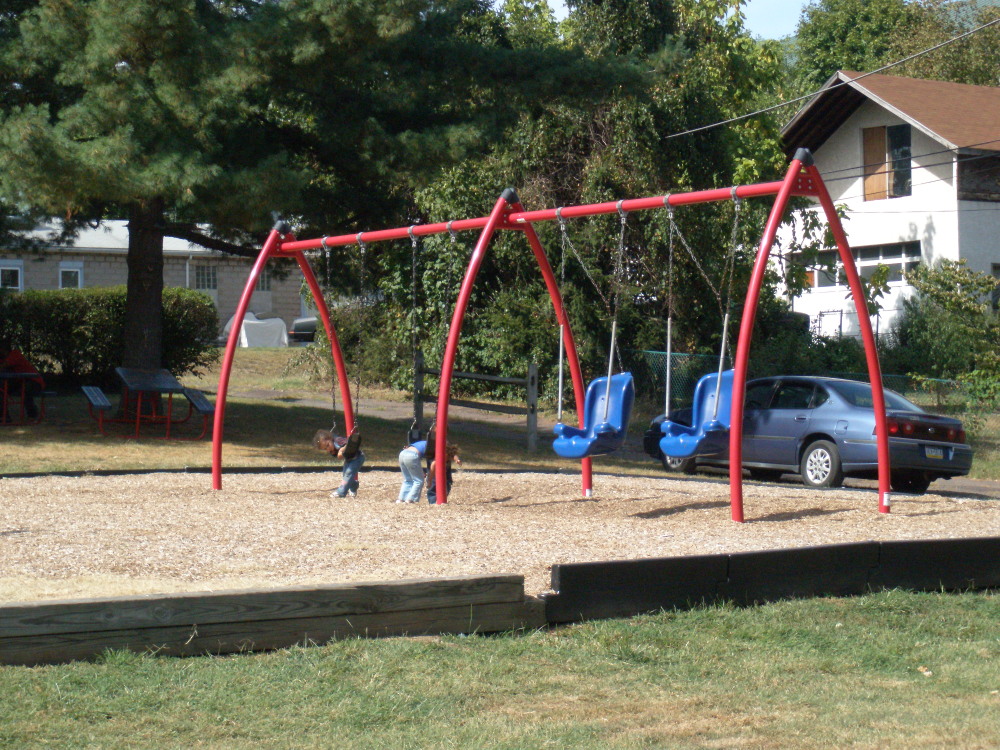
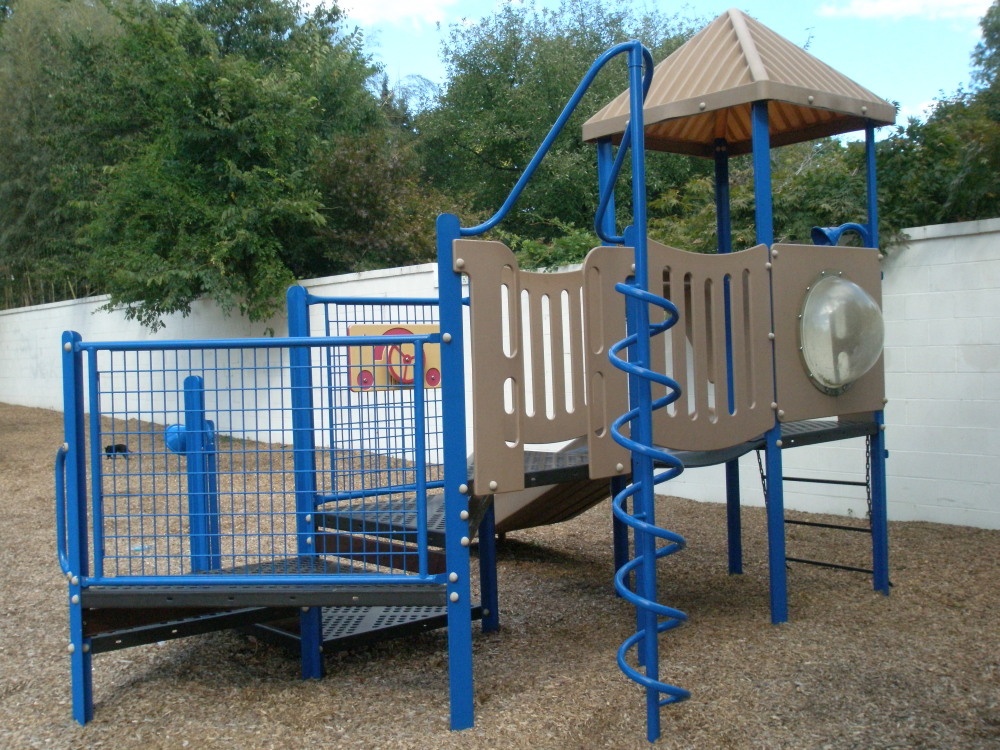
The Penn State researchers categorize parks that are less than 1 acre in size as mini-parks or pocket parks. Pottstown has many such parks scattered throughout the Borough. While it is desirable for every park to offer a range of opportunities for physical activity, social connections, contact with nature and elements that strengthen a sense of place, these mini-parks cater to children and typically include playground equipment set in mulch, perhaps a bike rack and some benches or picnic tables.

In general, Pottstown’s pocket parks are clean and have an open feeling to them with good visibility from the street. The equipment is practically new, colorful and cheery, providing active play space in neighborhoods that have fairly dense housing, narrow lots and small backyards that are not adequate for the personal play equipment that can be found on large, suburban lots. These spaces serve as neighborhood gathering spots for independent children as well as for parents and children together.

In central Pottstown, there are two parks that fit this description and one, New Chestnut Street Park, which offers even more possibilities for social connections.

Walnut Street Park is on Walnut between Grant and N. Adams Streets.
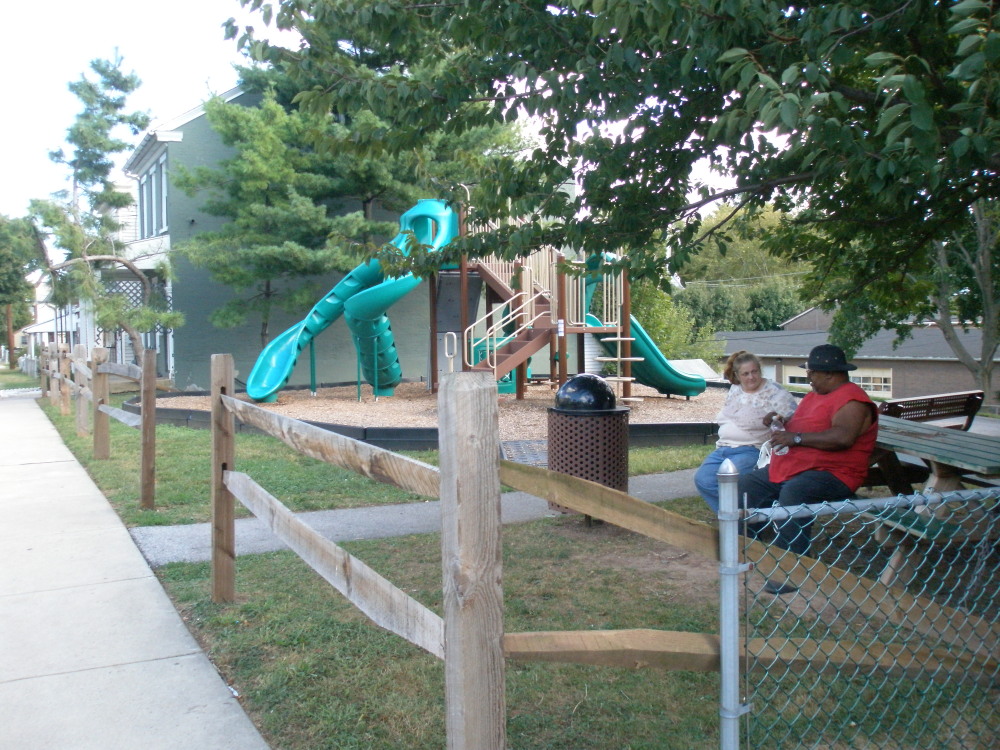
Walnut St. Park
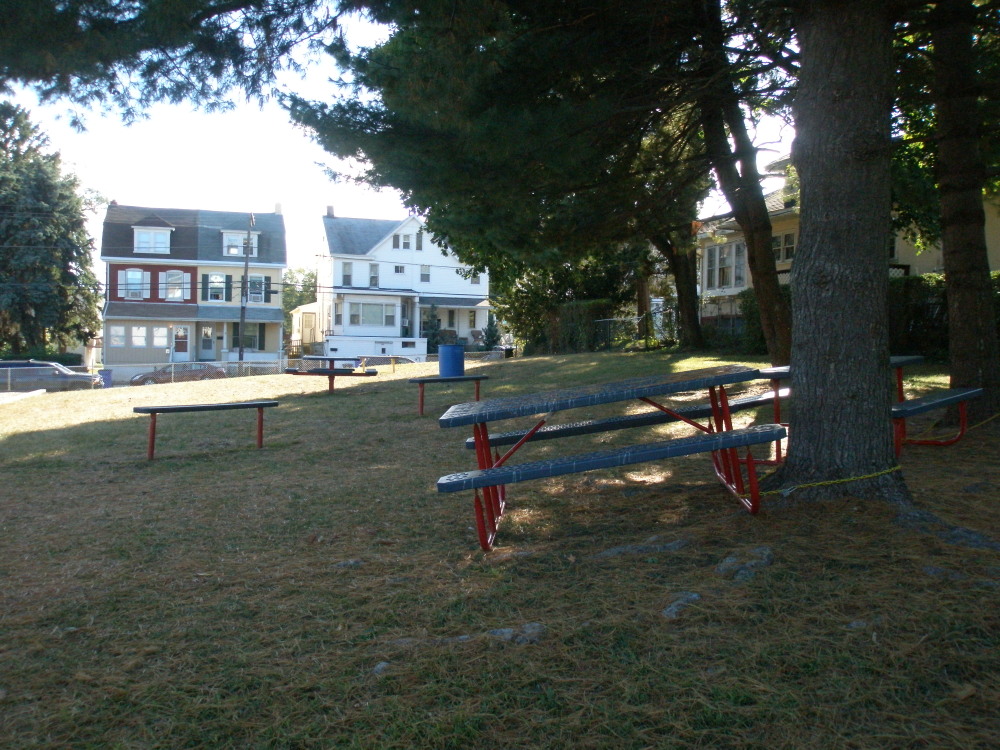
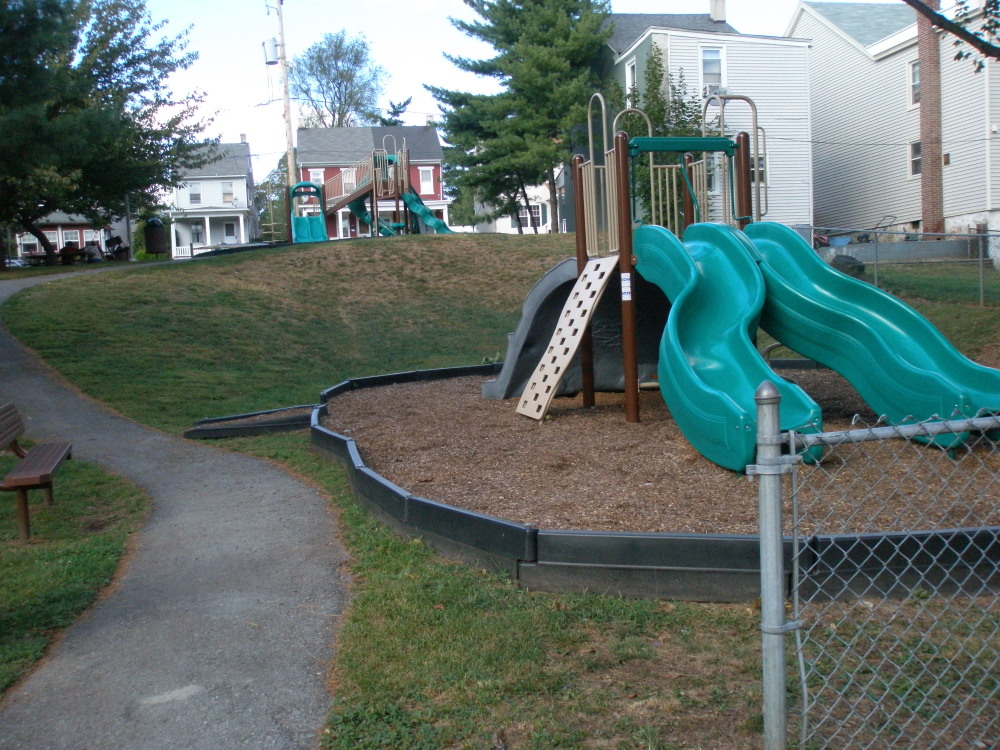
The interesting feature of this park is the dramatic slope between the two play areas, creating lower and upper playgrounds. From the street, it looks like there’s just one play area, but if you go inside the park just a few steps, you’ll see another play area down below, which can also be accessed from Rowan Alley. Some local residents in the park the day I visited said it’s the best sledding in Pottstown!

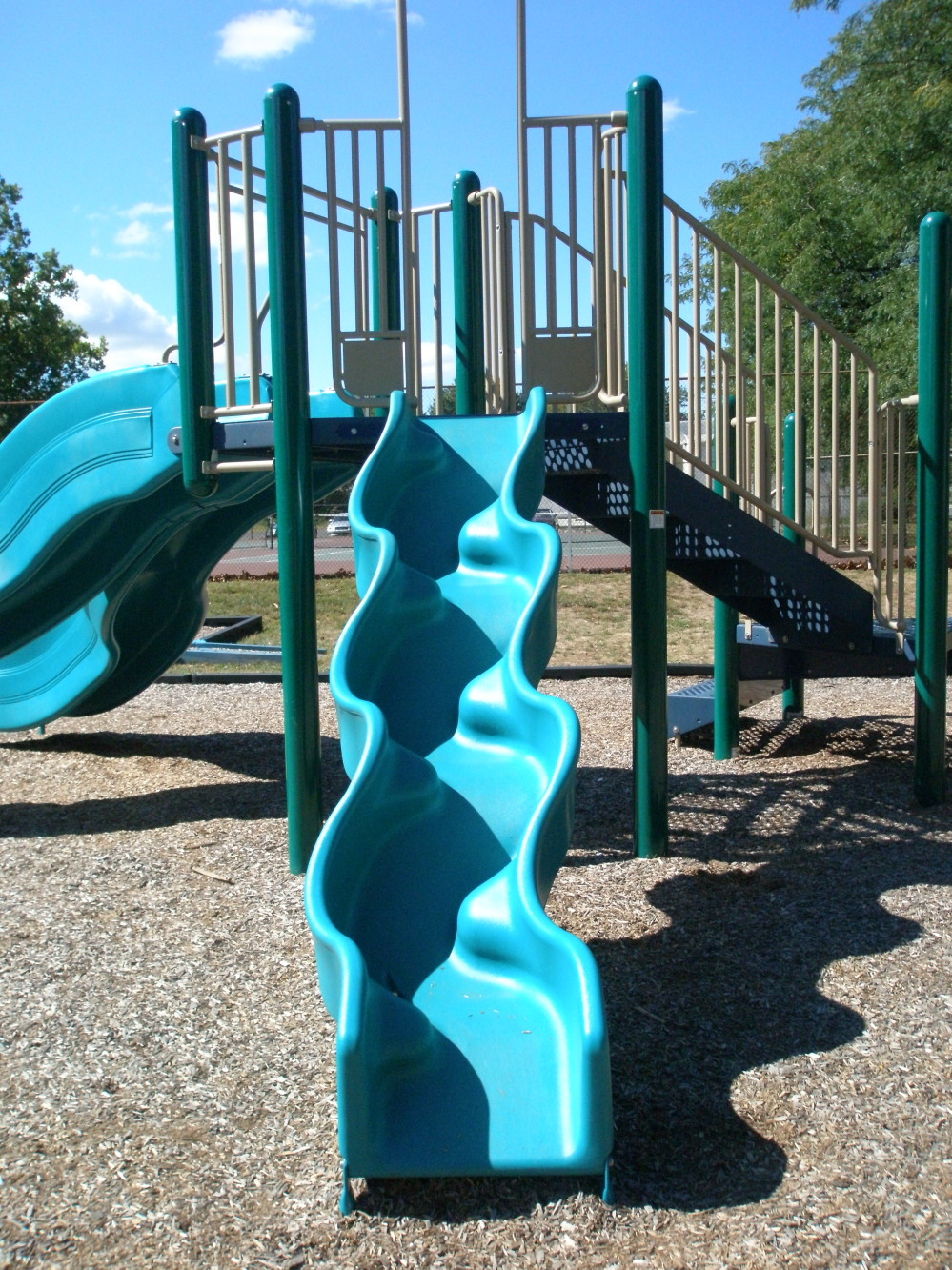
The slide closest to Walnut Street will also give a good jolt to a middle-aged spine! I will here admit that I have done some testing of the sliding boards at some of these pocket parks. In my defense:

(1) I had promised the Health and Wellness Foundation that we would try out important features of each park.
(2) When I was growing up, the high slide at the Franklin School playground was metal and, unless weather conditions were perfect and there was no humidity, it was hard to get in a good run. These new plastic slides send you flying!
(3) I guess I just refuse to grow up. 🙂

Moving on…
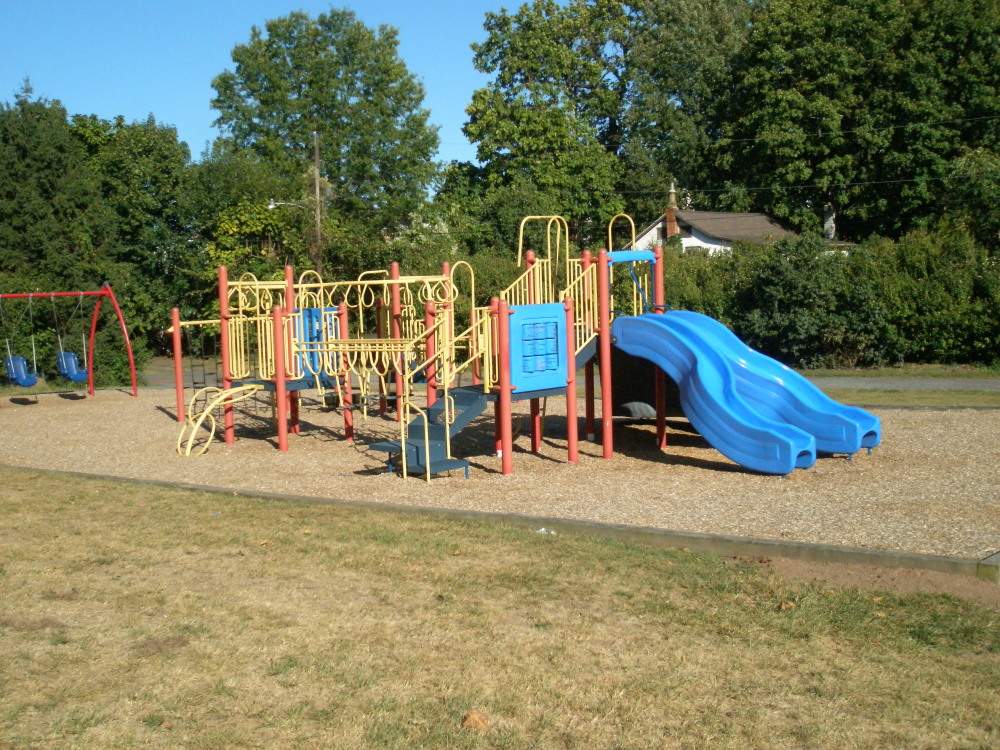
Washington St. Park

Washington Street Park actually lives on East Street, right at the “T” where that leg of Washington Street ends. It also offers new, fun equipment and plenty of space for running around. A new chain link fence prevents the youngest children from dashing off the playground into the street. I took a few moments at the end of the afternoon to just swing, something I hadn’t done in a very long time. I’d forgotten how meditative it can be. Adults: swinging is not just for kids!

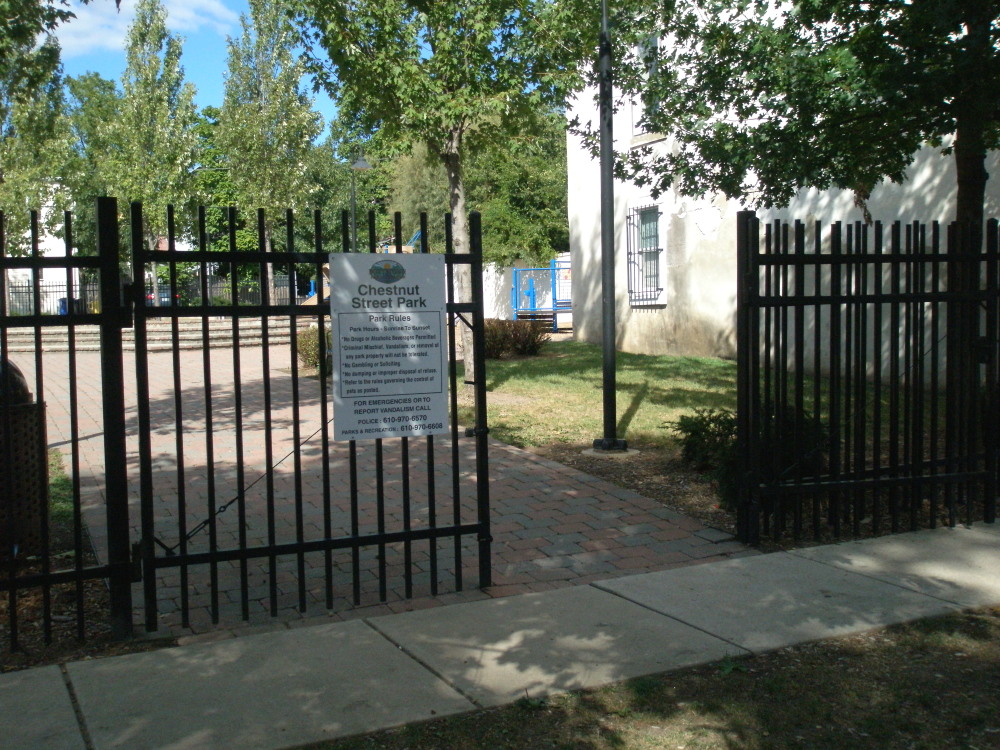
Heading down Washington Street, to the intersection with Chestnut, brings you to the New Chestnut Street Park. This very attractive, practically brand-new, fenced park has become a popular venue for community-wide events such as National Night Out, as well as for a local community gardening day and private parties.
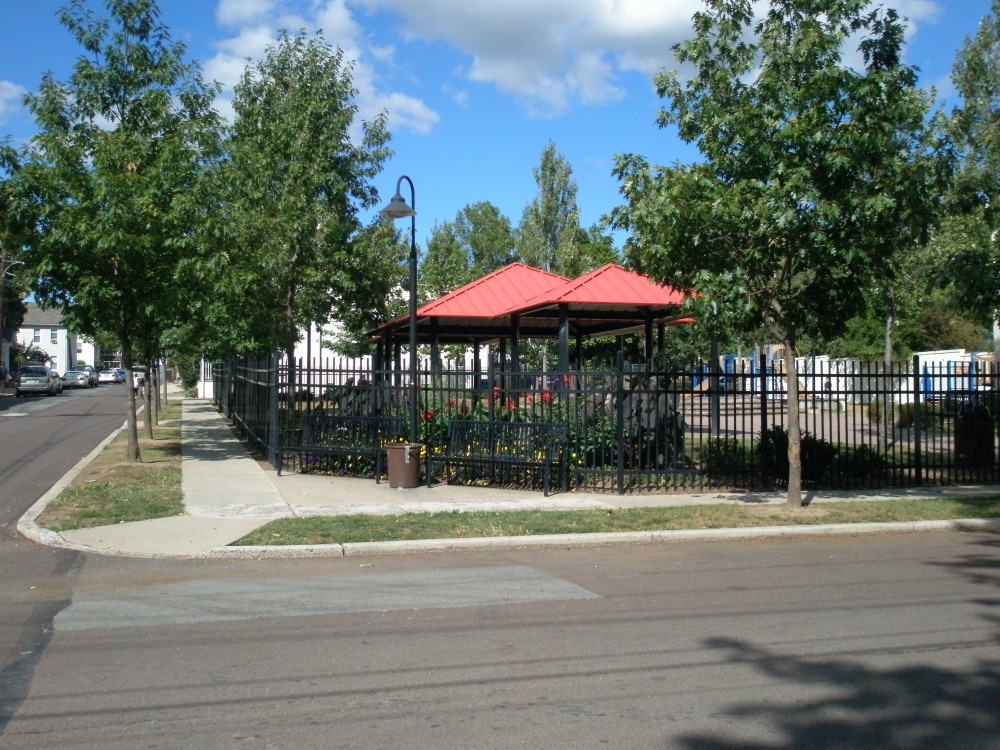
New Chestnut Street Park

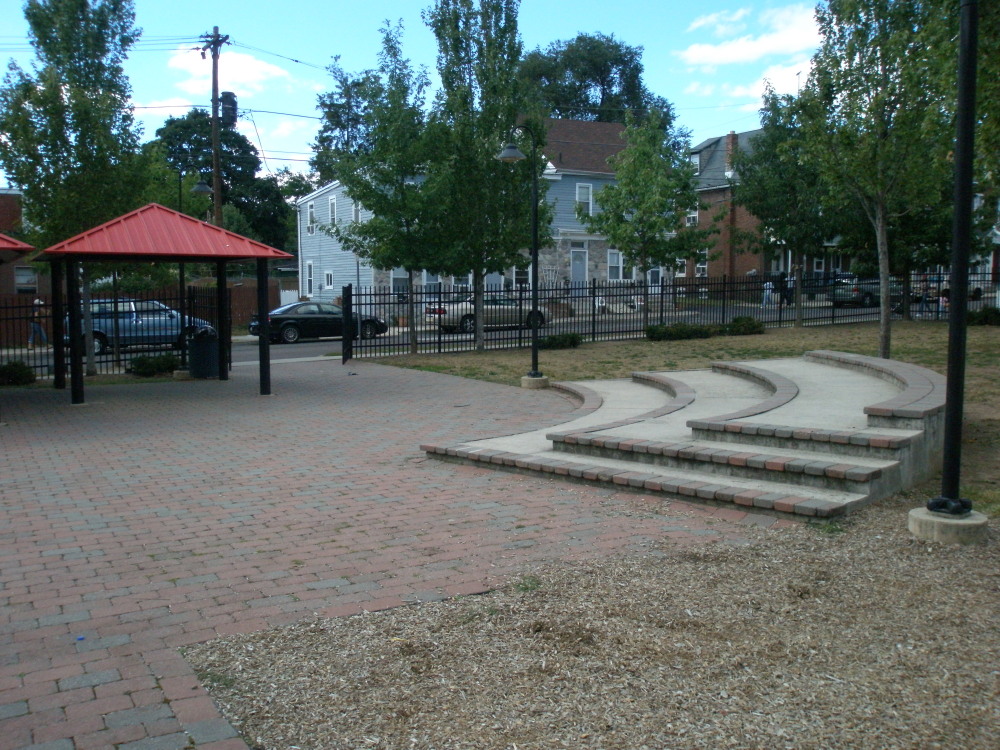
A few resident elders can usually be found on a bench right on the corner, keeping an eye on things. Because the park has a pavilion with access to electricity, it appeals to and serves a broad range of residents, not just children. It’s remarkable how the addition of that kind of equipment, which isn’t all that elaborate, can inspire wider and more frequent use of a pocket park. Something to think about if/when there’s funding for renovations or upgrades to other pocket parks in town.

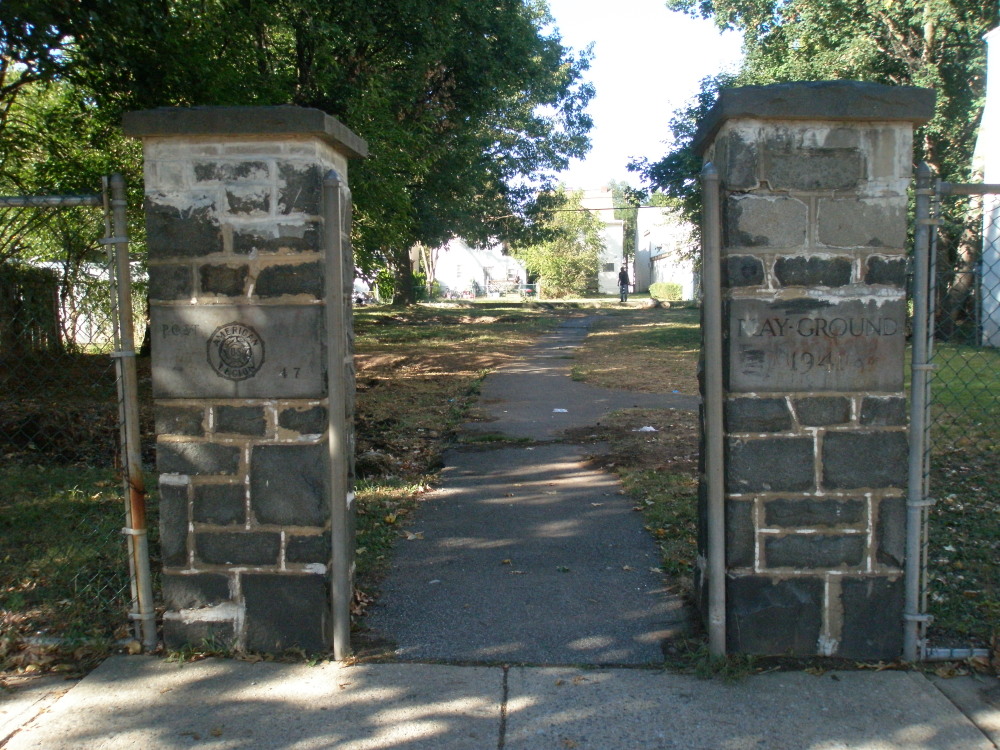
Now I just have to say a few words about the Old Chestnut Street Park, which appeared in the Penn State study but is now vacant. This quarter-acre park, which is on the north side of Chestnut Street, between Franklin and Washington Streets, is actually owned by the School District. This will be a site to keep your eye on as the School District conducts their facilities analysis because the idea of a community garden at this location has been floated out there by some neighborhood residents.
This property also has an interesting history. As you stand at the park entrance and look across the street, you’ll see two really cool, brick buildings that used to be public schools; they’ve got red boards over the windows. The one on the left was Hamilton School, built in 1881 (424 Chestnut), and the one on the right was Adams School, built in 1887 (420 Chestnut). While there are some clues on the buildings themselves, I consulted my handy Pottstown School Directory from 1892-93 that came in a small batch of things I won on eBay a while back. (I’ll eventually give this stuff to the Historical Society or the District, but I’m still working my way through it.) Anyway, this little book is filled with all sorts of interesting tidbits about the District, including the fact that there was a school called “Franklin” on the empty park site, way back in the 1890s. It seems to have had two second-grade classes, taught by Sue B. Fritz and Libbie Krause.
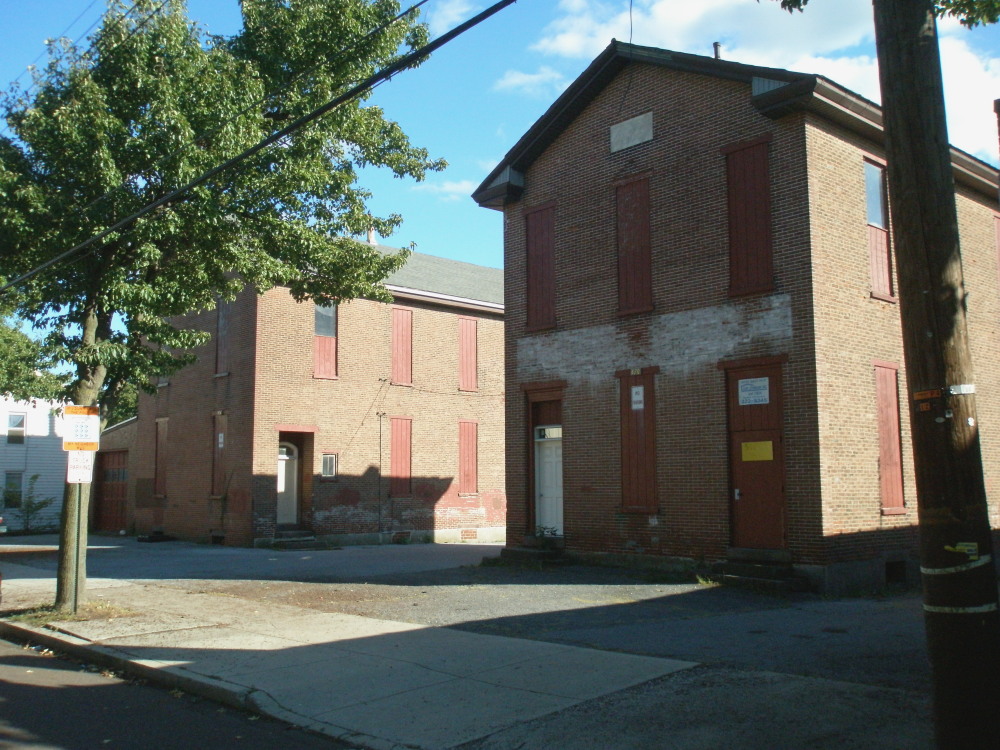
Former Hamilton & Adams Schools

Isn’t it kind of wild to imagine how every piece of land has its own history and its own stories to tell?

WALNUT STREET PARK
Location: Walnut Street between Grant & N. Adams Streets, Pottstown, PA 19464
Size: 0.5 acres
Suitability: Approximately 5-12 years old.
Facilities: Two play areas, picnic tables, benches; shady and sunny areas.
Activities + tips: Lower playground seems more appropriate for younger children. Locals report excellent sledding conditions on the hill!
Hours: Dawn until dusk.

WASHINGTON STREET PARK
Location: Intersection of East and Washington Streets, Pottstown, PA 19464
Size: 0.5 acres
Suitability: Approximately 5-12 years old.
Facilities: Playground, swings, picnic tables, benches; shady and sunny areas; small, grassy multi-purpose open space with slight downward slope.
Activities + tips: New fencing along East Street prevents younger children from running into the street.
Hours: Dawn until dusk.

NEW CHESTNUT STREET PARK
Location: Corner of Chestnut and N. Washington Streets, Pottstown, PA 19464
Size: 0.5 acres
Suitability: All ages.
Facilities: 2 sets of play equipment; multi-purpose, grassy space; paved area and pavilion with electricity; mini-amphitheater; community flower gardens & lovely landscaping.
Activities + tips: Call the rec. dept. for information on rentals. Pitch in if there’s a community gardening day next spring!
Hours: Dawn to dusk; sometimes later for groups with event permit from Rec. Dept.

OLD CHESTNUT STREET PARK
Location: In between 417-427 Chestnut Street, Pottstown, PA 19464
Size: 0.25 acres
Suitability: All ages.
Facilities & Activities: Paved path, open space; seems to be used mainly as a pedestrian pass-through.
Tips: Small site owned by Pottstown School District, which is currently doing District-wide facilities analysis. Check out the cool former school buildings across the street!
Hours: Dawn to dusk.

Contact regarding any park rentals:
Pottstown Parks & Recreation Department
Borough Hall, 100 E. High Street, Pottstown, PA 19464
610-970-6500
Click on the Department’s “Special Events” tab to learn more about upcoming events.

Follow the parks series at Mission: Healthy Living, Positively!Pottstown, Twitter (PositivelyPtown), Facebook, and The Mercury.

PHOTO GALLERY
Walnut St. lower playground

Walnut St. Hill

Washington St. swings

Washington St. grove

New Chestnut St. entrance

New Chestnut plaza

New Chestnut play area

Smith Family Plaza: Community gathering place in downtown Pottstown

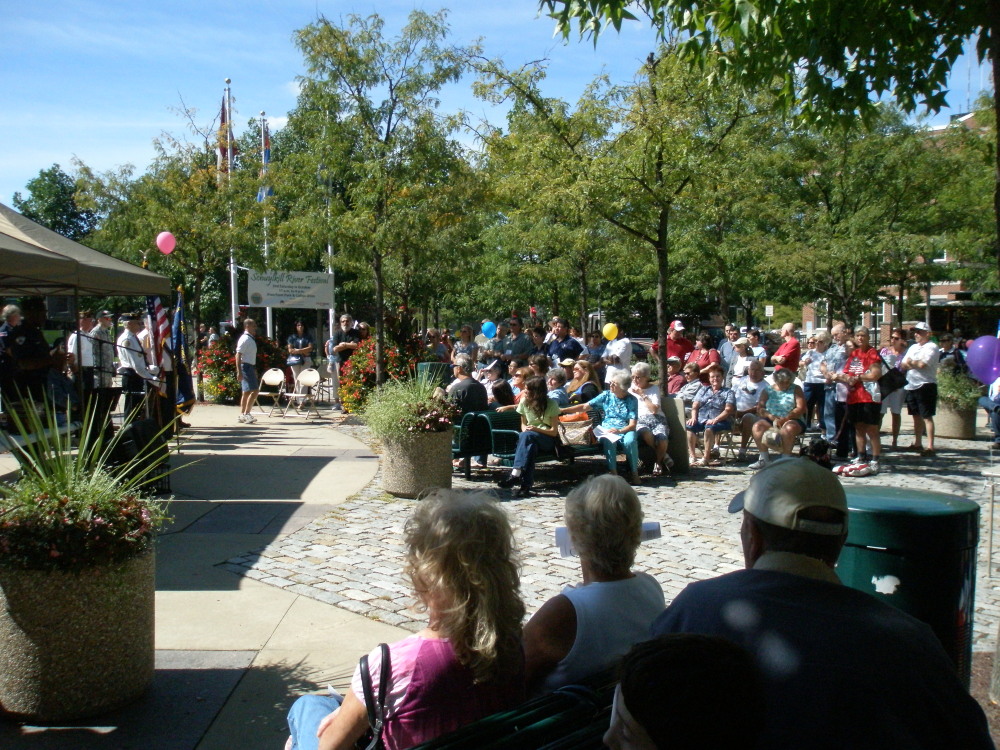
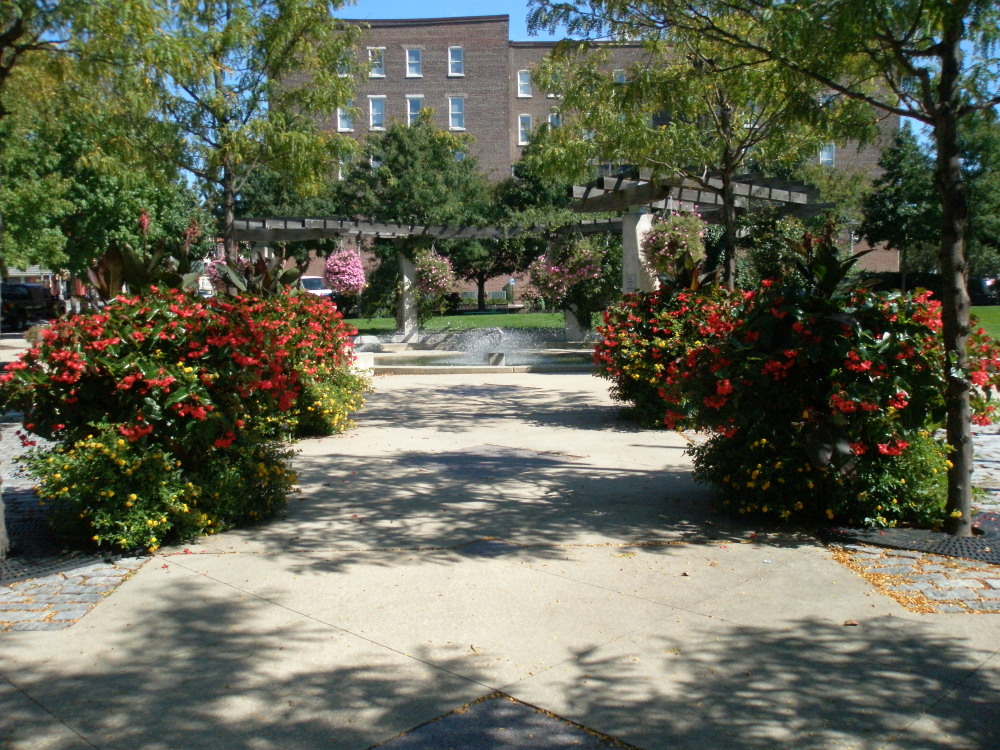
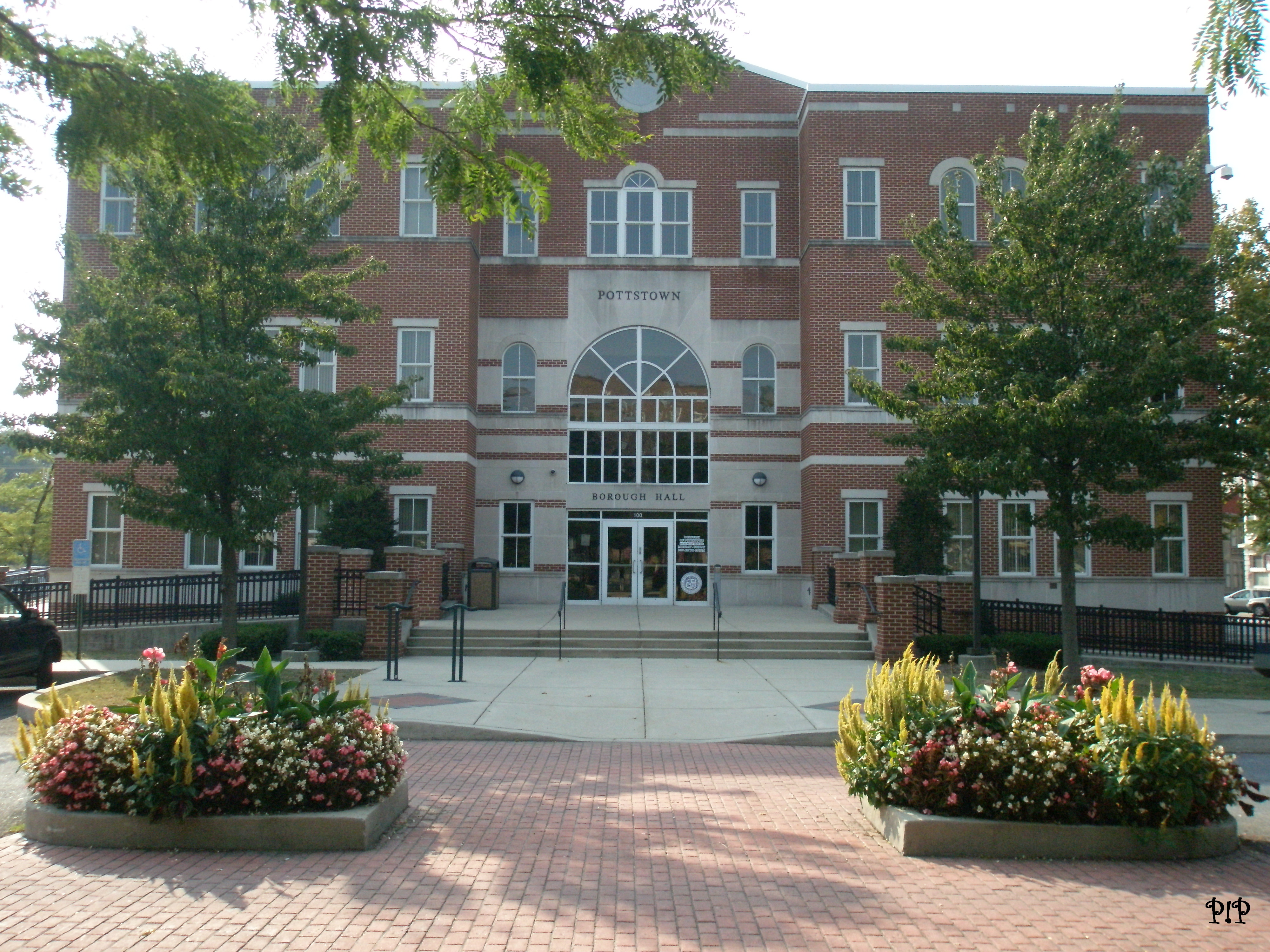
The Smith Family Plaza, together with Pottstown’s Borough Hall, was named a Bronze Award Winner in 2006 by the 10,000 Friends of Pennsylvania. Since then, this open, pleasant and visually-harmonious town center has become the gathering place for First Saturday celebrations during warm weather months as well as other community events, such as the recent September 11th remembrance service and kick-off to a daylong “Open Doors” event.

First Saturdays in Pottstown are held from 10 a.m. – 2 p.m. on the first Saturday of the month from May-September. They are organized by the Pottstown Arts and Cultural Alliance and typically include non-stop music, community tables, arts activities, and a used book sale by the Pottstown Regional Public Library.

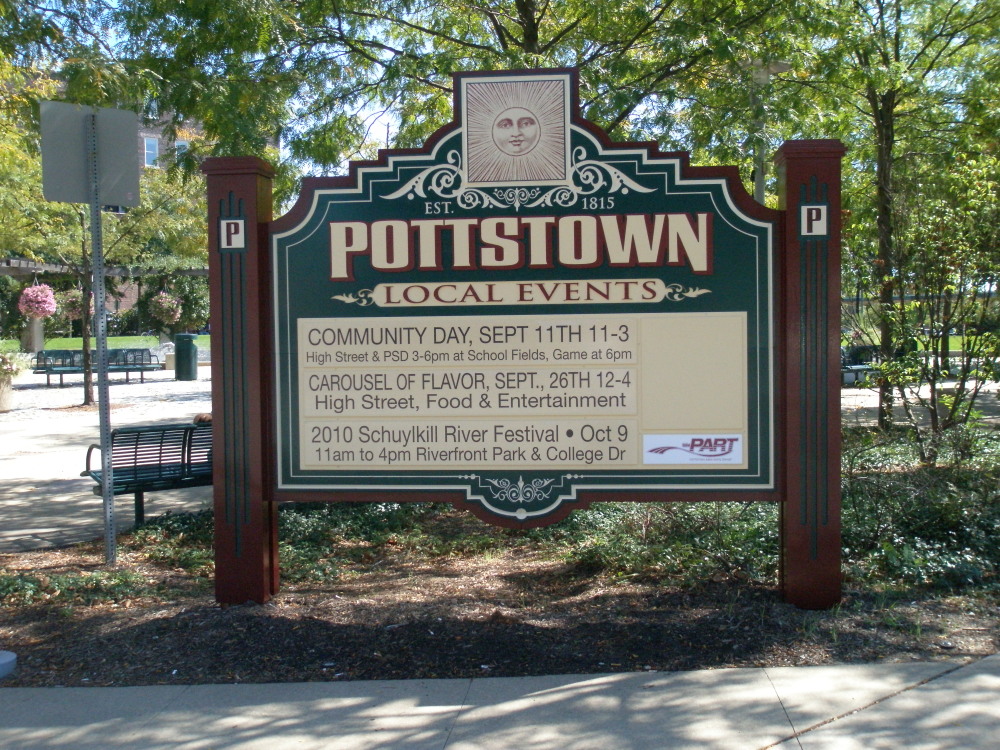
Across the street and within a 2-block radius of Smith Plaza, you have your choice of restaurants. And speaking of food, the Smith Family Plaza is at the heart of the Carousel of Flavor culinary festival, which just passed the seven-year mark this past weekend. This celebration of food, crafts, art, and live music allows residents and visitors to sample some of the best cuisine available in the region. It is organized by the non-profit Carousel at Pottstown and benefits their carousel revitalization project under construction at 30 W. King Street.

But I like Smith Plaza even after the crowds go home. The lawn is beautifully-manicured and the lush landscaping makes this public space feel cool, safe and inviting, even on the hottest summer day. It’s one of just a few areas in Pottstown with free WiFi, so if you’ve got your laptop and absolutely have to check your email, this is the spot for you. I also have a healthy respect, and a kind of awe, for well-designed government buildings, so a seat in the shadow of Borough Hall suits me just fine.

SMITH FAMILY PLAZA
Location: 100 E. High Street, Pottstown, PA 19464, in front of Pottstown Borough Hall

Size: 1 acre

Suitability: All ages can enjoy this public gathering space for community celebrations, passive recreation and connecting with nature.

Facilities: fountains, small multi-purpose lawn, concrete plaza, benches in sun and shade, people-watching areas, historical marker, seasonal flowers.

Activities + tips: The fountain will be tempting to all, especially young children, but no one’s allowed in! Even though there is no playground equipment, the parents of the stroller-crowd might want to grab a specialty coffee and pastry from across the street at Churchill’s, and then enjoy a moment of peace while the little ones doze.

Pottstown Parks & Recreation Department

Borough Hall, 100 E. High Street, Pottstown, PA 19464

610-970-6500

Click on the Department’s “Special Events” tab to learn more about upcoming events.

Follow the parks series at Mission: Healthy Living, Positively!Pottstown, Twitter (PositivelyPtown), Facebook, and The Mercury.

Pottstown’s Riverfront Park: A regional destination

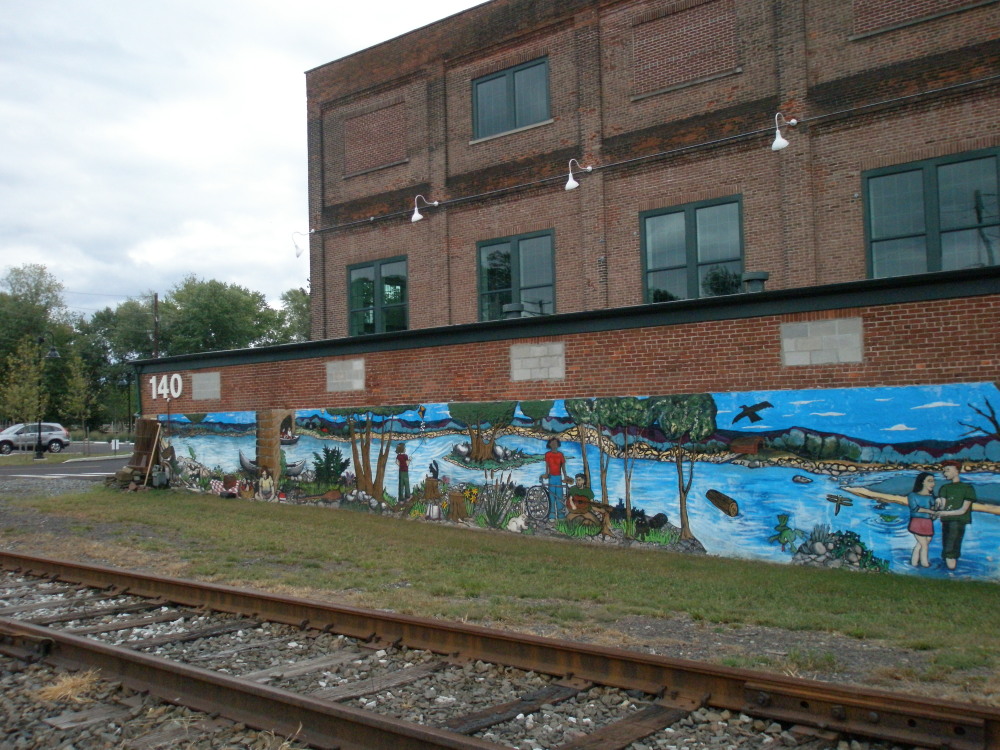
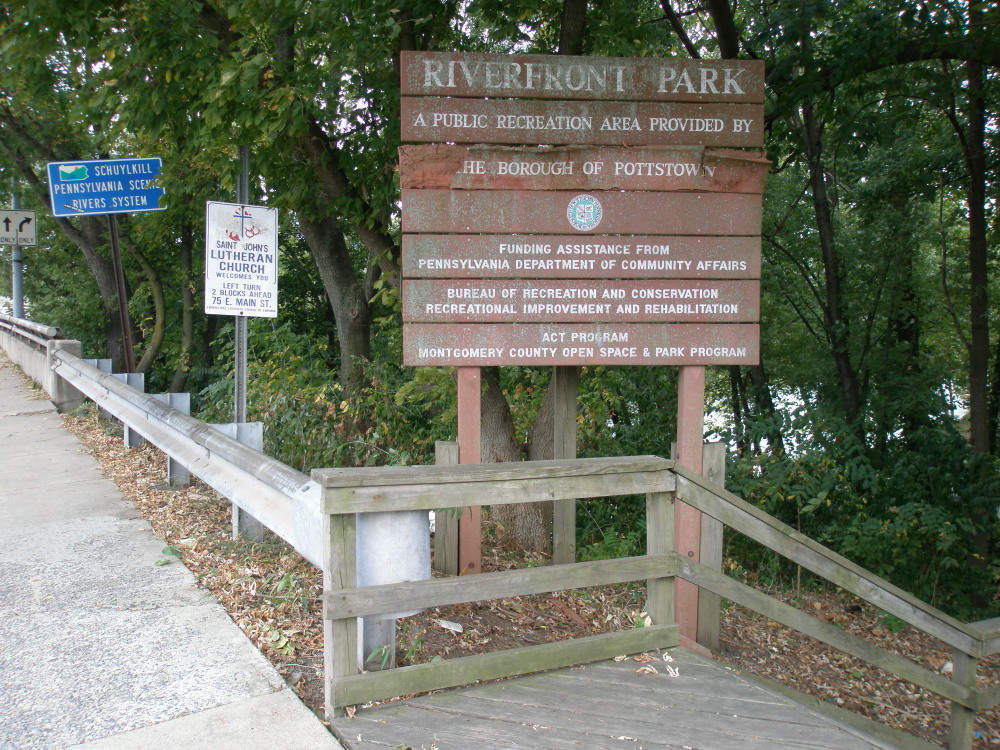
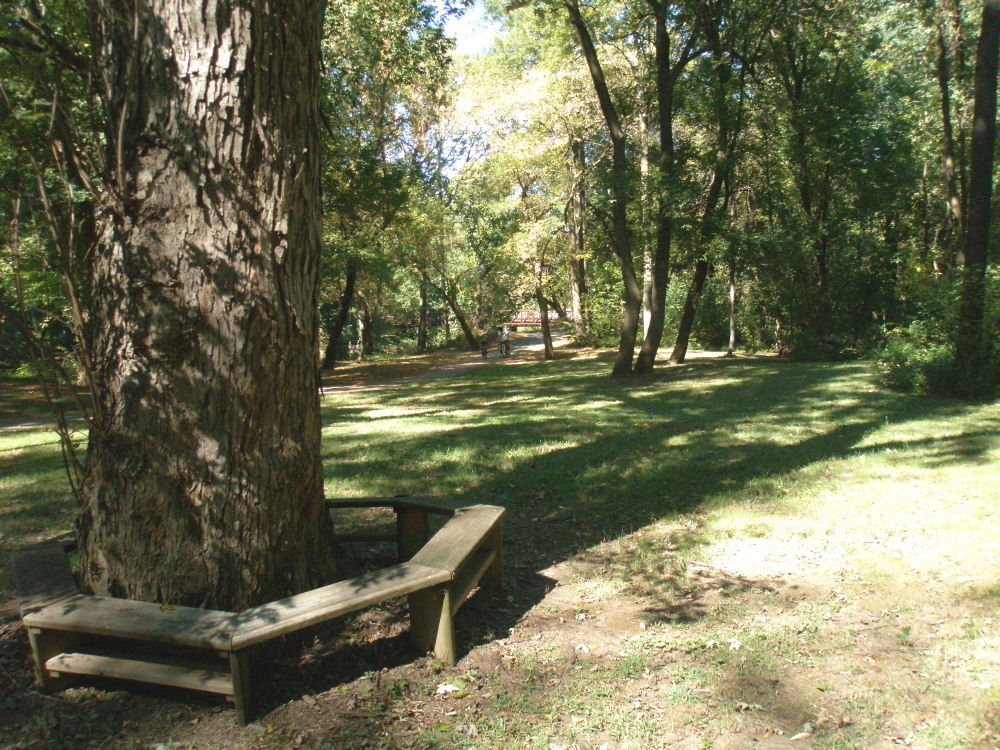
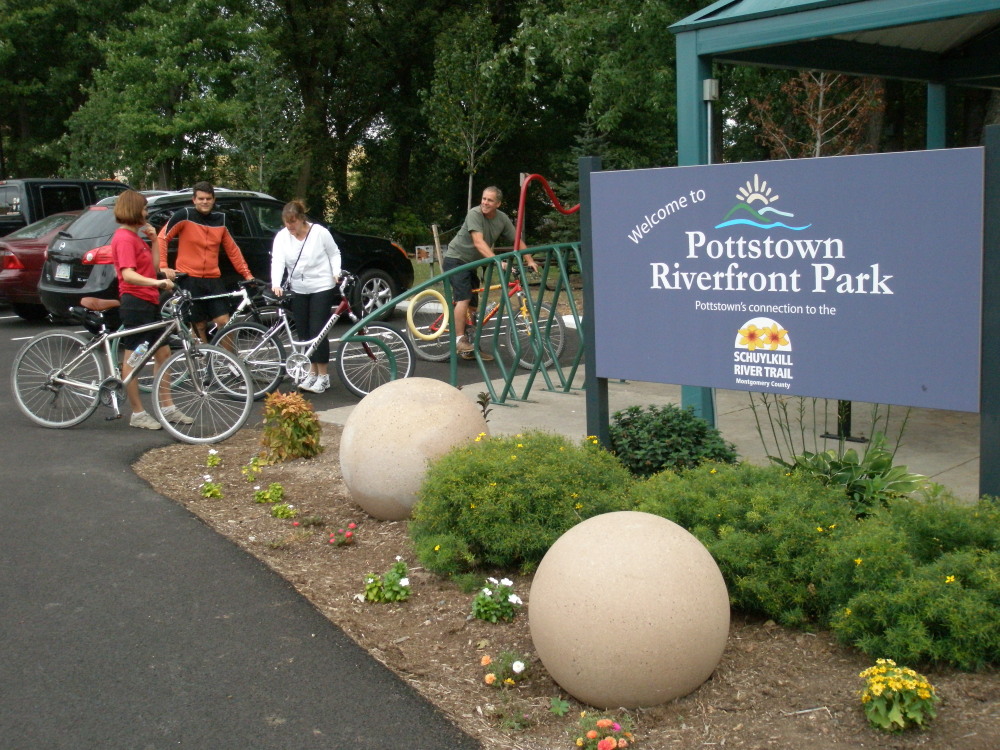
The brightly-colored mural at 140 College Drive in Pottstown is your signal to turn into the parking lot and bring yourself closer to the beauty and tranquility of Riverfront Park. This 60-acre public park offers a wooded oasis with biking and walking trails, sitting areas, a pavilion with picnic tables, an amphitheater for outdoor performances, and a chance to re-connect with the Schuylkill River, long a part of Pottstown’s industrial and recreational heritage.

The building with the mural is occupied by the Schuylkill River Heritage Area, which manages the Schuylkill River Trail, a path that will eventually stretch 130 miles in southeastern Pennsylvania from Philadelphia to Pottsville. To learn more about the trail itself, see their website here.

While the Schuylkill River Trail Council manages the trail itself, various county and local parks and recreation departments maintain the parks through which the trail winds. In Pottstown’s Riverfront Park, the Pottstown Parks and Recreation Department is responsible for maintenance and stewardship. They are also the agency that handles the requests and permits for all the festivals and events that take place in Riverfront Park and all of the Borough’s parks throughout the year.

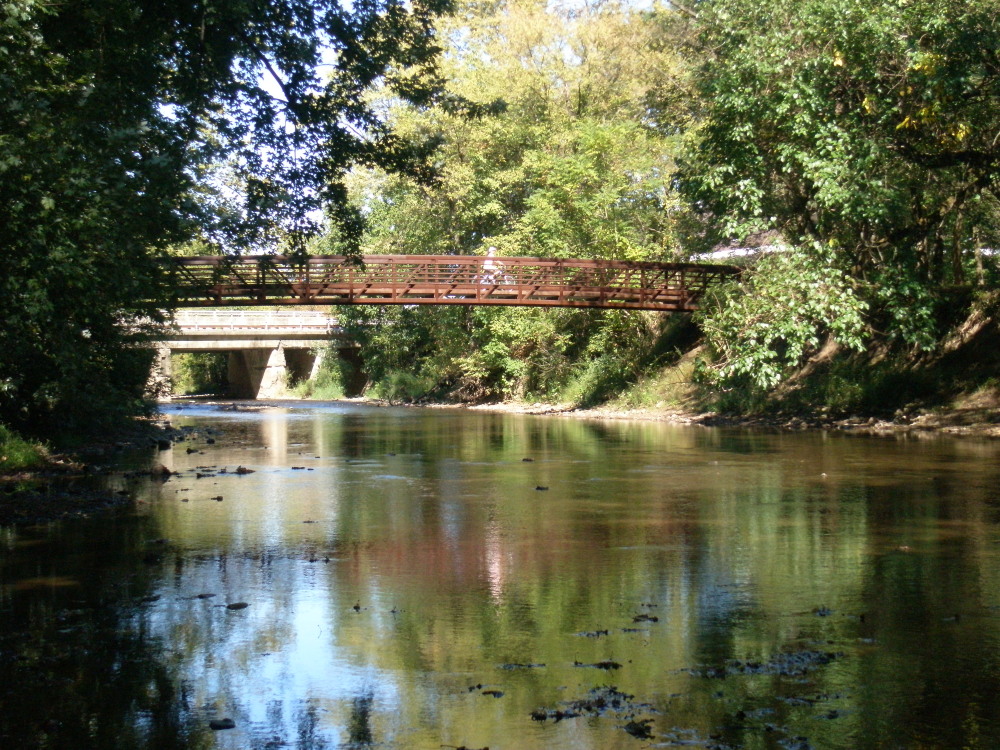
The Penn State study, recently done for the Pottstown Area Health and Wellness Foundation, classifies Riverfront Park as a moderately well-rounded, large, nature-oriented park. The “well-rounded” part of that description refers to the opportunities it offers for physical activity, contact with nature, social connections, and feeling connected to the history and culture of the place. Before I read this study, I probably would have said that a trip to Riverfront Park allowed me to connect with nature and get a little exercise. But on a couple of recent visits – one on foot, another on a free bike from Bike Pottstown and Tri-County BicyclesI found myself more tuned in to the possibility for social connection and the culture of the river than I ever had before. Here’s what I saw:

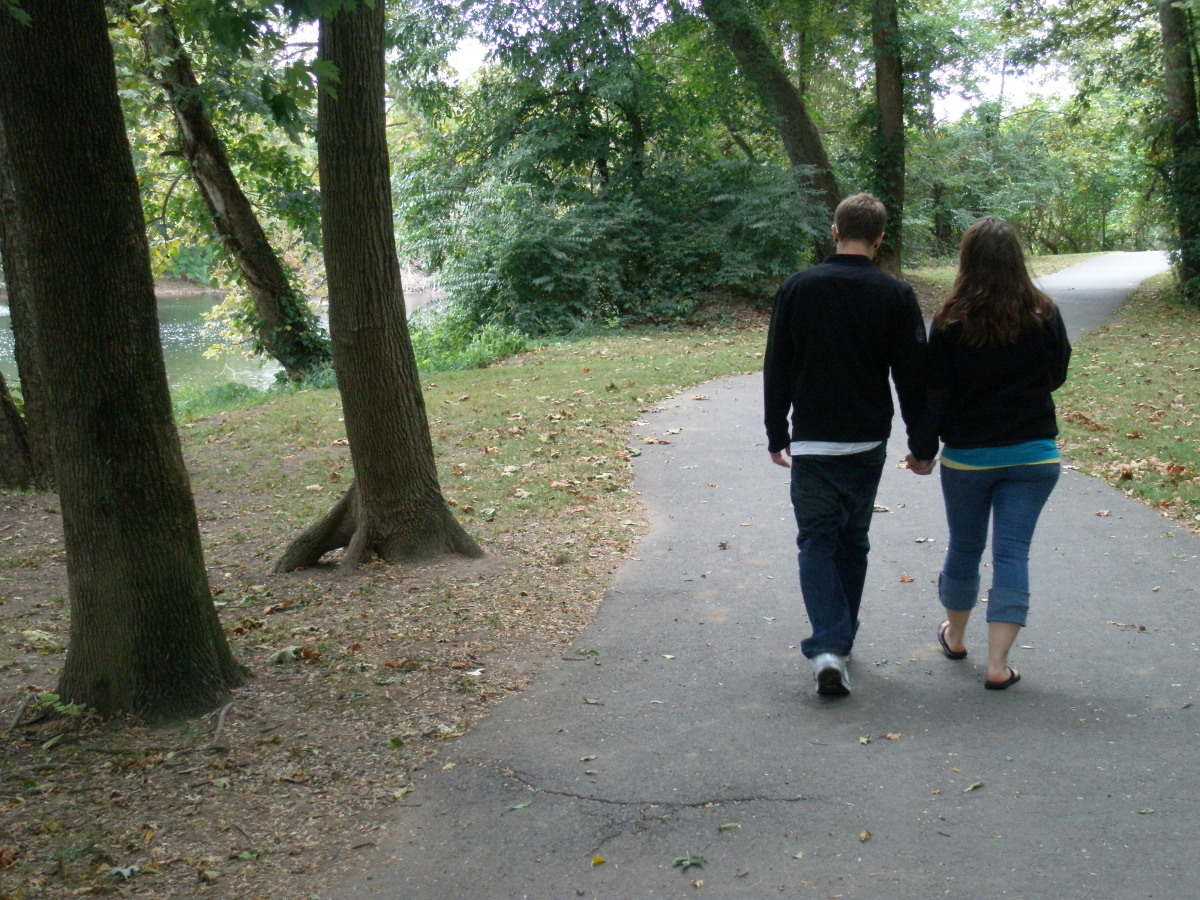
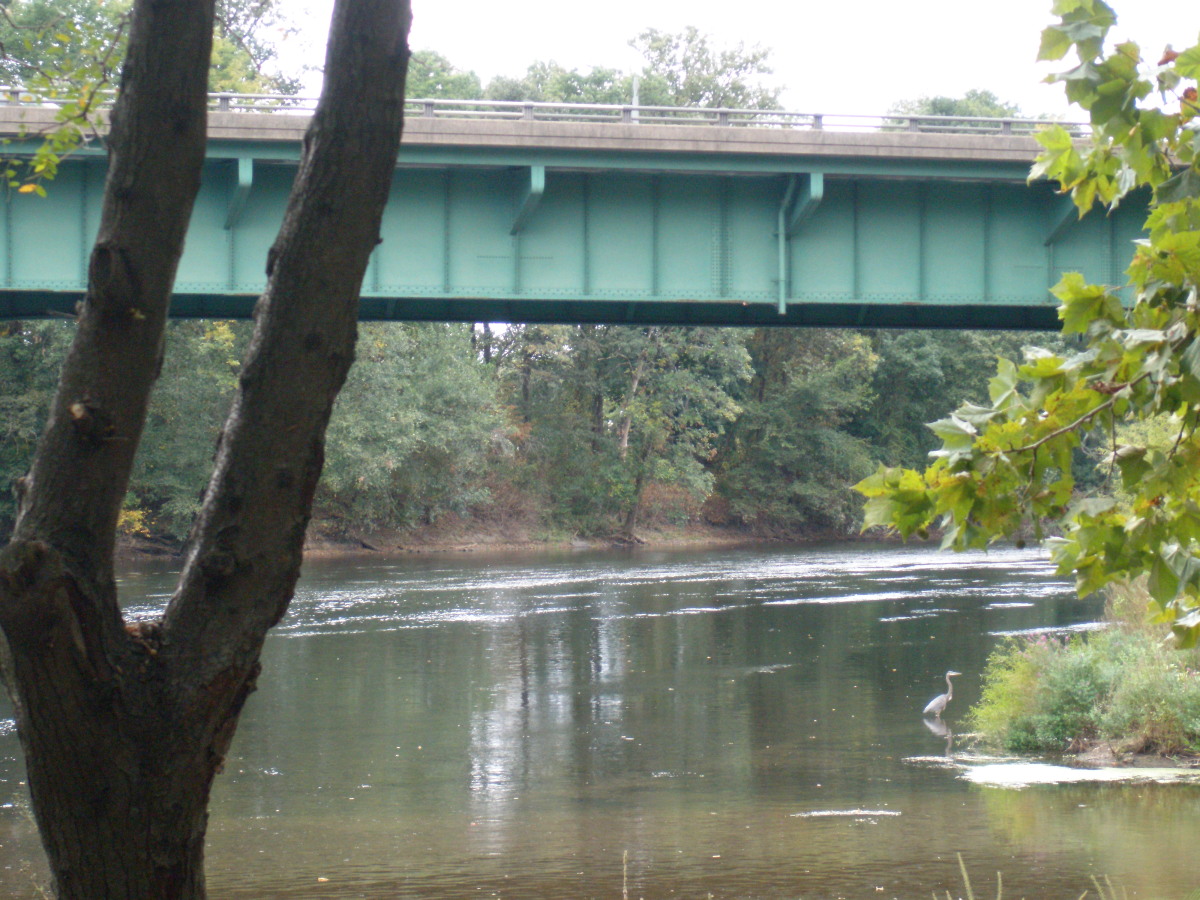
Families with young children walking and biking together… a teenaged couple walking hand-in-hand… a woman sitting on a bench, gazing at the water… a lone fisherman drifting past. It was a special treat to see an egret take flight in a low and graceful sweep above the water. I caught another glimpse of him at the water’s marshy edge a short time later. I hope you can see him in the bottom, right corner of this photo!

From my limited anecdotal experience, I would venture to say that the word is getting out about all that Riverfront Park has to offer. On a chilly day last April, before the parking lot was completed near the Heritage Center, I encountered very few people in the park. It was quite a different story in the past few weeks as college students, adults, families with young children, and senior citizens all took advantage of the many spaces and activities that the park provides.

Ideally, everyone would have a park within a half-mile walk (about 10 minutes) of their home. But communities also benefit from regional destination parks, and Riverfront is fast becoming one. The Park hosts the annual Schuylkill River Festival, a community festival that draws thousands of visitors and celebrates the arts, food and music, and also offers demonstrations about available recreational opportunities on the river. This year it will take place on October 9th from 11a.m. to 4 p.m.

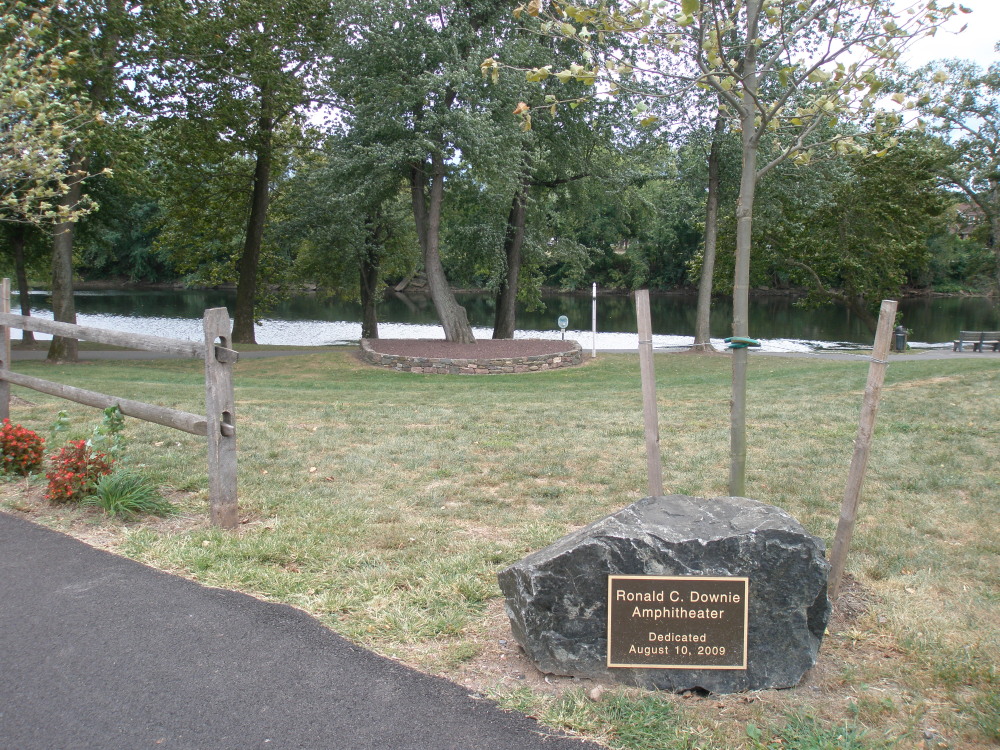
Throughout the summer, the Ronald C. Downie Amphitheater is home to the Pottstown Arts and Cultural Alliance’s Sunday in the Park Music Series. It is also  available for other musical events as well; just get in touch with the Pottstown Parks and Recreation Department (see contact information below.)

Riverfront Park is the site of Pottstown Parks and Rec’s Halloween fun, known as Halloween Hijynxx and Shiver on the River. The festivities take place this year on Saturday, October 23rd from 4 – 9 p.m. and include children’s games, scarecrow-making, a magic show, haunted hayride and more, which can’t be beat at just $5 admission per person.

Come New Year’s Day, the river’s edge is the place to be for the annual Polar Bear Swim and Bonfire, also organized by the Pottstown Parks and Recreation Department. Hearty souls must register and sign a waiver before taking a plunge in the river, with rescue crews nearby, of course. Afterward, “polar bears” and onlookers can warm up at a bonfire and scarf down a traditional Slovak meal of pork and sauerkraut, which is thought to bring good luck throughout the year. You can find Mercury reporter Evan Brandt’s account here. I also checked out this video posted on YouTube, and – seriously? – I feel a Polar Bear throwdown in the making. You just might find me in the Schuylkill River (for the first time in my life) on January 1, 2011!

So, how do you get to this amazing park?

Hanover St. entrance

I found three ways to enter Riverfront Park.

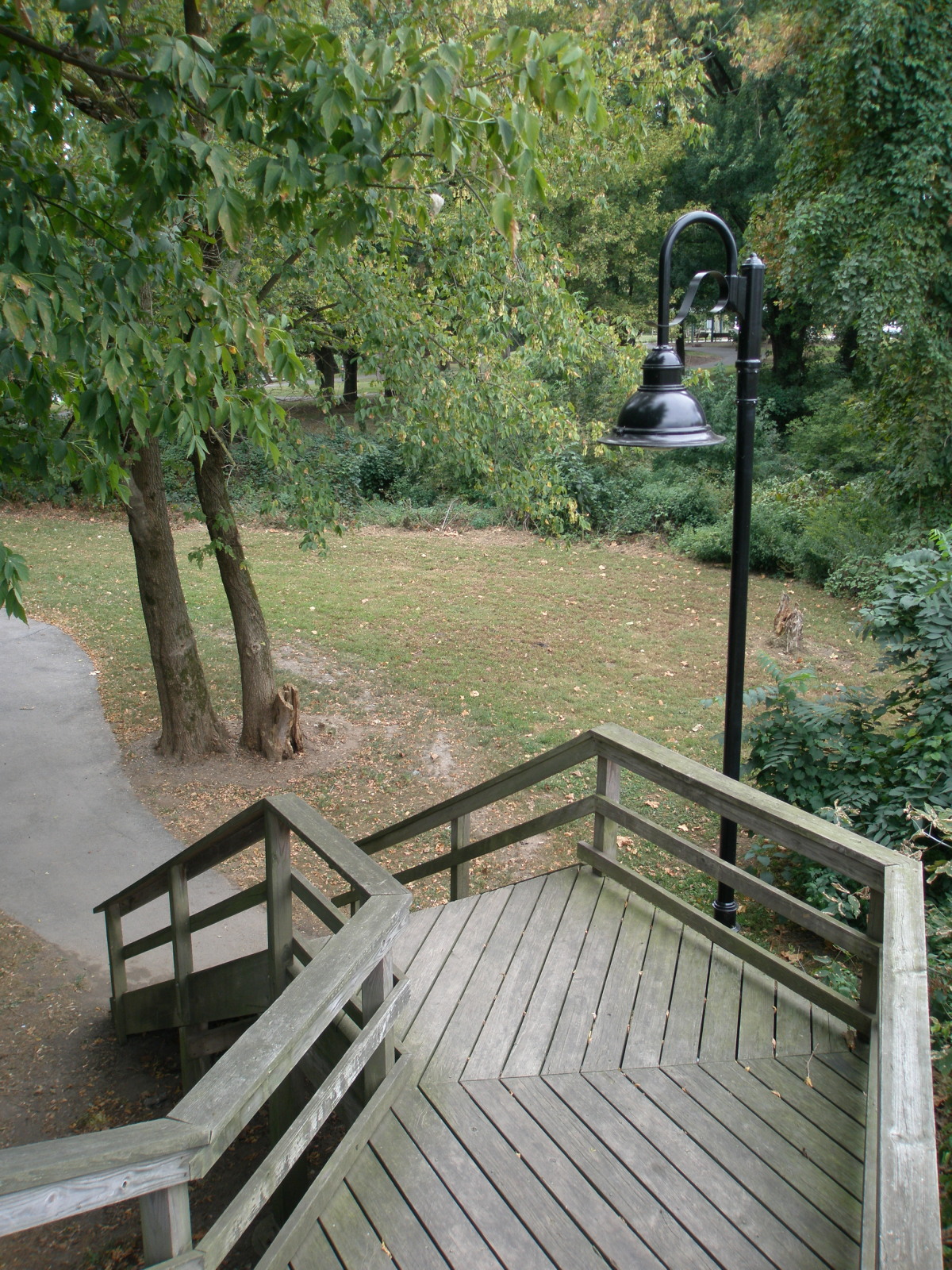
If you’re coming from High Street, head south on Hanover Street toward the Hanover Street bridge. If you’re on foot, or if you are able to carry your bike down steps, you can enter via the stairway shown in the photo and immediately start to feel like you’ve left urban life behind.

Come on down!

Or you can turn right onto College Drive to access one of the other two entries, which each have parking.

As noted above, you can turn left into the parking lot at 140 College Drive (the building with the mural). That building is the 1911 PECO generating station that has been, and continues to be, adapted to house the Schuylkill Riverfront Academic and Heritage Center, the result of a partnership between Montgomery County Community College and the Schuylkill River National and State Heritage Area.

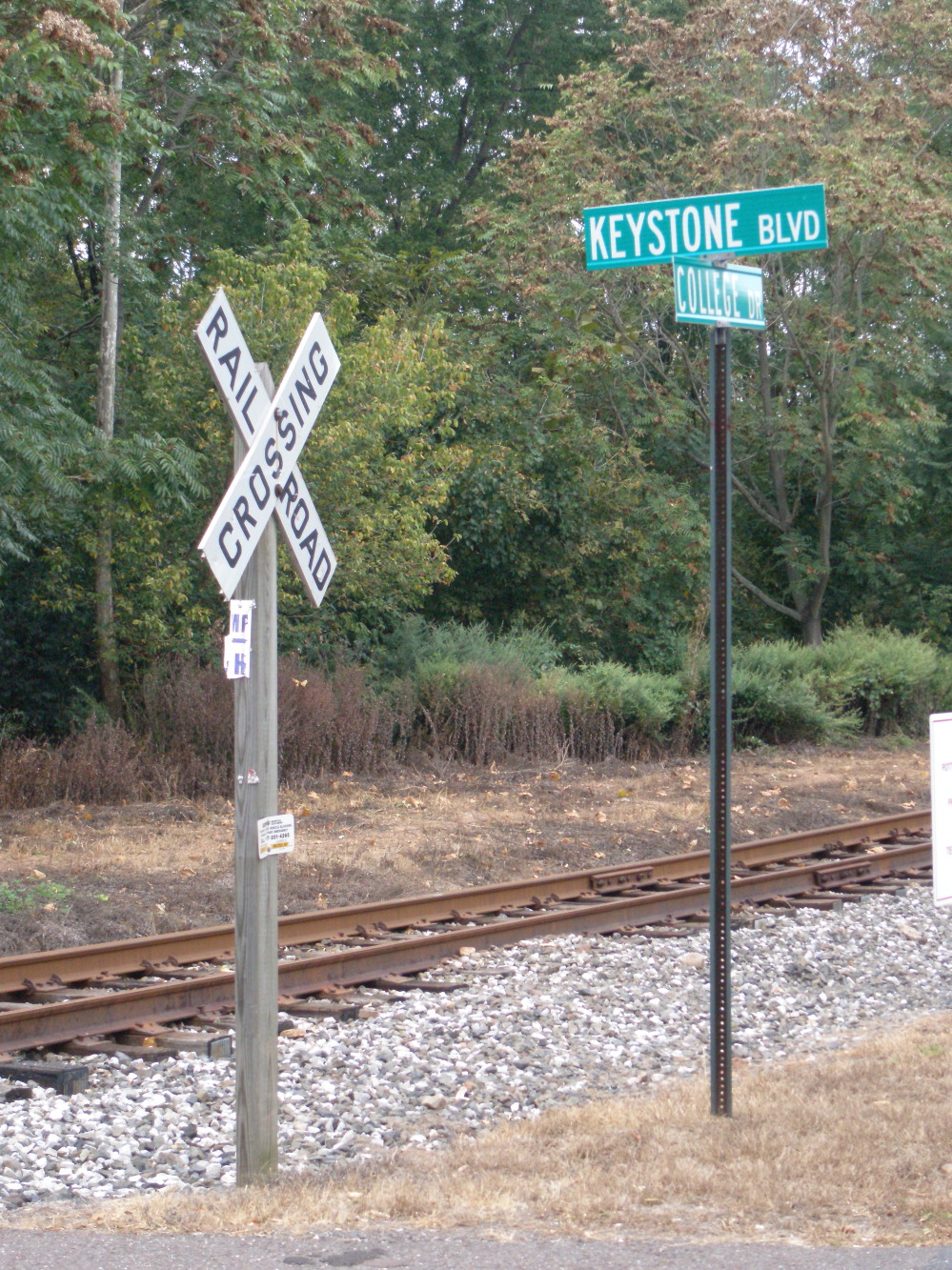
Or you can drive, bike or walk into the park near the intersections of Keystone Boulevard and College Drive. Make the turn, cross the tracks near the overpass, and you’ll be in the park.

Riverfront Park is the newest addition to Pottstown’s outstanding parks system and, with its burgeoning programming, has the potential to become a regional destination with year-round activities that appeal to residents and visitors of all age groups and activity levels. I strongly encourage you to check it out, both for its current programs and also as the site for your next hike, special gathering with friends and family, or secret spot for daydreaming on a sunny afternoon.

RIVERFRONT PARK

Location: Along College Drive, between Hanover Street and Keystone Boulevard. Use 140 College Drive, Pottstown, PA 19464 to find it on a map.

Size: 60 acres

Suitability: Active and passive recreation for all ages.

Facilities: Amphitheater, small multi-purpose open space, river, internal trails, picnic areas/tables, picnic pavilion, sitting areas, people-watching areas, natural study areas.

Activities + tips: Shaded, paved path ideal for strollers, walkers, joggers and bikers. Some internal, dirt trails with small jumps that seem to be used by dirt-bikers. These trails are suitable for hiking, although there are no trail maps; if you give these a try, be sure to go with a friend or two.

Hours: Dawn until dusk.

Contact regarding park rentals:

Pottstown Parks & Recreation Department

Borough Hall, 100 E. High Street, Pottstown, PA 19464

610-970-6500

Click on the Department’s “Special Events” tab to learn more about upcoming events.

Follow the parks series at Mission: Healthy Living, Positively!Pottstown, Twitter (PositivelyPtown), Facebook, and The Mercury.

PHOTO GALLERY
Footbridge over Manatawny

Getting ready for a ride

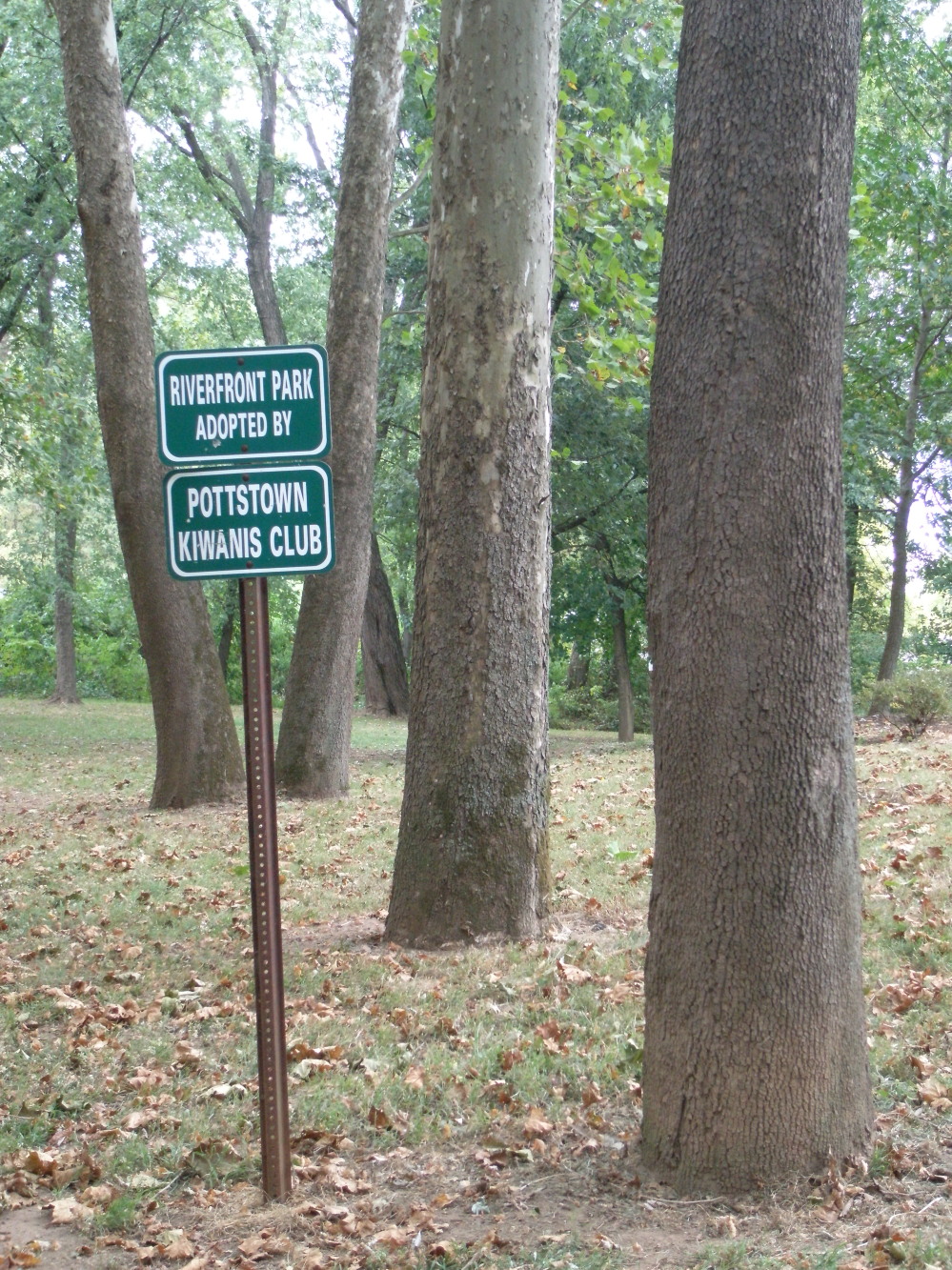
Thank you, Pottstown Kiwanis Club!

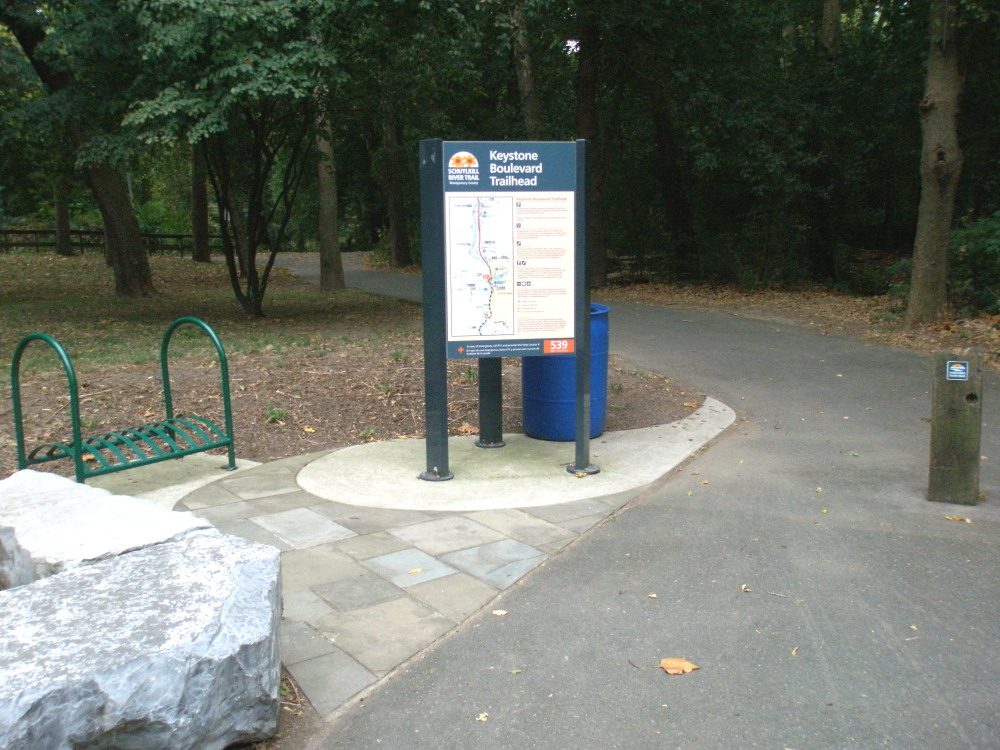
Keystone Trailhead

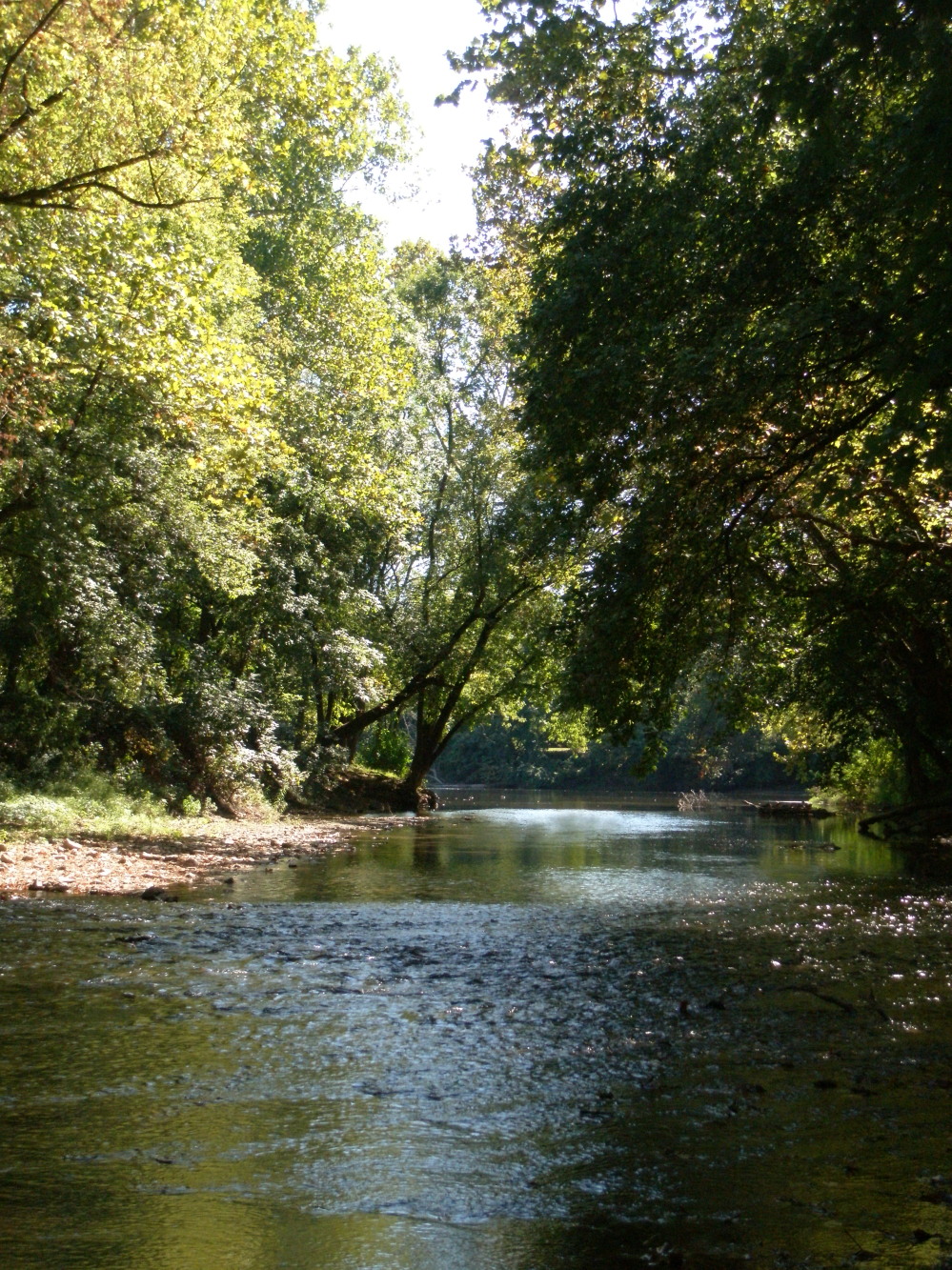
Serenity

Blog series to promote area parks

Positively!Pottstown has teamed up with the Pottstown Area Health and Wellness Foundation to run a series of articles about the parks and recreational opportunities in the Foundation’s service area, which includes the Borough of Pottstown and municipalities within a ten-mile radius.

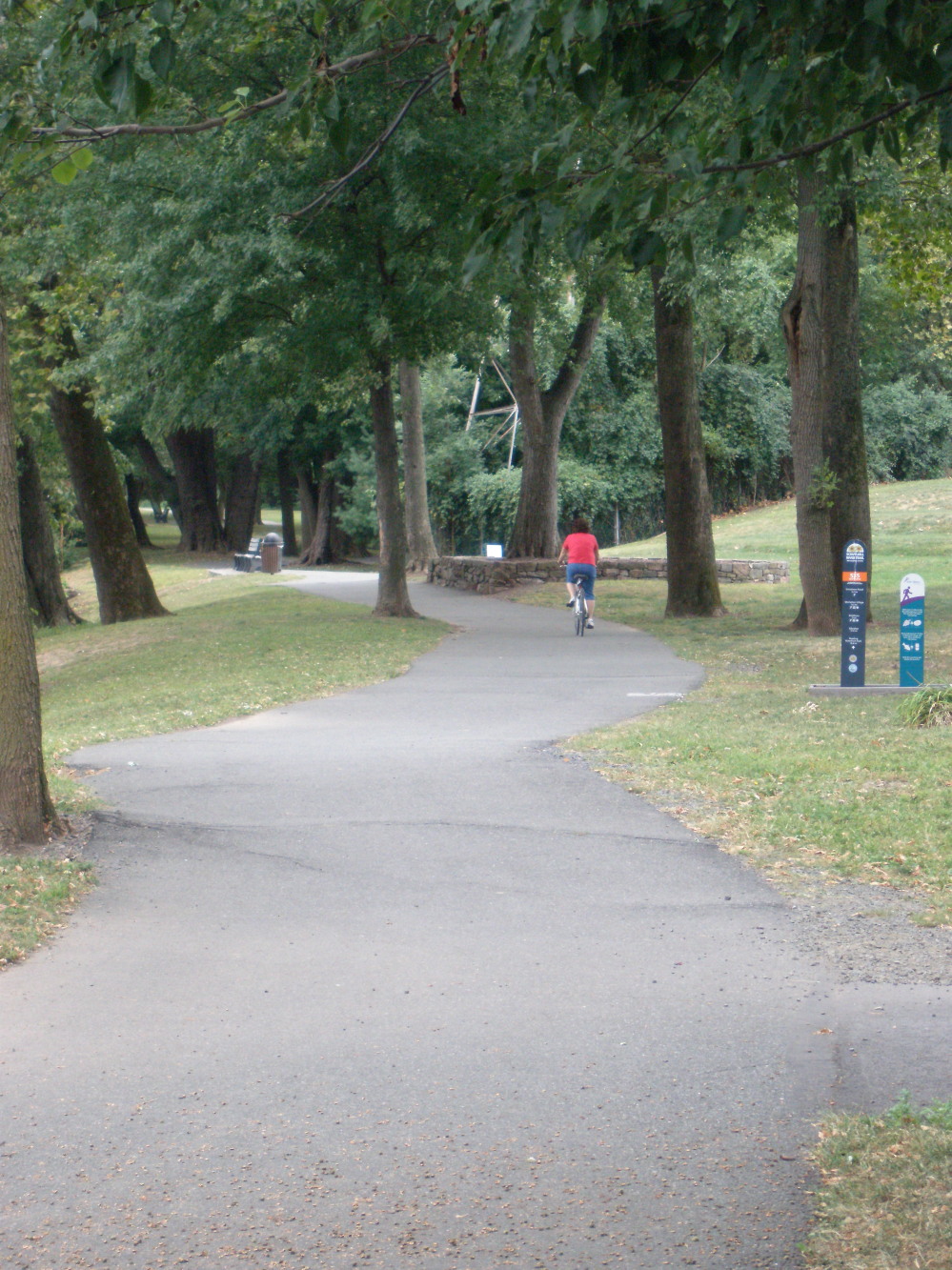
Riverfront Path
Bloggers Sue Repko and Rosemary Keane are visiting all the parks in a recent study commissioned by the Foundation and conducted by the School of Architecture and Landscape Architecture of The Pennsylvania State University. They will be posting their experiences and photos here at Positively!Pottstown, beginning tomorrow and continuing through the first week of November. Each week the blog will feature the parks in one municipality or geographic area.

The posts will also appear in the print edition of The Mercury, as space allows, and will otherwise employ new social media, such as the Foundation’s Mission: Healthy Living website, the online edition of The Mercury, Facebook and Twitter, to get the word out about the types and locations of recreational facilities in the Pottstown area.

This series is a direct response to some of the findings from Penn State’s two-phase study. Phase I identified critical issues facing the Pottstown area in terms of growth, sprawl, active living and access to parks, while Phase II linked the conclusions of Phase I to planning objectives, recommendations, design guidelines and implementation strategies.

Wellness trail sign

One of the key planning objectives to come out of the Phase II Report was to build awareness of nearby parks. The first question a potential park visitor is going to ask is, “Are there any parks nearby?” Surprisingly, one of Penn State’s findings was that more than a third of residents in higher-density areas, such as Pottstown, are not aware that they have a park within a 10-minute walking distance of their homes. Residents’ next questions typically revolve around how convenient it is to get to a park and whether the park has amenities of interest.

While the Penn State study mentions public and private school playgrounds, the series will not cover those facilities under the assumption that families – the primary users – will already know about them. But the bloggers will use the study as a guide to other community facilities and then will share their own experiences, tips and photos to make it easier for readers to decide what park might suit them on any given day and how to get there.

“We wanted to try this approach, to make this fun and engaging for readers, so that they will be inspired to get outside and explore the recreational opportunities in their own backyards and in neighboring towns,” said Dave Kraybill, Executive Director of the Foundation.

Maple Street Park
This project complements the Foundation’s efforts to create an online community, Mission: Healthy Living, where residents can learn and share information among themselves about health and wellness topics that interest them. All of the articles will be permanently available at Positively!Pottstown under the “Parks & Rec” tab at the top of every page, as well as in the “Parks & Rec Series” subject category.

Readers are encouraged to share their tips, insights and experiences (both good and bad) in the comment section at the end of each article. It is through this kind of real-life feedback that municipal officials, parks and recreation departments, non-profit sports and recreation organizations, and the Pottstown Area Health and Wellness Foundation can better understand how to encourage and strengthen the opportunities for physical activity and healthy living in their communities.

Schedule of Parks & Recreation articles
Pottstown – Week of Sept. 27
West Pottsgrove, Upper Pottsgrove, Lower Pottsgrove – Week of Oct. 4
North, South & East Coventry – Week of Oct. 11
Boyertown/Douglass/New Hanover – Week of Oct. 18
Amity & Douglass (Berks County) – Week of Oct. 25
East Vincent & Spring City – Week of Nov. 1

Follow the parks series at Mission: Healthy Living, Positively!Pottstown, Twitter (follow PositivelyPtown), Facebook and The Mercury.

The regulatory framework for land development – Part 3

This post picks up from where we left off on Sept. 7, when we looked at how website content/organization might influence potential home buyers/investors.

Since then, let’s give credit where credit is due. The web pages of the Parks & Recreation Department have been updated and they look great!

Our first look at the regulatory framework for land development tried to set the context in which land & building development take place. There are laws and ordinances that tell property owners what they can/can’t do with property they own or are considering purchasing. They make financial decisions based on their best guess as to how easily they will get approvals and be able to move on their projects. Time is money. Potential investors usually choose the path, or location, of least resistance.

In our second look, we went to the Borough’s website as though we were a potential business/property owner to get a sense of what incentives or regulations might impact our decision to locate in Pottstown. We found information that was confusing & not designed to entice people to town.

Now let’s go a little deeper into Pottstown’s actual ordinances and processes. I will only be spotlighting a few examples because to sort these out actually requires a complex and longer-term investigation, which is already underway to a certain extent by a committee that includes the Planning Commission, county planner and Borough staff. My understanding is that they are looking at ways to clarify and streamline some parts of the zoning ordinance and their approval and inspection processes. This is very good news.

Most people who are tuned into Pottstown’s ongoing land use discussions will have heard complaints about “codes,” “enforcement,” “HARB,” and “the zoning ordinance.” What do they really mean by this? Again, I am just going to give a few examples.

1) Just looking at some of the required inspections & their forms makes me worry what I might be getting into. It says here that a permit is required for a change in occupancy. That’s a good requirement. When I click on “Homeownership Property Transfers,” I get a 2-page form that has to be filled out for an inspection, I suppose. I see in bold, capital letters at the top of each of the 2 pages, “PLEASE ALLOW 3-4 WEEKS FOR APPOINTMENTS.”

Now I have to wonder if this is the beginning of some convoluted red-tape that I won’t get through for several months. Do I really have to do this? The 3-4 week warning is a red flag – what is it about this government’s process that requires that amount of time to get an appointment?

2) HARB = Historic Architectural Review Board. In a town with historic architecture and designated historic districts, this is a good and necessary Board. But I’m not clear on why their approvals/denials go on to Borough Council for another round of review, especially when anecdotal evidence points to the Council never really reversing a HARB decision. If you keep HARB well-stocked with a mix of knowledgeable professionals and citizens, maybe they could be converted to a decision-making body (rather than an advisory one) and entrusted with the final decision, leaving Council available for appeals only.

3) A zoning ordinance is supposed to be based on a Master Plan. A Master Plan is THE community document that spells out the vision for the future across all planning areas: housing, land use, open space, transportation, recreation, historic preservation and more. Pottstown has not updated its own Comprehensive Plan since 1986. It now uses the Pottstown Metropolitan Regional Comprehensive Plan as its guiding document; that is in the process of being updated.

With all due respect to the intent & spirit of regional planning, without a thoughtful, public master planning process and Master Plan that is very specific to Pottstown, it will be hard to get a handle on what you want your zoning to do for you today, not 25 years ago, or even 10 years ago. Today.

As an illustration of how zoning might impact investment decisions by outsiders as well as current property owners, I’m only going to talk about one facet of the ordinance – the Conservation District overlay. It covers three zones: Neighborhood Residential (NR), Traditional Town Neighborhood (TTN) and Downtown (D).

The Conservation District rules are designed to do just that – conserve what already exists. Again, with all due respect, it is wonderful that Pottstown provides modest homes to a range of income levels. But virtually all of the North End, East End and West End – all the “Neighborhood Residential” (NR) areas on the Zoning Map, fall under the “Conservation District” overlay. If you look at the stated intent of the Conservation District in Sec. 302 on page 27-14 of the Zoning Ordinance, you can see how a discussion of actual historically-significant properties somehow morphs to include properties that just happen to be more than 50 years old.

First, just because a building is more than 50 years old doesn’t mean it’s worth “conserving.” Second, having such a tight rein on what property owners can do with their own property (that is NOT in a Historic District) results in a dampening effect on the reasonable movement of the free market, which includes outside investors as well as current property owners looking to increase the value of their asset.

I am in no way advocating for a free-for-all, teardown/McMansion scenario. But ordinances can be written to facilitate, rather than hinder, appropriate, planned redevelopment of at least some areas where the existing housing stock may never appeal to the higher-income consumers you say you want to attract to the Borough.

What specifically is in the Conservation District language? Take a look at the Zoning Ordinance. At the bottom of page 27-15 and the top of page 27-16, there’s a description of the review procedure for any work proposed on any building in a Conservation District. It specifically includes the installation of fences.

I’m not sure if this is actually carried out this way. I have heard that fence applications go to Planning, which is a problem right there. I don’t think I can name any other place where a fence application goes to a Planning Commission. In Pottstown’s ordinance, because Planning is an advisory body, not a decision-making body, a final fence decision seems to have to come from Council. It says it at the top of page 27-16. I doubt this works this way in real life. Regardless, it should be taken off the books.

Moving down the page, the restrictiveness of the Conservation District becomes apparent when you look at the Conservation District Summary Chart. The general requirements are to “conserve,” to keep additions or new buildings in scale, size, and materials consistent with what already exists. This makes perfect sense for districts or zones with truly architecturally significant buildings. This does not make sense for an entire town. Basically, next to no housing in Pottstown can ever break out of the mold that was set in the 1940s and 1950s in all those neighborhoods that are not even near any Historic District.

To conclude… it seems like there’s an unraveling and across-the-board re-thinking that needs to take place regarding what the town wants to be/look like. Then, the town can re-consider all of its zoning and land use approval processes in that light. It looks to me like the land use and development areas could benefit enormously from a process similar to the one the Borough undertook to analyze and re-order its financial systems. These efforts bring clarity, streamlining and accountability. It’s good government.

Visioning & master planning help you to articulate what you want your community to be in the future. The changes that need to be made to land use ordinances and systems will become more apparent if you know what you want to achieve as a community.

Next up: Current planning documents, or the reports that everyone needs in front of them if they want to talk about revitalization & development in the Borough.

Getting back on track

I don’t know about you, but I have not forgotten about the tail end of the planning series, which was started on August 5th with “How one planner thinks.”

Here’s what we’ve covered so far:

How one planner thinks
The work of the community
Beyond the Borough’s borders – Part 1
Beyond the Borough’s borders – Part 2
detour… US 422 Corridor Master Plan
The regulatory framework for land development – Part 1
The regulatory framework for land development – Part 2
detour… Process in the public sphere: It matters

Here’s how I would like to finish this series to bring us up to date:

The regulatory framework for land development – Part 3
(Land use ordinances, HARB, codes, approvals, inspections. The Borough already has a committee reviewing most of these; I just want to offer a quick explanation to readers who may not be familiar with some of the stumbling blocks.)

Current planning documents
(The reports that everyone needs in front of them if they want to talk about revitalization & development in the Borough.)

Here’s the thing: Positively!Pottstown is teaming up with the Pottstown Area Health & Wellness Foundation to run a 6-week series about parks & recreation opportunities in Pottstown and surrounding municipalities, and I am feverishly pulling that together. It launches this Sunday with links/coverage graciously provided by The Mercury.

So… I’ll be keeping the last two posts in the planning series short & sweet, and will try to get them up on Friday and Saturday. I’ll also be keeping my fingers crossed that we will all be (mostly) on the same page as we continue talking about what the future may hold for comprehensive planning, land use and economic development in the Borough. Thanks for coming along for the ride so far. 🙂

Camden, ME: Unique economic development initiative

The article below and also found here describes an interesting attempt by Camden, Maine to bring new, high-paying jobs to their community; put a brownfield, riverfront site back in use; and get a tax-foreclosed property back on the tax roll. And citizens were involved all along the way.

Note that the town will still be on the hook for the clean-up costs when all is said and done. It would be interesting to see the overall fiscal analysis and how the added jobs & property/income/business taxes collected might offset that.

I’m not suggesting that this is directly related to any Pottstown property or situation, but merely wanted to bring it to readers’ attention and add it to the Revitalization Library. It’s an innovative approach to jobs growth and brownfield re-use that’s worth watching to see if there are any takers.

Copyright 2010 Bangor Daily News

Bangor Daily News (Maine)
September 16, 2010 Thursday
All Editions
Pg. A1
567 words

Waterfront land for free in Camden;
The catch: New owner must provide good jobs

HEATHER STEEVES OF THE NEWS STAFF
CAMDEN

Free land, anyone? In an effort to attract business, to bring well-paying jobs for residents and to collect taxes, Camden is giving away 3.5 acres of riverside land to anyone who wants it – with a few caveats.

The future owner of the land will have to pay $200,000 up front. Then, for every eight workers hired, the owner will get a third of the purchase price refunded. The company will have five years to hit the 24 employee mark and get the full rebate of $200,000 before the offer expires.

The jobs also have to pay more than the average wage for Knox County – $45,165 including benefits, to be exact.

The land also will be challenging to build on. The site sits beside the Megunticook River, and used to house Apollo Tannery, which allowed tanning solvents to run into some of the land’s soil.

“With brownfield properties, it’s not unusual to negotiate zero-cost deals,” said Mathew Eddy, the interim development director for Camden. “You have to work around the environmental issues, so it costs more to build the project.”

The town took ownership of the old tannery in 2003 after the previous owner didn’t pay his 2001 taxes. The town is still paying for the property – the tannery needed to be torn down and some chemicals had to removed – which set residents back $836,000. Camden bonded the issue and still has $683,000 to pay off.

Eddy said the property is commercially zoned, but in a residential neighborhood and consists of a paved lot, the tannery solvent-contaminated area and open space. A future owner can build on the property, but may have to tiptoe around the contaminated area; although Eddy said sometimes government agencies allow property owners to build on top of the contaminated soils.

Eddy said that trying to sell the abandoned industrial slot this way and making it work for Camden is exciting.

“You had a property that is empty, it was an eyesore, it was an environmental problem,” Eddy said. “[Camden] is taking a brownfield property, cleaning it up and putting it back into production. This is new development. At the same time, the community has been involved every stage of the way – that is pretty special. That is the community taking the bull by the horns.”

The idea was originally brought up by a citizen group and then voted on by the whole town sometime around 2008, Town Manager Roberta Smith said. But the recession hit, so Camden held out on selling. Marketing for the property just started up this month.

“It is a way to say ‘We are open to business and we are willing to make you a deal,'” Smith said. “We were trying to set the bar to attract year-round, sustainable, good-paying jobs. So that was a marker that we thought was a good goal to reach for.”

There are other examples in Maine of communities giving away brownfields, according to Eddy.

“It’s not a brand-new concept in economic development, but it’s very new for Camden and the midcoast and it could prove to be a great model,” said Dan Bookham, executive director of the Camden-Rockport-Lincolnville Chamber of Commerce. “I think it’s a great example of community citizens taking an active role in determining their own future.”

There have been some calls on the property, but nothing serious yet, Eddy said.

There is no deadline for business owners to contact the town, according to Smith.

“Let us know when you want to buy it.”

For information, visit freelandinmaine.org.
hsteeves@bangordailynews.com
338-9546
September 16, 2010

BUSTED!

Top 5 reasons why a parking ticket in Pottstown is a good thing:

#5 The free bicycle from Bike Pottstown and Tri-County Bicycles makes it easy to forget you even had a car.

#4 There’s a lot to explore in Memorial Park & Riverfront Park.

#3 Everyone is so darn friendly, you find yourself having long conversations with (formerly) complete strangers and even getting invited to a family celebration of an 8-year-old’s birthday party under the pavilion at Memorial Park.

#2 The dark roast coffee and conversation with John on the sidewalk in front of Churchill’s are worth lingering over.

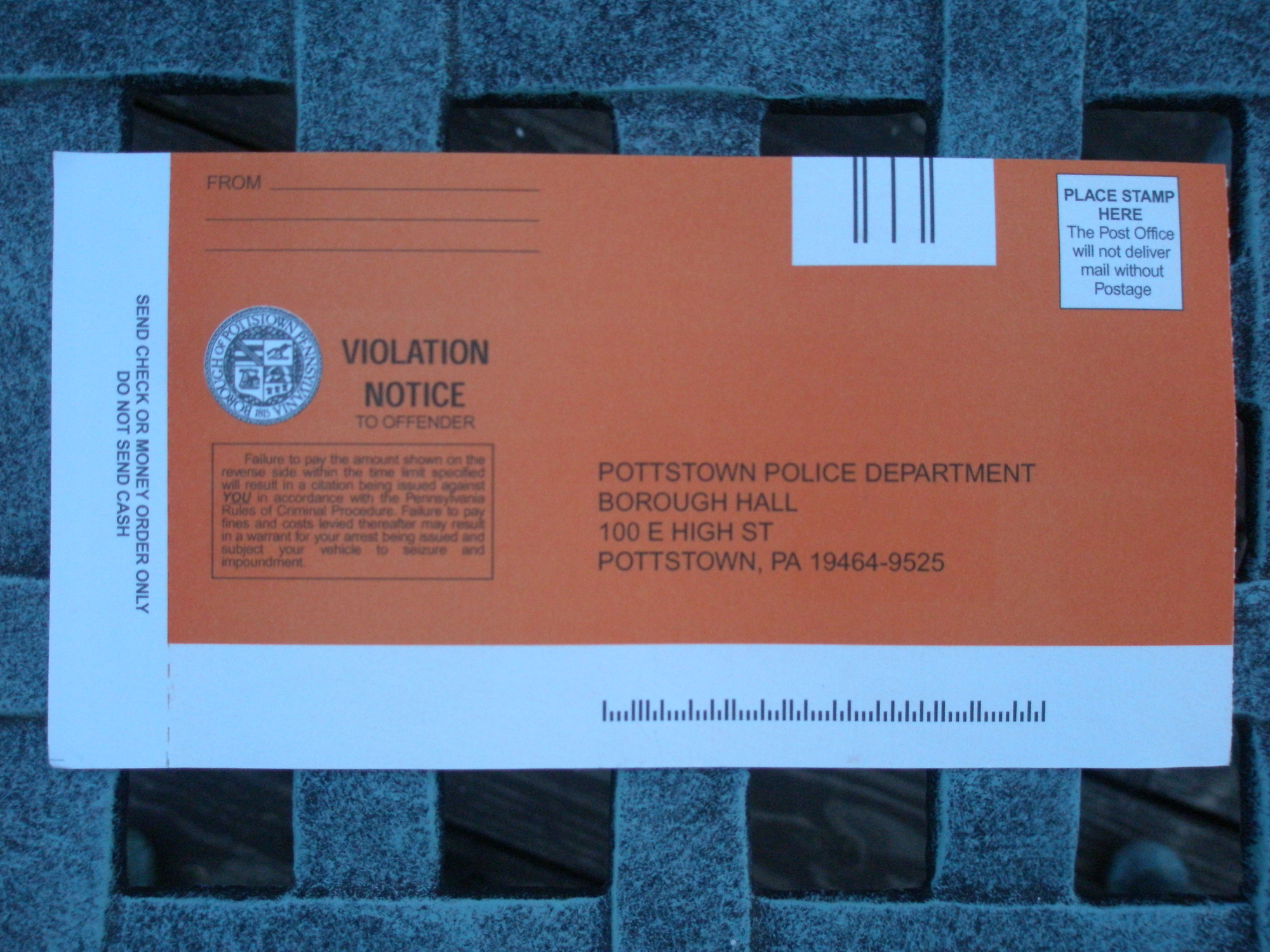
#1 The fact that you were in a 3-hour parking spot, your tire was chalked at 10:45 a.m., and the ticket was written up at 1:49 p.m., reveals an efficient, local government & law enforcement system at work. Way to go, Pottstown – I’m proud of you! (I’m actually serious.)

Forgotten cats & the arts team up!

Yes, I know that’s a cryptic title, but this is a unique fundraiser, described below. If you’re a fan of Antiques Roadshow, this is your opportunity to find out that you might not need to play the lottery anymore, and you can help the local Forgotten Cats organization and The Gallery School of Pottstown at the same time.

Ever wondered if there might be treasure in your attic? Join us on Thursday, September 23 for an antique appraisal event and find out! This evening is a joint fundraiser for the Gallery School’s scholarship fund and Forgotten Cats, a local group dedicated to helping many of the stray and abandoned cats in our neighborhoods. Eileen Rhoads, of Rhoads Auction and Antiques, is generously donating her time and expertise for this event.

The event runs from 6:00-8:30pm at the Gallery on High, 254 High St. There is a $10 entrance fee, which entitles you to one free appraisal. Each additional appraisal is $5, with a maximum of 4 total items appraised per person. Light refreshments will be served.

Please RSVP to 610-326-2506 or by email.

We hope to see you there!

About the Gallery School of Pottstown
The Gallery School of Pottstown is a non-profit community art school dedicated to making the arts accessible to everyone. The proceeds from this fundraiser will go to our scholarship fund, which provides free and reduced cost art classes to children, teens and adults who demonstrate financial need.

About Forgotten Cats
Forgotten Cats helps many of the stray and abandoned cats in our neighborhoods. They help the animals receive needed medical care, get them spayed or neutered and find them a forever home.

About Rhoads Auction and Antiques
Ron and Eileen Rhoads Auction and Antiques can be found at 383 Ben Franklin Highway West, Douglassville, PA 19518. They have fifty years in the business and are the second generation serving the Delaware Valley.

(As an aside… I’m posting this from Smith Family Plaza, right in front of Borough Hall, where there’s free WiFi! I’ve been tooling around Memorial Park on a free bike from Bike Pottstown & Tri-County Bicycles. I’m about to try to find some dirt bike paths in Riverfront Park that some kids told me about over in Memorial Park. )

funky lil’ kitchen, funky lil’ life

I’d had a long day, arriving in town for a 9 a.m. meeting with another writer/blogger, and then it was on to Musikfest in Bethlehem with a contingent from Pottstown. By the time we got back into town, and I dropped someone off at their house and finally finished yakking (so much to talk about!), I was all talked out and needed a good, quiet meal to refresh me for the 90-minute drive back across the Delaware to New Jersey.

As I sat at the light at Penn and King Streets, there was practically an aura emanating from the Funky Lil’ Kitchen, and I figured the time was now: I was finally going to treat myself.

It was fairly early and there was just one couple there, sipping wine and chatting with the waiter. I got a table in the window, and the waiter must have sensed my hunger because he immediately brought over a small bowl of spicy peanuts, Funky Lil’ Kitchen’s own blend, and they took the edge off.

I took in the decor – decidedly Pottstown-chic, with Mrs. Smith pie tins on the walls, a very large utensil-clock on one wall, and a partial wall-sculpture of utensils that screens the kitchen from the dining room. I didn’t ask what music was coming through the speakers, but it was – absolutely – way funky cool. The waiter delivered my appetizer of white beans, celery, red onions and cherry tomatoes drizzled with balsamic vinegar on bruschetta, and my strength started to come back. If only I were there with my husband and a crowd of friends!

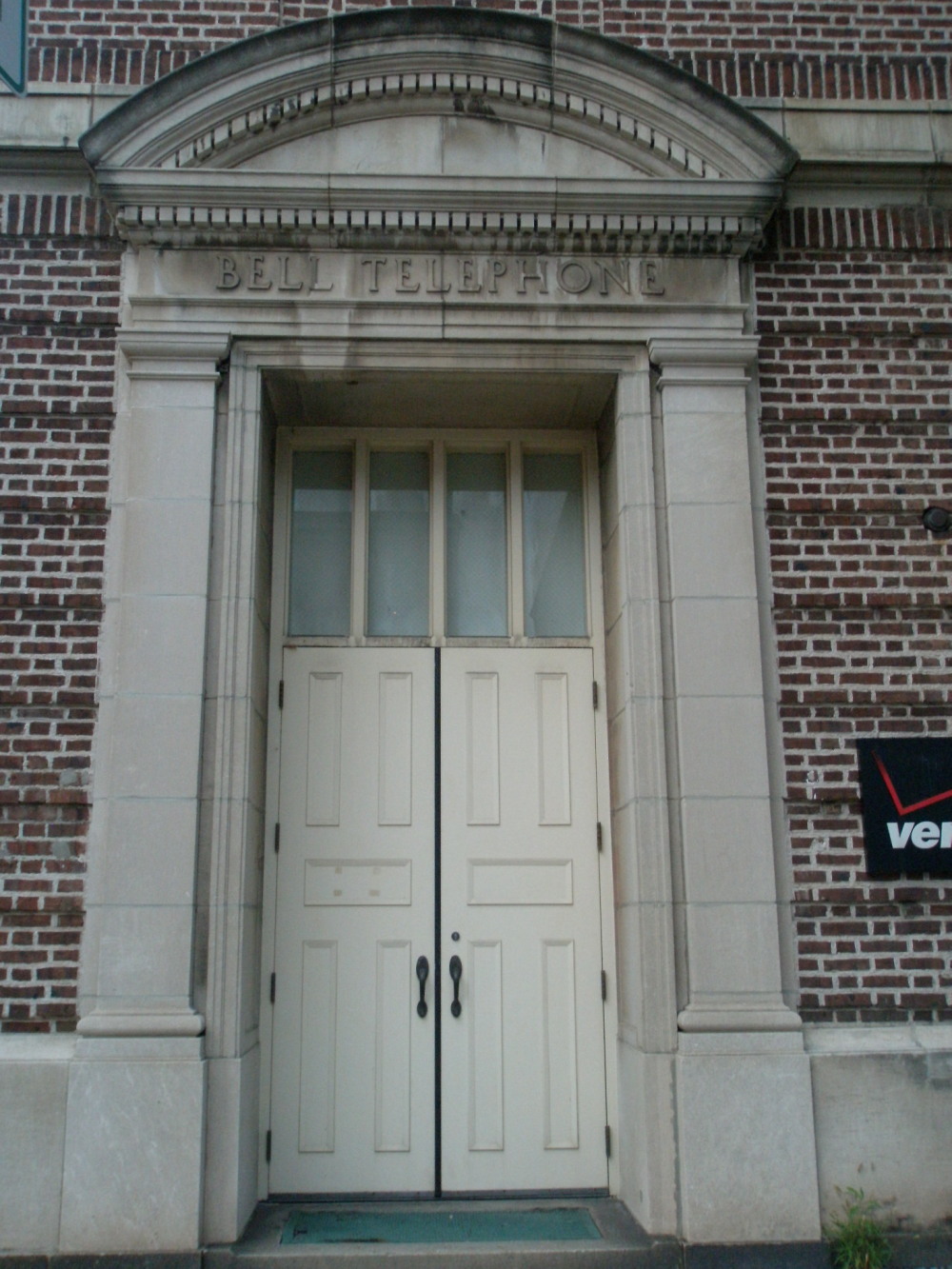
When I looked out the window then, I finally focused on what was directly across the street – a phone booth. A man was using the phone in the phone booth. Remember those? I hadn’t seen one in years. Then I zeroed in on the building – Bell Telephone – and immediately had a flashback…

Old Bell Telephone, now Verizon

My best friend from high school, Karen Brennan, and I were working for A.S.K. Cleaning Service in the summer of 1981, after our freshman years at college. I’d had an offer to be a nanny for a family on Martha’s Vineyard, but in the end, I chickened out without even asking my parents, and came home instead. None of us really knew anything about Martha’s Vineyard, not really. I had vague notions of extremely wealthy, idle people, who would only make me uncomfortable anyway. Besides, who would want to play with kids on a beach all day and get paid a boatload of money, when they could safely scrape gum off the bottoms of desks all summer?

Okay, so Karen and I had been assigned to clean the offices in the Bell Tel building before people got to work. I think we had to be there at 5:00 a.m. On the particular day I have in mind, no sooner did we get into the building than we ensconced ourselves on a sofa in the employee lounge, which had a T.V. It was July 29, 1981, and Lady Di was about to become Princess Di over in London within the hour. Young, beautiful Diana – only a year or two older than we were – was marrying into the Royal Family, in a real, live, televised fairytale. We watched in awe as the pomp unfolded, two American Cinderellas holding out hope for our own Prince Charmings, while literally clutching mops and dust rags. By 6:20, they were married, we watched for a few more minutes, and then went to swab the floors of the dark, eerie, windowless cable room downstairs.

But I digress… flash forward almost three decades…

Across the street from that episode of “character-building,” I was very fortunate on a recent evening in August 2010 to be able to indulge in Chef Michael Falcone’s sautéed salmon cake with pineapple salsa on a bed of basmati rice. It was an exquisitely refreshing summer combination. I had no room for dessert, although I was impressed with the dessert menu, which was written on a large green bottle that the waiter held in front of me (chalk up another point in the “funk factor” column.) But you know I will be going back soon for “Mom’s Chocolate Cake.” I opted instead for a milky-smooth cappuccino, which gave me the final boost I needed to propel me on my way.

I am so glad I didn’t wait any longer to try out this fun and inventive restaurant in downtown Pottstown. You don’t have to be royalty for your culinary dreams to come true!

Notes:
1) I just Googled “Pottstown-chic” and the phrase doesn’t seem to exist, so I want credit for coining it.
2) Thank you KBM for the details and the trip down memory lane!

About Funky
Hours: Dinner (Tuesday-Saturday) 5:00-9:00
Address: 232 King Street, Pottstown, PA
Voice: 610.326.7400
Email: funkylilkitchen@email.com
Reservations: Highly Recommended
Dress: Smart Casual
Credit Cards: Visa, MC, AMEX & Discover
Parking: Public lot & on street (the lot across the street is now privately owned! Thanks for the heads-up from reader Jeff Leflar!)