The pocket parks of central Pottstown

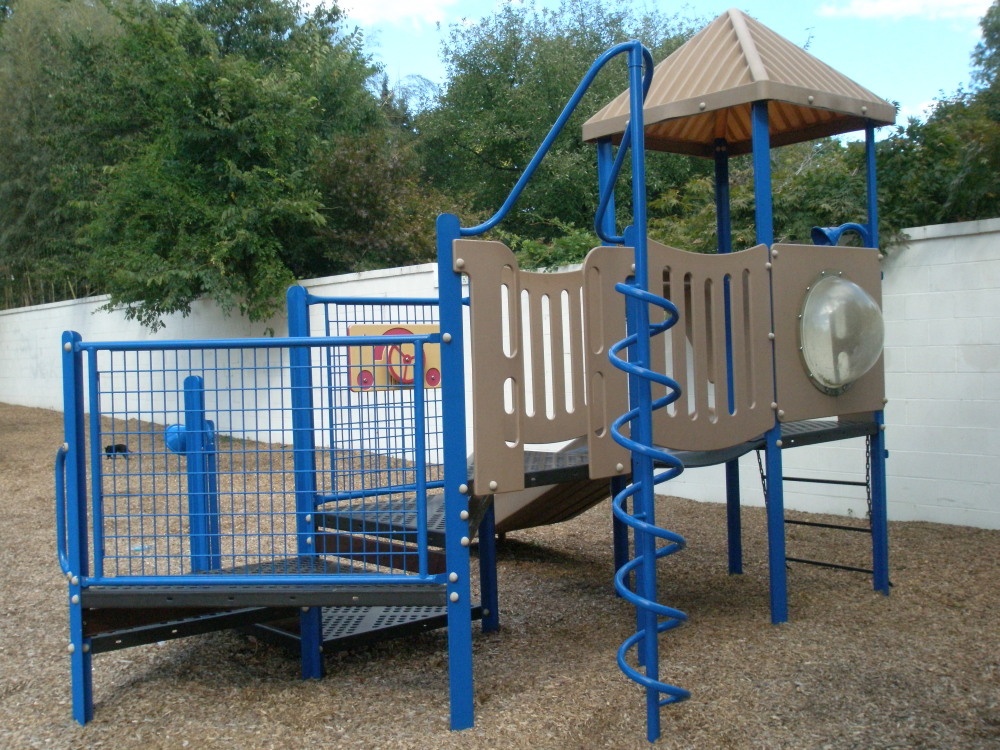
The Penn State researchers categorize parks that are less than 1 acre in size as mini-parks or pocket parks. Pottstown has many such parks scattered throughout the Borough. While it is desirable for every park to offer a range of opportunities for physical activity, social connections, contact with nature and elements that strengthen a sense of place, these mini-parks cater to children and typically include playground equipment set in mulch, perhaps a bike rack and some benches or picnic tables.

In general, Pottstown’s pocket parks are clean and have an open feeling to them with good visibility from the street. The equipment is practically new, colorful and cheery, providing active play space in neighborhoods that have fairly dense housing, narrow lots and small backyards that are not adequate for the personal play equipment that can be found on large, suburban lots. These spaces serve as neighborhood gathering spots for independent children as well as for parents and children together.

In central Pottstown, there are two parks that fit this description and one, New Chestnut Street Park, which offers even more possibilities for social connections.

Walnut Street Park is on Walnut between Grant and N. Adams Streets.
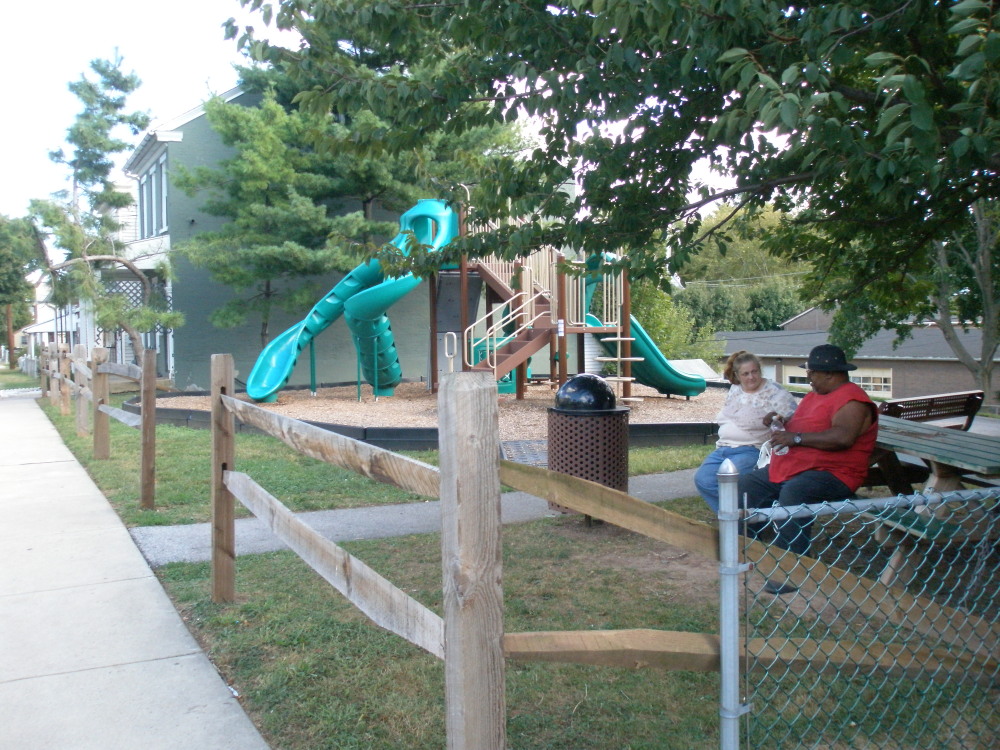
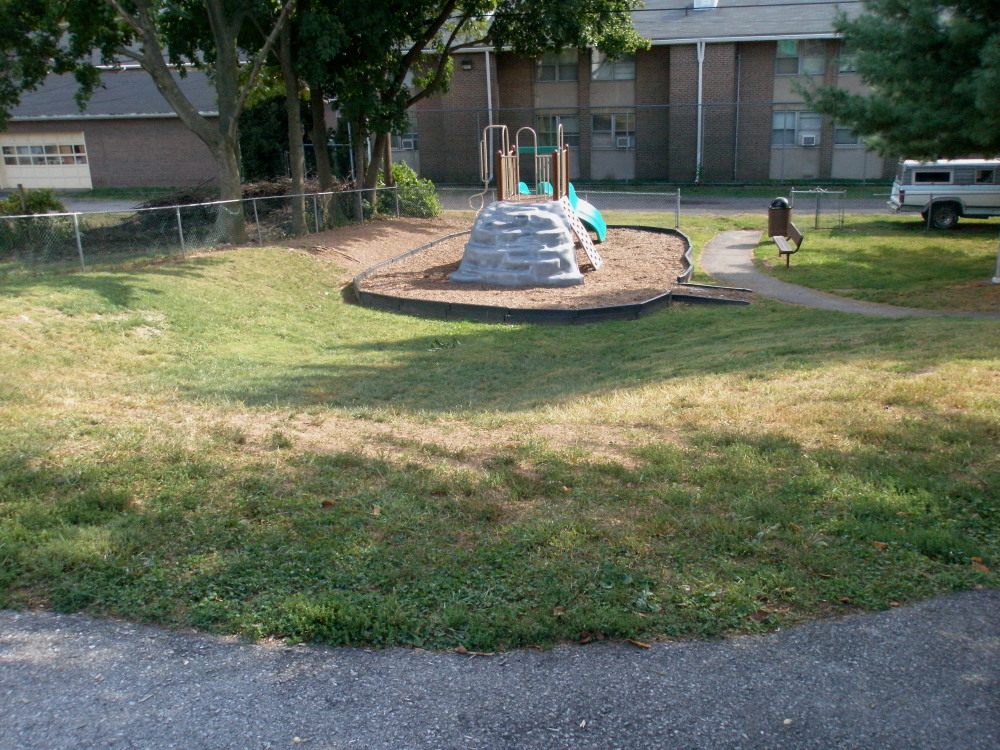
Walnut St. Park
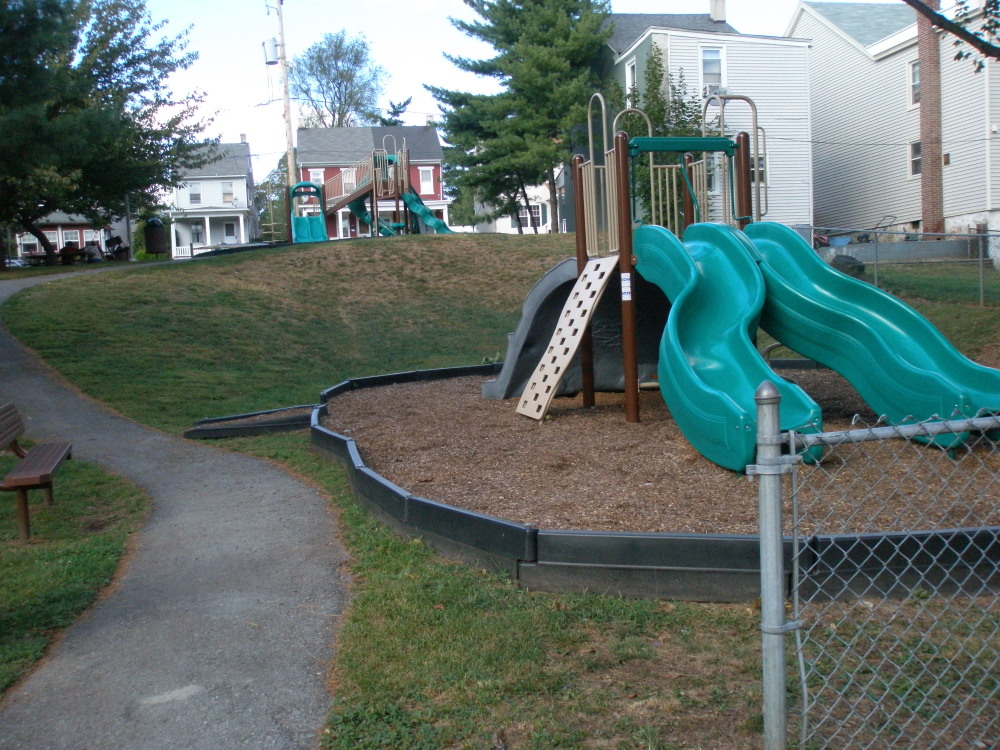
The interesting feature of this park is the dramatic slope between the two play areas, creating lower and upper playgrounds. From the street, it looks like there’s just one play area, but if you go inside the park just a few steps, you’ll see another play area down below, which can also be accessed from Rowan Alley. Some local residents in the park the day I visited said it’s the best sledding in Pottstown!

The slide closest to Walnut Street will also give a good jolt to a middle-aged spine! I will here admit that I have done some testing of the sliding boards at some of these pocket parks. In my defense:

(1) I had promised the Health and Wellness Foundation that we would try out important features of each park.
(2) When I was growing up, the high slide at the Franklin School playground was metal and, unless weather conditions were perfect and there was no humidity, it was hard to get in a good run. These new plastic slides send you flying!
(3) I guess I just refuse to grow up. 🙂

Moving on…
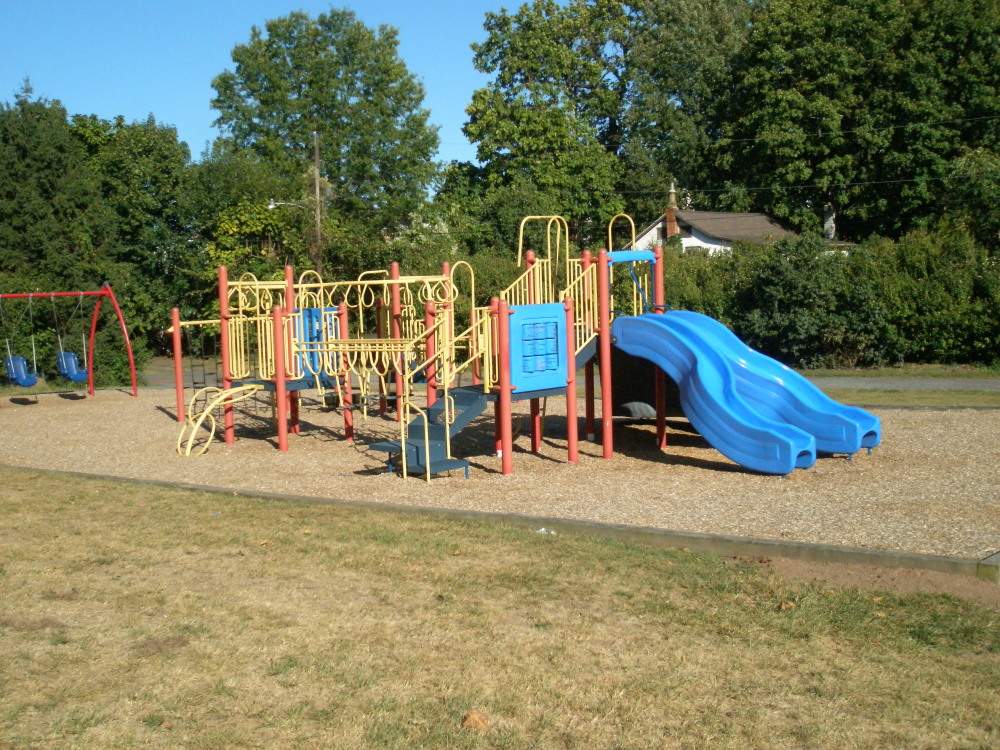
Washington St. Park

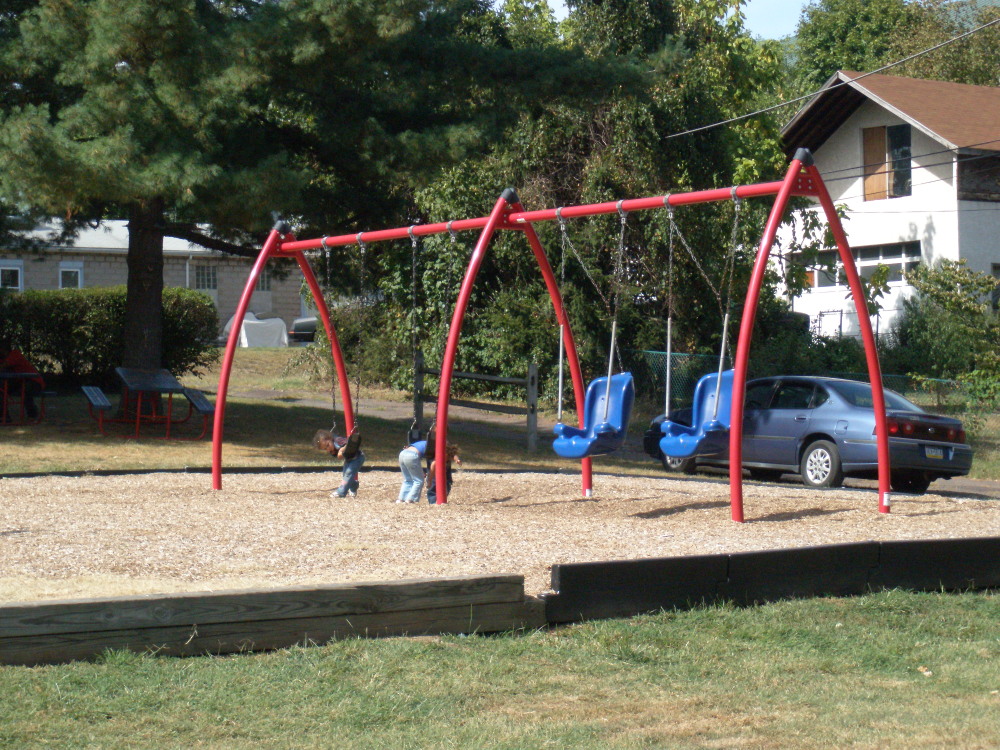
Washington Street Park actually lives on East Street, right at the “T” where that leg of Washington Street ends. It also offers new, fun equipment and plenty of space for running around. A new chain link fence prevents the youngest children from dashing off the playground into the street. I took a few moments at the end of the afternoon to just swing, something I hadn’t done in a very long time. I’d forgotten how meditative it can be. Adults: swinging is not just for kids!

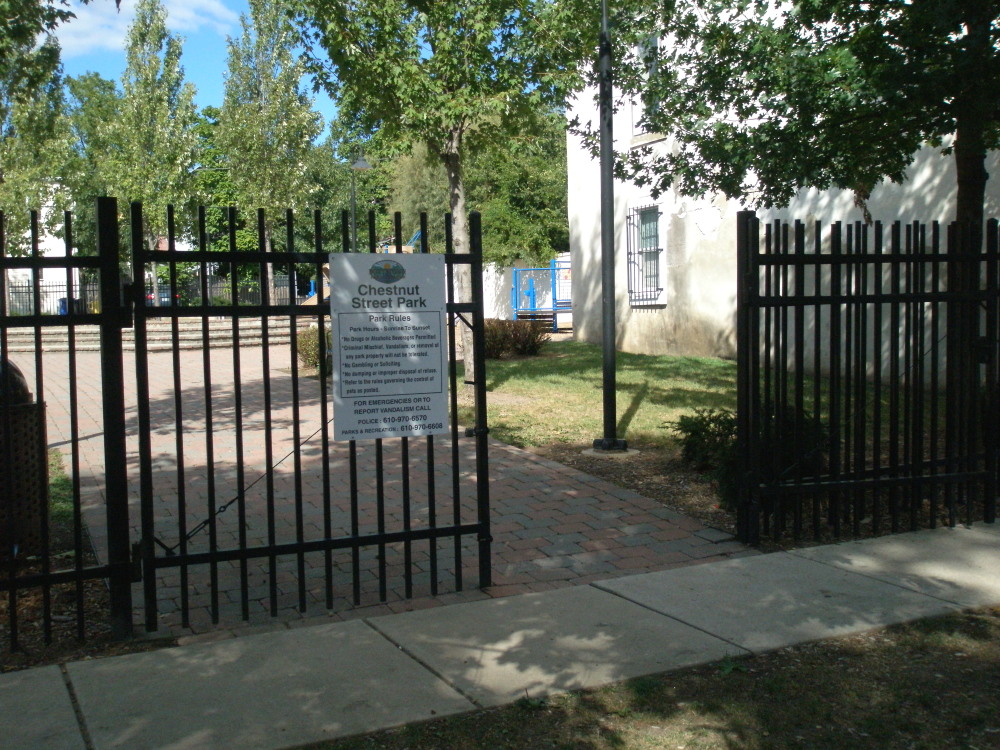
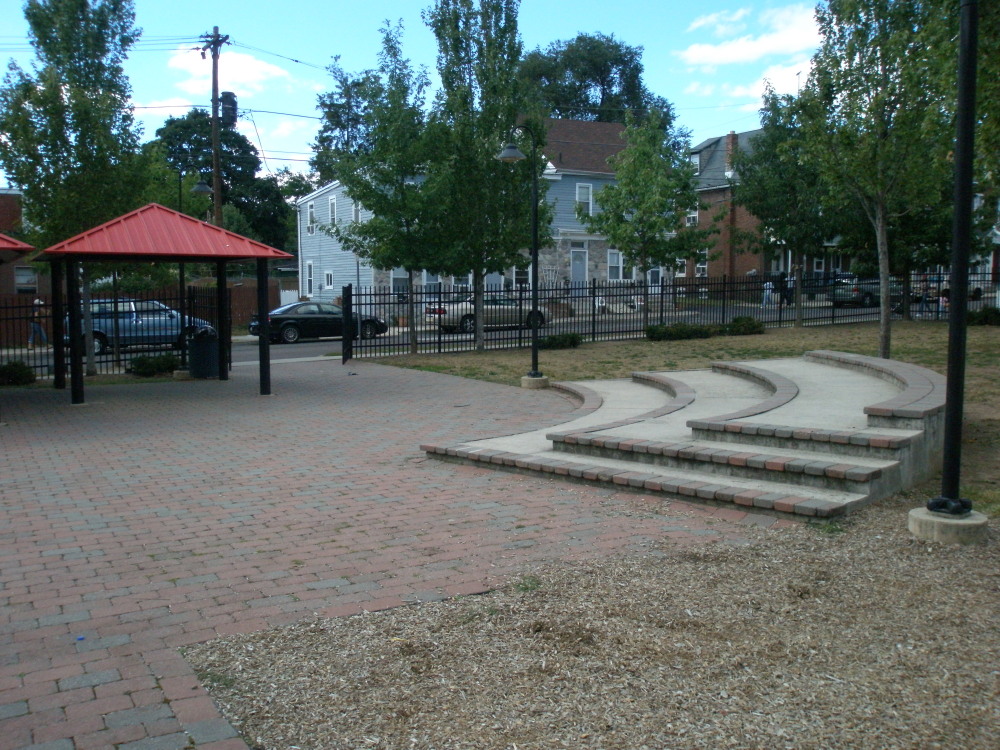
Heading down Washington Street, to the intersection with Chestnut, brings you to the New Chestnut Street Park. This very attractive, practically brand-new, fenced park has become a popular venue for community-wide events such as National Night Out, as well as for a local community gardening day and private parties.
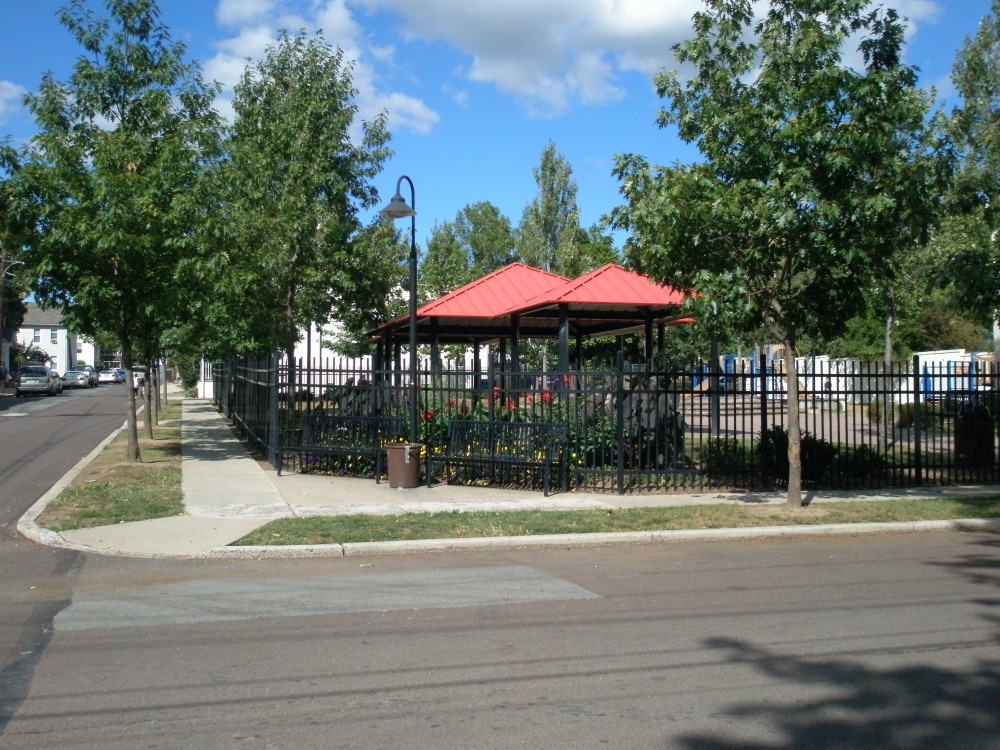
New Chestnut Street Park

A few resident elders can usually be found on a bench right on the corner, keeping an eye on things. Because the park has a pavilion with access to electricity, it appeals to and serves a broad range of residents, not just children. It’s remarkable how the addition of that kind of equipment, which isn’t all that elaborate, can inspire wider and more frequent use of a pocket park. Something to think about if/when there’s funding for renovations or upgrades to other pocket parks in town.

Now I just have to say a few words about the Old Chestnut Street Park, which appeared in the Penn State study but is now vacant. This quarter-acre park, which is on the north side of Chestnut Street, between Franklin and Washington Streets, is actually owned by the School District. This will be a site to keep your eye on as the School District conducts their facilities analysis because the idea of a community garden at this location has been floated out there by some neighborhood residents.
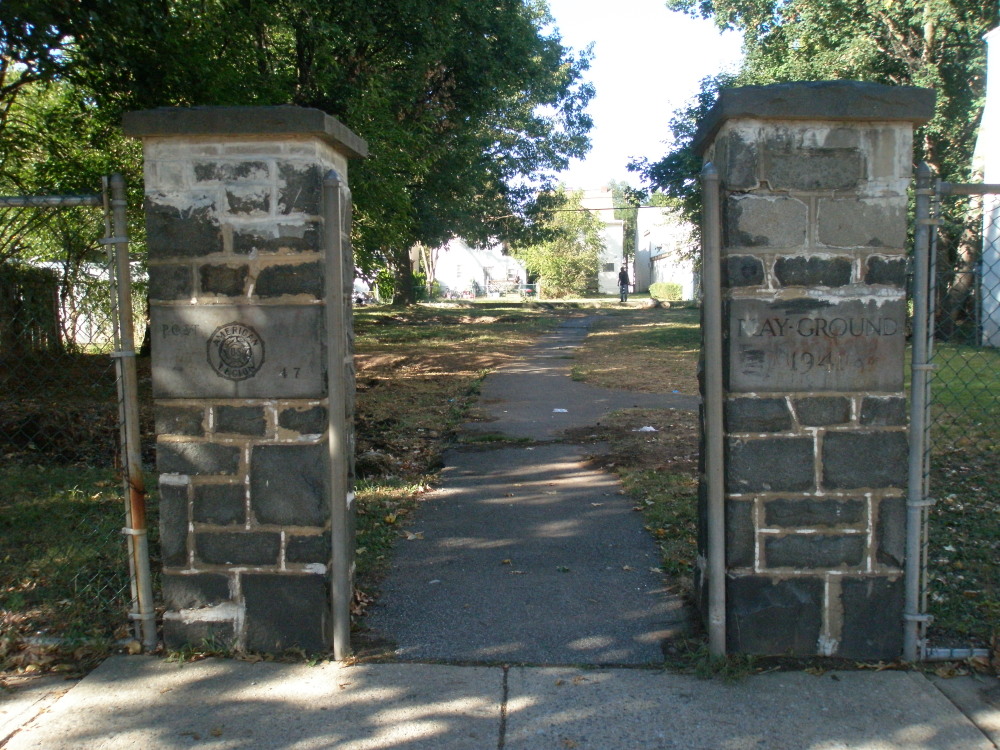
This property also has an interesting history. As you stand at the park entrance and look across the street, you’ll see two really cool, brick buildings that used to be public schools; they’ve got red boards over the windows. The one on the left was Hamilton School, built in 1881 (424 Chestnut), and the one on the right was Adams School, built in 1887 (420 Chestnut). While there are some clues on the buildings themselves, I consulted my handy Pottstown School Directory from 1892-93 that came in a small batch of things I won on eBay a while back. (I’ll eventually give this stuff to the Historical Society or the District, but I’m still working my way through it.) Anyway, this little book is filled with all sorts of interesting tidbits about the District, including the fact that there was a school called “Franklin” on the empty park site, way back in the 1890s. It seems to have had two second-grade classes, taught by Sue B. Fritz and Libbie Krause.
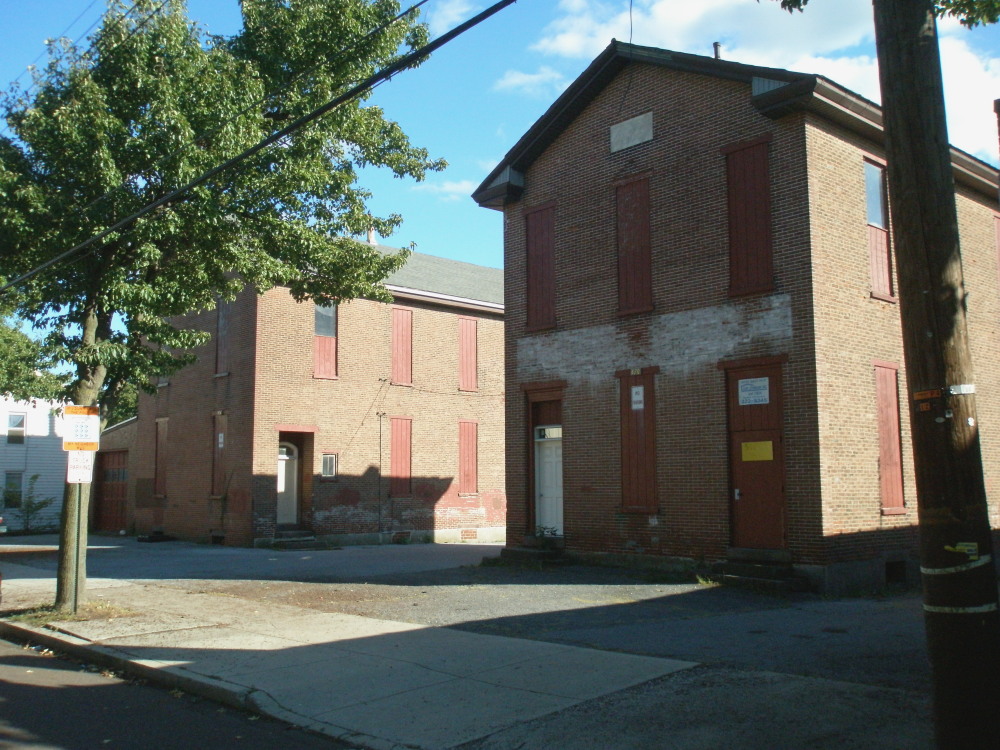
Former Hamilton & Adams Schools

Isn’t it kind of wild to imagine how every piece of land has its own history and its own stories to tell?

WALNUT STREET PARK
Location: Walnut Street between Grant & N. Adams Streets, Pottstown, PA 19464
Size: 0.5 acres
Suitability: Approximately 5-12 years old.
Facilities: Two play areas, picnic tables, benches; shady and sunny areas.
Activities + tips: Lower playground seems more appropriate for younger children. Locals report excellent sledding conditions on the hill!
Hours: Dawn until dusk.

WASHINGTON STREET PARK
Location: Intersection of East and Washington Streets, Pottstown, PA 19464
Size: 0.5 acres
Suitability: Approximately 5-12 years old.
Facilities: Playground, swings, picnic tables, benches; shady and sunny areas; small, grassy multi-purpose open space with slight downward slope.
Activities + tips: New fencing along East Street prevents younger children from running into the street.
Hours: Dawn until dusk.

NEW CHESTNUT STREET PARK
Location: Corner of Chestnut and N. Washington Streets, Pottstown, PA 19464
Size: 0.5 acres
Suitability: All ages.
Facilities: 2 sets of play equipment; multi-purpose, grassy space; paved area and pavilion with electricity; mini-amphitheater; community flower gardens & lovely landscaping.
Activities + tips: Call the rec. dept. for information on rentals. Pitch in if there’s a community gardening day next spring!
Hours: Dawn to dusk; sometimes later for groups with event permit from Rec. Dept.

OLD CHESTNUT STREET PARK
Location: In between 417-427 Chestnut Street, Pottstown, PA 19464
Size: 0.25 acres
Suitability: All ages.
Facilities & Activities: Paved path, open space; seems to be used mainly as a pedestrian pass-through.
Tips: Small site owned by Pottstown School District, which is currently doing District-wide facilities analysis. Check out the cool former school buildings across the street!
Hours: Dawn to dusk.

Contact regarding any park rentals:
Pottstown Parks & Recreation Department
Borough Hall, 100 E. High Street, Pottstown, PA 19464
610-970-6500
Click on the Department’s “Special Events” tab to learn more about upcoming events.

Follow the parks series at Mission: Healthy Living, Positively!Pottstown, Twitter (PositivelyPtown), Facebook, and The Mercury.

PHOTO GALLERY
Walnut St. lower playground

Walnut St. Hill

Washington St. swings

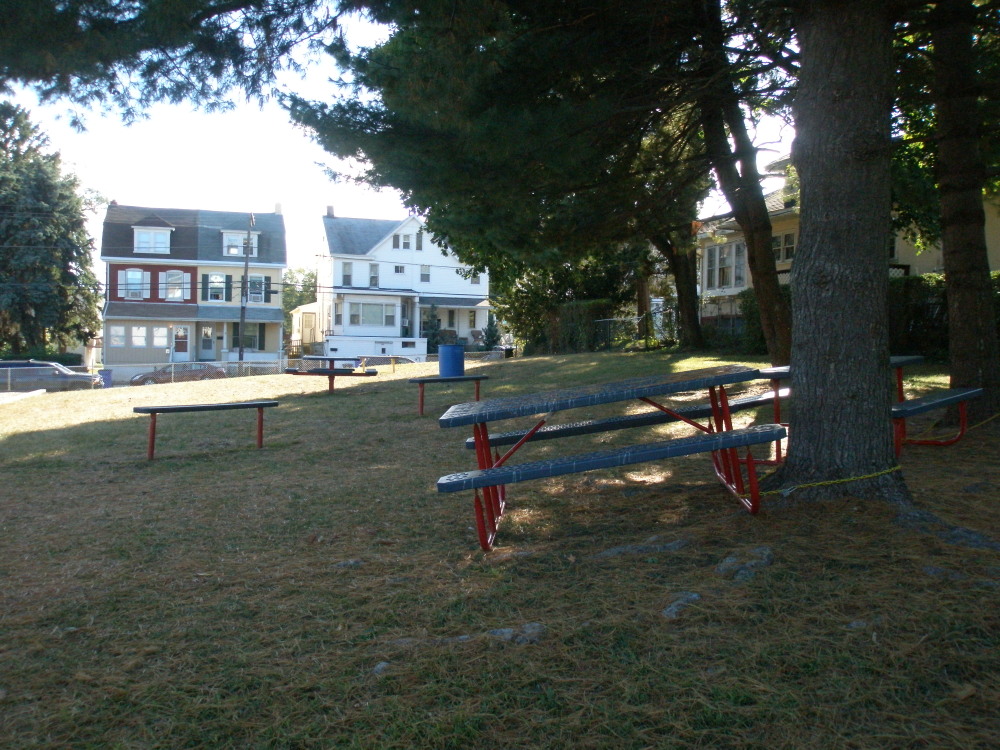
Washington St. grove

New Chestnut St. entrance

New Chestnut plaza

New Chestnut play area

“Tell us what you think about Pottstown.”

That was an online headline at The Mercury this past Friday, June 25. And then it said, “What positive changes need to be made for Pottstown borough to move forward? Tell us in the comments section below.”

Hmmm… I wondered, “Is this a set-up? Is The Mercury deliberately taunting me over here at Positively!Pottstown?”

I’m sorry, dear readers, I couldn’t hold this in any longer! Here’s what I posted over there this afternoon (as Number5).

” Dear Mercury: thanks for asking! I’ve been thinking about doing a series of blog posts about all these interrelated issues, so I guess this is kind of a jumpstart. Sorry for the length – a lot of pent-up thoughts! And my m.o. is to throw a lot out there and see what resonates on the ground – that’s the spirit in which this is offered.

I’m going to stick with the positive spin of the question – suggesting positive changes.

Pottstown, what’s your story? You need a vision and a voice to communicate that vision. It’s got to go deeper & get more specific than the generalities in study after study. For example: former industrial center retains what is good about its small town past AND re-invents itself for the 21st century. It values its river, historic architecture, walkability, neighborhoods, community gardens and businesses that MAKE things. While the industry used to be all about steel, pies, auto parts, etc., now the town makes art, dance, music, recycled-fashion designs, and solar/green technologies. What the heck, maybe it’s home to several organic coffee roasters too. (This is an example!)

What if just about every decision made by town or a local property owner or civic group took that kind of vision into consideration? There are places billing themselves as “sustainable cities.” Maybe Pottstown could be a “sustainable town”? Could something like that provide the framework for guiding revitalization decisions in Pottstown?

Pottstown has never been for the faint-of-heart; hard-working, gutsy immigrants made this community what it was in its heyday. Now is no different. Arts and business entrepreneurs, who have higher risk levels than the average Joe, would totally be in keeping with Pottstown’s immigrant past.

So, where are these risk-takers? You’ve got a bunch of them in the arts and restaurant community in town already. Another commenter has already mentioned them. Any day now, the Pottstown Arts & Cultural Alliance is going to launch a totally cool new website. PACA is on its way to putting a very new face on outsiders’ perceptions of Pottstown. They are adding value to this community by what they do every day and, now, by more effectively communicating what they offer. And they’re just getting started.

The business community and property owners are critical. Bottom line: You gotta fill the spaces on High Street. I’m putting out there right now: If anyone in the business and real estate community wants to put together a clearinghouse website to market their Pottstown properties in an attractive, easy-to-understand format that SELLS, I will gladly help make that happen within, say, 90 days. I’m from out of town and I’ve gone looking for properties as though I were an investor, and it’s not easy to even find out what’s available, let alone where might be some good locations for specific uses like a café or a used bookstore/literary venue or whatever.

Community groups: reduce fragmentation wherever possible. Join forces around a common, positive, pro-active vision. Link to and intersect with the arts, business & educational communities wherever appropriate.

Good government. There’s no way around this. There has to be a “good government” halo around Boro Hall that can be seen from Routes 422 and 100. Anyone stepping into the building has to know they will be treated courteously, fairly and consistently. There’s got to be follow-through. You got an ordinance on the books, you enforce it. If it doesn’t make sense in your new vision of yourself, you set out on a course of careful, PUBLIC consideration, you ENGAGE the affected parties/property owners, and you change it. The arts, business and community groups can go pretty far if they’re all pulling in the same direction, but unless the foundation of government is strong and inspires confidence, yeah, people are going to be hard-pressed to trust their investments here.

Nail down the vision ASAP. Preferably without paying for another study! Communicate the vision, whatever it is, through your ACTIONS. (I’ve got some more specifics to throw out there, but will deal with that on the blog.) Everyone: get your stories straight and tell it that way, over and over again, every time your organization or collective reaches a milestone, large or small. Give the naysayers less and less to talk about, especially on public message boards! ”

” Sorry, meant to sign that post:

Sue Repko
Positively!Pottstown ”

Community Gardens & First Suburbs – the start of a (long) conversation

This is the first in a series about First Suburbs of Southeastern PA.

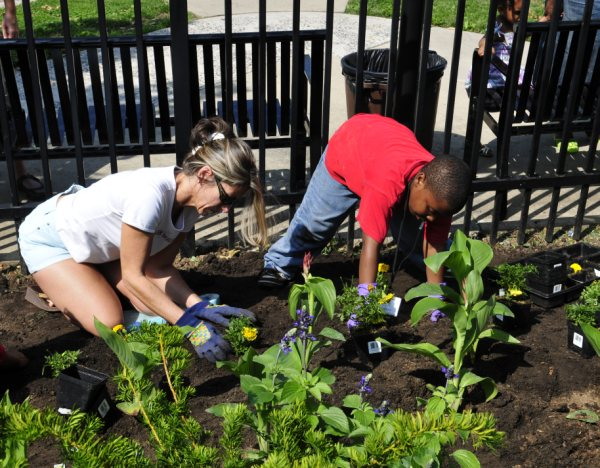
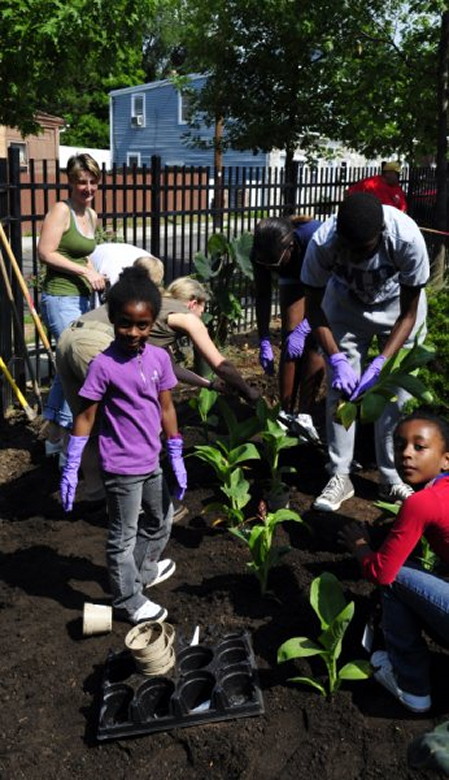
This past Saturday a community gardening project took place at a corner park in the heart of Pottstown’s historically African-American neighborhood. The Washington Street corridor has faced its share of challenges over the years – challenges that many would characterize simply as “urban.” But by all accounts the gardening project was a huge success, bringing together a diverse array of children and adults, members of the broader community, and the energy of two organizations – Citizens for Pottstown’s Revitalization and Preservation Pottstown.

At The Mercury, this was news, before and after the event. Two local blogs, Code Blue and Save Pottstown!, promoted it ahead of time. And I certainly was thrilled to blog about it after the fact, thanks to the quick emailing of photos and updates from those in attendance.

To me, the fact that there was such a buzz is interesting in and of itself. What did this activity spark in individuals and the community? Can we try to define it, and in the process, become conscious of it, and try to do it again? There are all kinds of metaphors that spring forth from the gardening/growing process that are apt here. But I also think the actual process of growing food and flowers is good and vital… and not for just one neighborhood. Rather, it’s something for all of Pottstown and the school district to consider as a powerful tool for revitalization, which brings me to the First Suburbs Project.

According to their website, “The Southeastern Pennsylvania (SEPA) First Suburbs Project is a coalition of community organizations and institutions focused on solving common challenges facing the older, developed suburbs of Bucks, Chester, Delaware, and Montgomery Counties. These communities share conditions of diminishing economic investment, declining infrastructure, struggling school districts, and social services lagging behind the needs of their residents.” Older suburbs and towns, like Pottstown, now find themselves face-to-face with a host of public challenges that were once thought to be the province of larger cities.

These conditions are the result of a self-fulfilling syndrome that works something like this:

Over a long period of time, disinvestment occurs due to range of causes, usually a combination of public policy and “free market” forces. Businesses and homeowners with rising incomes leave for literally greener pastures, creating sprawl. The people and businesses that remain must pay more in taxes to maintain the infrastructure, level of municipal services and school system. But these tax increases are too much for some more people and businesses; they leave. Over time, in an attempt to rein in taxes, services are cut. Property values do not go up under these circumstances, making properties concentrated in these areas attractive to investors, and decreasing the percentage of homeowners in a community. This downward spiral picks up momentum, and the chances for an economic recovery diminish even further

The (SEPA) First Suburbs Project advocates “state policy changes and regional solutions” as the best way to tackle these common challenges.

There will be a regional public meeting of the First Suburbs Project this Thursday, June 10 from 7-8:30 pm at South Hall on the Western Campus of Montgomery County Community College in Pottstown. SEPA First Suburbs coalition members want to hear the concerns, ideas, and questions of area residents, organizations, businesses and government officials about their very real experiences in the kind of environment described above.

I’m a firm believer in the potential for regional planning and public policy to mitigate these problems, and I encourage everyone to get to this meeting, speak out, listen and learn more about the possibilities for changing some of the inequities in public policy at the regional, state and even federal levels.

That’s on the one hand.

On the other hand, Pottstown cannot afford to wait for larger, slow-moving, governmental/political behemoths to change their own deeply-entrenched fiscal and social policies. Pottstown must continue to try to define a new course for itself ASAP… while simultaneously pursuing broader changes with other communities that find themselves in the same boat.

And this is where I come back to community gardens.

Below is my quick list of what might have made that such a great experience for those who were involved, and why it brings a smile and hope to someone reading about it. Readers should feel free to add to the list.

What’s Great about Gardening

    – Getting hands dirty; being a kid (again)
    – Adding beauty to surroundings
    – Transformation before your very eyes
    – Having responsibility to care for something that’s your own
    – Being given the chance to nurture
    – Anticipating wholesome food
    – Being around cheerful adults
    – Being pro-active; feeling of taking control, being in charge
    – Sharing snacks/food with other human beings after a job well done
    – Feeling that you are part of a caring community, not alone

    As I’ve blogged before: Community gardens are growing in popularity, especially in places where wholesome foods, such as fresh fruits and vegetables, are not available or are too expensive. Basically, an available lot is divided up among interested residents and/or groups/clubs. Someone who knows something about gardening coordinates and teaches, so that participants end up with a steady flow of food and flowers. Of course, donations of tools, plants, seeds, soil are sought to make it all happen. Community gardens get people outside, get neighbors working together, provide better food at a lower price, raise awareness about nutrition and food production, and put an empty or nuisance lot to good use.

    During World Wars I and II, Victory Gardens in private yards and public parks were considered one’s patriotic duty to ease pressure on the food supply.

    So, what does this have to do with Pottstown’s revitalization on a larger scale?

    Private gardens were very much a part of my growing up. Just about everyone grew tomatoes. Picking apples and making applesauce were, and still are, an early fall tradition for my mom. These were traditions enjoyed by many immigrant, hard-working families that came to Pottstown to work, raise a family and improve their standard of living. Small-scale gardening is part of Pottstown’s past, and in these fiscally-challenging times, it makes a whole lot of economic sense to think about how to bring it back… but with a modern take.

    What if Pottstown became known as a place with a strong private and community gardening movement in its neighborhoods and the schools?

    As a non-resident, I don’t know the extent to which any of the items on the brainstorming list below are possible or already in the works. My inclination is to always just put ideas out there to see if any of them resonate on the ground, where people live.

    Ideas for Extending the Washington/Chestnut Park Project

– Identify a few Borough- or District-owned lots throughout town that might be suitable
– Factor garden space into the District’s land/building planning process, right up there with other energy-saving/sustainability measures
– Seek out several individuals with expertise and enthusiasm to guide smaller, working groups & organizations around town and in the schools.
– Get Bud Heller, Director of Food Services for the School District, on the case. Heller is a tireless advocate who has testified before Congress on behalf of the Fresh Food Produce Association and the School Nutrition Organization.
– Incorporate student-grown produce into menus?
– Is the healthy food program at Edgewood still going strong? Expand to other schools?
– Incorporate organic, small-scale food-growing concepts into science curricula
– Highlight the natural world in fiction, poetry and non-fiction in the English curricula
– Have science & English classes periodically come together for joint projects
– Is there a sustainability club in the high school?
– Have there been quantifiable efforts to reduce waste – in the cafeteria, paper, lights in classrooms, etc.– that engage the kids? See The Green Cup Challenge, which the Hill School has participated in. Tap The Hill, Montgomery County Community College and the Pottstown Garden Club for advice. So many people and resources right in Pottstown!
– Gardening does not have to be expensive; built-in labor pool in schools. Knowledgeable and generous landscapers and suppliers are out there, such as Eric Schmidt of Colonial Gardens, who provided materials for Pottstown’s gardening project.
– The Pottstown Health & Wellness Foundation’s grant program and Mission Good Nutrition videos are additional, key local resources.

The community gardening concept could be a way for Pottstown – and other First Suburbs – to take a past practice that was sensible and sustainable and re-claim it in a way that will appeal to anyone who wants to live in an engaged, progressive-minded community today. The power of people working together on an activity so basic to human survival should not be underestimated. Last weekend’s project at Washington & Chestnut Streets has given a glimpse of the positive, communal energy in Pottstown that is looking for a meaningful outlet. In a time when so much in the world seems out of our control, gardening can put some kind of power back into the hands of the people.

Note: The Pottstown Health & Wellness Foundation’s grant program and Mission Good Nutrition videos are additional, key local resources, which were inadvertently omitted from the original post.

Sue Repko is a writer, licensed urban planner in New Jersey and a member of the American Institute of Certified Planners. She grew up in Pottstown and blogs at Positively!Pottstown.

Park planting brings neighbors together

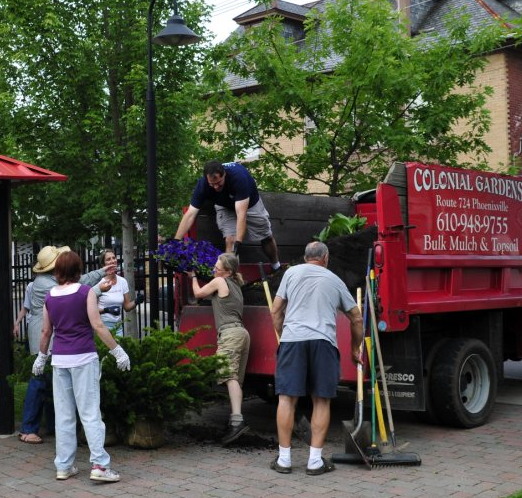
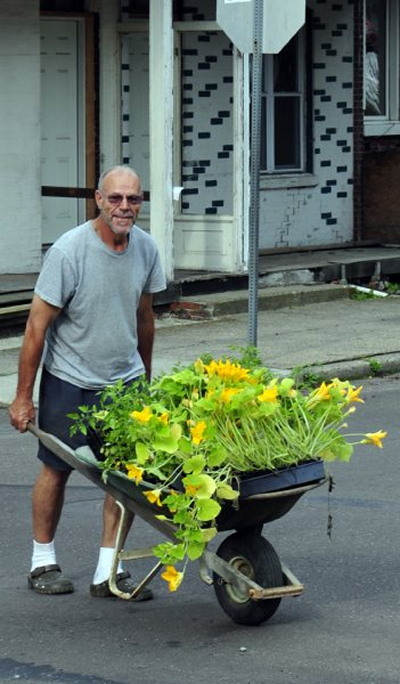
Unloading plants

Thanks to Tom Carroll of Preservation Pottstown for these photos from today’s gardening activities at the park at the corner of Washington and Chestnut!

Katy Jackson, one of the organizers from Citizens for Pottstown’s Revitalization, says via email, “We just arrived home from the park planting and it was superb!! The children in the neighborhood were as excited as they could be. They did a great job and each child has their own tomato plant, named, and several squash plants. It was a huge success…”

Kudos to all who helped bring the neighborhood together outdoors for this beautification and healthy living activity, and a big THANK YOU to Eric Schmidt of Colonial Gardens for the donation of materials!

Janet & friend
New gardeners
David on the move!

Citizens for Pottstown’s Revitalization – Take 1

I was in town last weekend for several activities, and first on tap, after my grilled cheese & pie at The Very Best, was attending the monthly meeting of Citizens for Pottstown’s Revitalization, a relatively new grassroots coalition of borough residents. (You gotta love a URL like http://www.vivapottstown.com!) The group’s mission is to instill pride and empower residents to get involved and take positive actions in their neighborhoods and throughout town. The two leaders, Katy Jackson and Anna Johnson, have lined up a series of speakers for their meetings, which take place at the PAL building at 146 King Street on the 3rd Friday of the month, beginning at 7 p.m. and lasting about an hour.

I had met Katy a few weeks before (and Anna briefly), when Katy took me on a walking tour of her block in the vicinity of King, Washington, Chestnut, and Franklin Streets. It was one of those gorgeous, sunny, warm afternoons when everyone seemed happy just to be outside. So, there’s this sweet park at the corner of Washington and Chestnut that was just abuzz with activity. Plans are in the works for neighbors to (hopefully) plant some flowers in one area, and for art students from the high school to use a block wall at the back of the park as a kind of rotating exhibit space to showcase their work throughout the year.

I’m not sure how far along the residents are in working out this next concept, so I’ll just say this: there’s a chance there will be a space available in the neighborhood for a community garden. Community gardens are growing in popularity, especially in places where wholesome foods, such as fresh fruits and vegetables, are not available or are too expensive. Basically, a lot is divided up among interested residents and/or groups/clubs. Someone who knows something about gardening coordinates & teaches, so that participants end up with a steady flow of food and even flowers. Of course, donations of tools, plants, seeds, soil are sought to make it all happen.

Community gardens get people outside, get neighbors working together, provide better food at a lower price, raise awareness about nutrition and food production, and put an empty or nuisance lot to good use. That’s a lot of win-wins in there. So, if this happens, maybe it could be a kind of pilot project for other gardens around town.

But this wasn’t what this post was even supposed to be about! I’ll try again in the next one…

Blog at WordPress.com.

Up ↑