Riverfront proposal: Tough decision

The post that follows was also submitted to The Mercury’s online comments for today’s article, “Senior housing proposed for Pottstown’s riverfront.” Some of the major parameters:
– the Borough would sell a 1.5 acre parcel on Industrial Highway to the developer at fair-market value
– the housing would be for seniors making no more than 62% of the area’s median income
– 55 rental units, all 1-2 bedrooms
– the developer would be getting tax credits to build the project
– the developer would pay property taxes

I sincerely hope Pottstown is in a transition toward becoming a community that works together, has public conversations about its future, and then acts on the vision that results from those conversations. This project proposal comes at a time when the town has not gotten its new system into place. This project is forcing the Borough into a corner because it has a fast-approaching deadline for tax credits. (How are tax credits not a government subsidy? Could anyone provide the name of the specific tax credit program the developer is applying to? Are they LIHTC?) Okay, though, sometimes that’s just the way the ball bounces… you gotta deal with what’s in front of you.

Let’s put this conversation into the context of other, very relevant issues that I heard/read were discussed at the same meeting.

(1) The Norfolk Southern line is not likely to disappear from the waterfront anytime soon. In fact, they will likely be increasing their usage of it. Now you’ve got a huge constraint on any waterfront planning. All the more reason to think through what you want at that gateway.

Typically, people with limited economic choices live on top of highways and railroad tracks. I hope that Council is engaging in dialogue with the railroad about its plans, or I fear for the future of the residential area that is being created in the vicinity. Will the current townhouses become investor-owned 10 years down the line? All the more reason to have an unhurried, public conversation about the future of that area and a plan & strategy to encourage more commercial uses.

For the past six months there’s been a lot of talk about the 44% rental housing stock in Pottstown. How does this project help reverse that particular bottom line? And how much new money will people at the projected income level inject into Pottstown’s economy? Property taxes are one part of the equation. Disposable income of the new residents is another. So is the perception that potential visitors, business and home owners have of Pottstown.

(2) A presentation was made by Main Street Manager Leighton Wildrick for the year-round lighting up of a few blocks of High Street. I wasn’t at the meeting but saw a preview of this when I happened to stop by Leighton’s office last week. This is a brilliant idea on so many levels. Relative to this housing proposal and all the naysayers who keep complaining about an empty High Street: if Leighton & the downtown property owners, arts organizations, a re-tooled Borough website & streamlined approvals are given half a chance, you will see High Street make a comeback. You haven’t even given yourselves a chance.

(3) “… and the PAID group was excited about it.” It would be nice if several members of PAID showed up at the next meeting to speak on the record in support of the project. And the School District, too, if that’s the case. Then, since the County Redevelopment Authority is already behind this proposal, the four entities of the new Pottstown Partnership would essentially be speaking with one voice, evidence of the new system of cooperation and unity in action.

I understand how $60-80K in taxes looks good. It would be nice to see some spreadsheets on the projected tax revenues. If the max. income is 60% of median, how many of those units will actually be rented in the lower end of that range? Would be nice to see a projected distribution of units by income/rent levels. How will property taxes be determined: based on final rent levels, building value, or a payment in lieu of taxes? I hope that’s covered in any sales agreement that might be drawn up.

Yes, you need to increase your tax base. On the other hand, I don’t think the Borough should be hasty in giving up even 1.5 acres because someone else is dragging them along their own timeline. I’ve got no problem with springing into action – based on previously-agreed upon strategies and plans – but rushed approval scenarios always raise a red flag for me. In this case, especially when the Pottstown Partnership is supposed to get started in just a few months, which makes me wonder: Will there be another round of funding for these particular tax credits? If so, when?

The Mayor was right – Council has a tough decision on its hands.

Sue Repko
Positively!Pottstown

The regulatory framework– Part 2: Walking a half-mile in a property owner’s shoes

I am so sorry for writing really long posts! Please try to get through this one. I feel it’s getting to the heart of the question: Why is High Street empty?

In previous posts, we’ve done an overview of the various documents, ordinances, and maps that dictate land use in Pottstown. We have a sense of the outside agencies and funding sources that are available to help make development happen. We know that the private sector prefers to know exactly what it’s getting into. In this post, we’re walking a half-mile in a property owner’s shoes… into the Borough’s website.

Over the past nine months that I’ve gotten re-acquainted with my hometown, I’ve been to the Borough’s website hundreds of times (no exaggeration) to look at maps, regulations, etc. It’s taken me quite a while to even begin to figure out how the heck things work, and I admit I’m still unsure about a lot of things. It’s kind of a bummer to admit that I can’t get through the maze more easily. And it is a maze.

Being a writer/communicator, I’m really big on websites that serve their purpose. The Borough’s website is not only for current residents, it’s also the point of entry for outsiders who are considering becoming insiders, i.e., potential homeowners and the business community. The website, in and of itself, should be a user-friendly, logical “document.” The fact that it isn’t gives the first hint that the functioning of the government and the approval processes might not be user-friendly or logical either. If your land development systems can’t be communicated clearly for the average citizen, then there’s probably something wrong with your systems.

Let’s go to the Borough’s website now.

1. First thing, I want to know what this town is all about. I click “About Pottstown” and go to “History.” The town’s “story” stops in 1964. That’s a little scary right there, and stops me in my tracks. I want to know about Pottstown today, but I can’t really find it anywhere on the site. Also, it looks like there’s only one photo on the whole site. (Picture = 1,000 words.)

I here confess that I wrote a bunch of the web copy for the PACA website. On the home page, they come right out with their mission, give three sentences about history and then move into the vision of the arts community for the present & future of Pottstown. I like to think these words create an image, draw people in, and make them feel the potential old-school coolness of this place. The Borough can have more about its history on its website, but at some point it needs to bring visitors to the present day.

So now you’re thinking, “What does this have to do with land development?”

Everything the Borough does and how it presents itself to the larger world is part of its redevelopment efforts. Successful land development is all about telling the story, selling a dream, a vision. It’s about the Borough selling itself.

2. Again, we’re developers or potential home owners now. The Borough’s website is chock-full of information about its ordinances, maps, etc. There’s a lot there. But it’s not enough to say the information is all there. It has to be presented in chunks that help a user make sense of the land development process itself.

On the main navigation bar on the left of the home page, I click on “Departments,” to see if they have a planning or community development department. I’m drawn to “Inspections and Permits.” There’s a huge amount of useful information – what you need a permit for, which zoning & planning applications are relevant to specific kinds of projects, residential property transfer and rental registration/inspection requirements.

If you go in this order through the website, this is where you first run into mention of the Homeowners’ Initiative Program. I guess it’s under “Inspections & Permits” because it will involve an inspection and a permit. (Okay, but that seems kind of random.) “It” turns out to actually be two programs (homeowner loan and rental conversion loan). They are also mentioned on the Economic Development page.

Before we go there, though, click on the link to the “Redevelopment District Map” at the bottom of the “Inspections & Permits” page. If I’m a redeveloper or a business owner, my ears perk up: What is the “Redevelopment District”? What are the rules and incentives there? But, no, it’s just a link to a map, and I can’t find anything more about it. On the entire website.

(Out of the blue, in an email, someone recently mentioned a “Core District Redevelopment Plan” from 2003. Is this where the Redevelopment District Map came from? Why have I never seen this plan before? Is it still relevant to Borough land use policy and programs? I need to call someone at Borough Hall to get to the bottom of this.)

3.a. So, let’s jump over to the Economic Development “Information & Links” page. Scroll down under “Homeownership Initiative Program.” Click on “Click here for the Step-by-step application process and to view the Boundary Map” You end up here. Click on Homeownership Initiative Program – Boundary Map. You end up here. This Homeownership Initiative Program Boundary Map is not the same as the Redevelopment District Map.

So why is there a link to the Redevelopment District Map under the Homeownership Initiative information on the Inspection & Permits page?

Are you confused just reading that last sentence? Welcome to my world.

What I’m saying is that I really need the dots to be connected for me.

3.b. Go back to the Economic Development “Information & Links” page. At the very top – no heading, nothing to draw your eye to it – there’s a link to information for businesses in the Pottstown Downtown Improvement District. Up pops what is essentially a whole other website with its own logo. The text says it’s still part of the Borough… a Main Street Program… a special assessment district. I can’t find a map… would my property be in this district?? There’s the Pottstown Downtown Foundation to support their activities. They have funding for their own façade programs… or do they?

I start to wonder if this program is still operating… Under the “Business Opportunities” link, I’ve been reading the same message for nine months. This may be the only place you can find the name of Pottstown’s Main Street Manager… well, the former Main Street Manager. (The current Main Street Manager is Leighton Wildrick. Leighton & I had a great chat last week. I’m sure other people want to talk to him too!)

Eventually, I find the PDIDA map on the Borough Maps page, which is under “About Pottstown,” but not on the PDIDA pages… Did I miss it there?

… From what I can tell by toggling back and forth between the two maps, the PDIDA district is not the Core Redevelopment District… still curious about that…

3.c. Go back to the Economic Development “Information & Links” page. Okay, so there’s an economic development plan. That will tell me what I need to know. Oh… wait… the link goes right to the document. It’s 145 pages. I have to read a 145-page report just to find out what their economic development strategy is? Forget it! I just want to know what programs they have to help me NOW!

3.d. Go back to the Economic Development “Information & Links” page. Click on “View the Maps.” Up pops a map from the Economic Development Strategic Plan. The first map is: “Development Areas and Opportunity Sites.” What do those red and blue boundaries mean? Is there special funding programs for those areas? They don’t seem to match up with the other maps I’ve seen. Geez, I guess I have to dig into that report.

Let’s review:
– Redevelopment District Map
– Homeowner Initiative Program Boundary Map
– PDIDA Map
– Development Areas and Opportunity Sites (from Economic Development Strategic Plan)

And add a couple more:
– Keystone Opportunity Zone (does a map exist?)
Historic District
(We’ll talk about the Historic District and HARB in the next post.)

Why aren’t businesses coming to High Street?

I’m just trying to get a sense of what this town has to offer me and/or my business. I’m just trying to get my bearings. I didn’t even get to any of the actual development or building approval processes yet.

Look, who has time to do all this? Save staff time, residents’ time, business’ time by straightening out the message and getting it up on the website. The website is the entry point to your community and to your land development approval system. It has to be friendly, simple and clear to attract new people and businesses, not tearing their hair out and running in the opposite direction.

What is needed on the Borough website:
– A vision statement that inspires and tells potential homeowners and businesses what you’re all about and where you’re headed.
– Simple summaries of land use incentive programs and regulations, possibly sorted by specific user groups: current residents, potential home owners, potential business owners/landlords, potential developers.
– Examination of maps to see if they are all absolutely relevant. If they are, then there has to be some simple way to explain or graphically depict the overlaps. People purchasing real estate need to know what incentives they are eligible for and what regulations or special assessments apply to their property.
– Clear, logical visuals of the incentive programs, along with their funding sources, to show how they are related to each other.

For now, you could keep the same website design and just start consolidating and simplifying. (Simple is always better.) This could use the attention of a small, working committee of knowledgeable, local minds to sort this out. 🙂 I’d be glad to work on the writing and organization with them. This doesn’t have to take long. In the end, visitors to the Borough website should have a clear sense of what they have to do to become a home owner, business owner or developer in Pottstown and feel welcomed and inspired to check it out further.

Next up: The regulatory framework– Part 3: Walking another half-mile in a property owner’s shoes

The regulatory framework for land development – Part 1

Planning and land development take place within a regulatory framework. There are federal, state and local laws regulating a spectrum of issues, from environmental clean-up standards for a former industrial site to how high a fence can be in your front yard.

If there’s too little regulation, or not the right kind, consumers and communities suffer the consequences, most notably around issues of safety and the environment. If there’s too much regulation, the private sector goes elsewhere, or may selectively build where it can pass the additional costs of regulation onto well-to-do consumers who can afford it. For our purposes: the regulatory environment in any given state or locality plays a huge role in what kind of market activity happens there.

I’ve worked and volunteered largely in the public and not-for-profit sectors. However, I learned early on in my work in affordable housing that municipal and non-profit developers have to think and act like private sector developers if they want to achieve their mission. If a project fails, they may never get another chance. Also, they are not using their own money and have to carefully consider what level of risk is appropriate to assume on behalf of their public funders/taxpayers or private donors. But no matter what your end product, you have to be savvy if you’re getting in the game. Land development is not for the faint of heart.

When my kids were young and attending a small Montessori school in central New Jersey, I took a spot on the board as this 20-year-old organization was re-negotiating a lease and found itself with a healthy surplus. When faced with the question of how/if the school wanted to grow, we decided to consider all possibilities: renovate and continue to lease at the current location; purchase and renovate a building nearby; or look for land and build a new school. Within a 3-year period, I led the school – with a lot of help from staff and other parent volunteers! – through the analysis, planning and construction of a new 10,000 square foot facility just about a mile from the old location. It involved negotiations with the current landlord, working with a realtor, scouting properties and options, constantly running in-house financial analyses and income/expense projections, lining up an architect experienced in designing pre-schools, getting a land use lawyer, a builder, and securing construction financing and permanent tax-exempt bond financing through a local bank, with the services of a bond lawyer.

I tell you all this to establish some degree of “street cred” when I say: land development is a risky, expensive, gut-churning business, in which “time is money.”

Developers put money into escrow with a municipality when they put in an application for approval. The town’s engineers, codes staff and planners are all getting paid from that escrow account when they do their reviews of the application – all those nit-picky details that are supposed to ensure the “health, safety and welfare” of the eventual users of the buildings, roads, parking lots, etc. And every time a developer has to talk to his own lawyer, architect, planner or engineer, the meter is running.

Once the project starts, municipal inspections have to be timely; enforcement can’t be arbitrary. Because construction financing is typically at a higher interest rate than permanent financing, if a project’s timeline keeps getting extended, it could sink the project, or at least result in serious losses for the developer. A clear, streamlined set of regulations, consistently enforced in a timely manner, is critical for enticing the private sector to choose your town over another town for the location of their buildings and business.

The logic is similar for potential home buyers and small business owners, whose budgets have an even smaller margin for error. No one is going to put their hard-earned money into play – whether it’s for a home in the historic district or for retail space on High Street – if there’s a great deal of uncertainty and wasted time in the land use approval and enforcement processes. Who needs it, if things are likely to go smoother elsewhere?

Next up: The regulatory framework– Part 2: Walking a mile in a property owner’s shoes

Name That Building (#2)

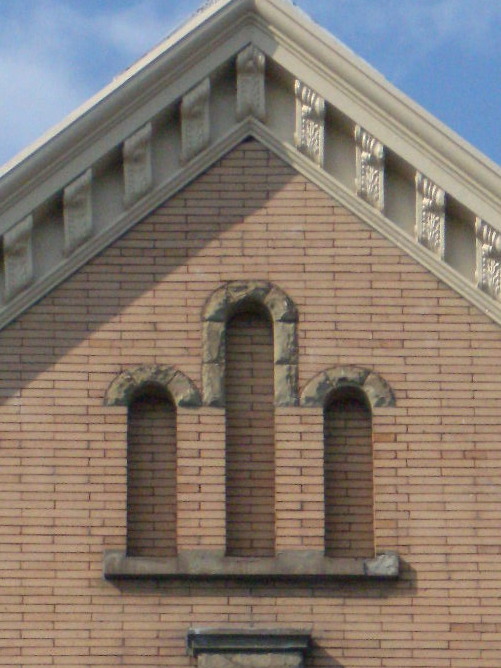
The first person to correctly guess the name/location of this building will get $20 in gift certificates for Grumpy’s Handcarved Sandwiches.

Hint: It’s on High Street.

Operators are standing by to take your – uh – emails and Facebook posts. Don’t delay!

Incorrect Guesses coming in on Facebook:
St. John’s Byzantine Catholic Church
St. Peter’s Church
old Police Station (was on King St., yes?)
Christ Episcopal Church
The Mercury
Grumpy’s (ANOTHER HINT: No, but you’re getting warm.)
Former senior center
Bridal Salon & bakery

ANOTHER HINT: It’s not a church.

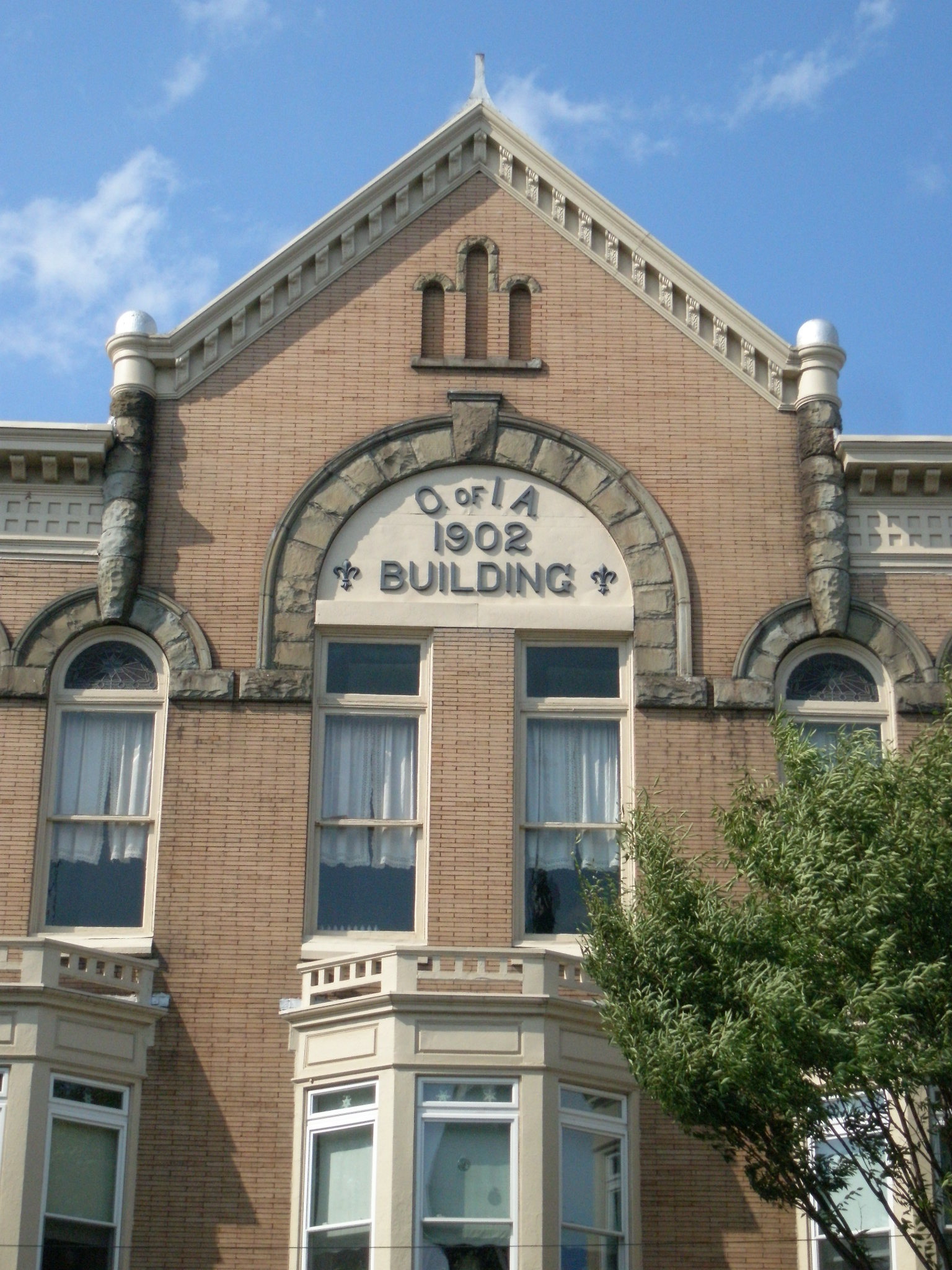
WE HAVE A WINNER: DEBBY WEBER of Pottstown. She correctly guessed 311 E. High Street. There was a fierce competition between Debby and Becky Koniow-Marvel. I just realized that Debby was the winner of our last “Name that Building” contest , so I’m going to ask that she hang back on the next one, although I admire her enthusiasm for Pottstown’s buildings!

Here’s another photo of the Order of Independent Americans 1902 building at 309-313 E. High Street.

And another view from the photographer “road_less_trvld” on flickr.

I hope I have this right and this is what “O. of I. A.” stands for! The Order of Independent Americans was a fraternal organization from the 19th and 20th centuries. They seem to have had several councils in the region. Here’s a photo from one in Chester, and an article about a group in Hamburg. Does anyone know anything about the Pottstown council? Is the Order of Independent Americans still active today?

“Name That Building” postponed ’til tomorrow!

A photo of a building in downtown Pottstown will be posted tomorrow, here and on Facebook. The first person to correctly guess the building and its location will get $20 in gift certificates to Grumpy’s Handcarved Sandwiches at 300 High Street. Tune in tomorrow for your chance to win!

Pottstown as fashion hub??

Alright, you can stop choking on your coffee now and hear me out.

This article in today’s New York Times talks about the zero-waste movement in the fashion industry. I just had to post it now even though it’s several leaps ahead of where I am in my planning series.

Back in June, I mentioned recycled fashion designs here in a laundry list of possibilities for a new “story” for Pottstown.

You’ve got empty buildings for workshop and retail space. You’ve got Moore College of Art & Design, the Art Institute of Philadelphia and Philadelphia University, all with fashion design programs, all turning out graduates looking to make their mark in a fast-paced, ever-evolving field. You’re not that far from NYC either.

Here’s something to think about as just one piece of an overall economic development plan with sustainability, arts and culture at its heart… Pottstown actively marketing green fashion design, manufacturing and retail incubator spaces, with some kind of short-term rent subsidy program for young designers just starting out.

Pottstown could still be a place that makes things… sustainable, hip, cutting-edge things instead of industrial revolution stuff.

HB 712 – PA Land Bank Legislation

This afternoon I sat in on an hour-long webinar on proposed legislation that would enable the creation and operation of land banks in PA. The ability to create land banks would give all municipalities and counties a tremendous tool against blight and property abandonment. I could see a Pottstown Land Bank working hand-in-hand with The Pottstown Partnership, Genesis Housing and even PACA, offering homes for sale or lease-purchase throughout the Borough, marketing & offering housing and work space to artists (similar to Paducah, KY), attracting homeowners, entrepreneurs and businesses, and getting properties back on the tax rolls. But I’m getting ahead of myself.

The Housing Alliance of Pennsylvania sponsored the webinar. The presenters were Cindy Daley, Policy Director of the Housing Alliance, and Irene McClaughlin, an attorney and mediator who has spent her career dealing with blight-related issues in the Pittsburgh area. From the Alliance website: “Anti-blight land banking legislation passed the House on Tuesday, June 29, 2010 by a majority vote of 190-8. HB 712 provides for the creation of land banks for the conversion of vacant or tax-delinquent properties into productive use. The Housing Alliance supports this bill, although we anticipate it will need some technical amendments in the Senate.”

Below are some key points about what this legislation would allow and how a land bank would function. There are still questions about the nitty-gritty details, but with such overwhelming support in the House, it seems like this legislation could very well get passed in some form pretty soon. It is enabling legislation, which means that it allows land banks to be created but it’s up to individual towns and counties. It is NOT mandatory.

There are an estimated 300,000 vacant properties statewide. Between population and job loss and sprawl, rural, inner ring suburbs and urban communities have been faced with blight and abandonment.

An abandoned house or lot reduces the value of all other surrounding houses by an average of $6,720.

There might be potential buyers for these properties, but an inability to find the property owner, the lack of clear title, and debt that exceeds the property’s value all prevent a property from getting a new owner. Existing tools are inadequate: uncertainty of tax foreclosure process; cost & difficulty of condemnation; and existing laws, which have been on the books for decades never anticipated people simply walking away from property.

Land banks are single purpose entities created by local government to manage properties that no reasonable purchaser otherwise wants.

Would allow for the clearing of existing liens and old debt; clearing of title; remediation; assembly of parcels for current market conditions; holding of property until a market emerges; disposal or transfer under terms and conditions driven by the market.

Land banks just a part of a larger picture. Still need tax collection and foreclosure reform along with clearer mechanisms for protecting low-income homeowners or owners who simply wait until the last possible minute before paying their taxes. This enabling legislation – HB 712 – is just the beginning of the process.

Details of HB 712
Defines a Land Bank as a public agency.
Jurisdiction: Cities or counties that are authorized by state law to create a redevelopment authority. Any city or boro with 10K or more population.
Formed by an ordinance subject to approval by a mayor or county executive.
Intergovernmental Cooperation Agreement (ICA) between 2 or more land bank jurisdictions.
Smaller jurisdiction could join an existing land bank.
If there’s a land bank in a city and in that county, the county can’t take real property in that city.

Board of Directors
5-11 members (odd number); can include public officials and municipal employees.
Must include at least one voting member who is a community resident and a member of a civic organization, but who is not a public official or employee.
Must have open meetings, a regular meeting schedule and follow Sunshine Laws.
Staff: may hire employees, or have crossover with city staff & municipal functions

General powers
Adopt, amend, repeal bylaws
Borrow money
Issue negotiable revenue bongds and notes
Enter into contracts
Collect rent
Design, develop, construct, demolish real property
Partnerships, joint ventures for development of real property.
Needs to have capacity to maintain the property according to existing codes.

Acquisition & Holding of Property: gift, transfer, exchange, foreclosure, purchase, from municipalities, from tax claim bureaus. At this point, these properties are undesired by anyone else.
Land bank’s real property, income and operations are exempt from state & local taxation.
Land banks may only acquire property within their jurisdiction, except by Intergovernmental Cooperation Agreement (ICA.) Except if property is leased out to 3rd party for more than 5 years, then income becomes taxable. Ideally, will stabilize and bring up values of surrounding properties.

Disposition: A land bank must create an inventory of its real property which is available to the public for inspection.
May sell, transfer, lease, or mortgage any real property of the land bank.
A land bank may establish priorities for the re-use of real property it conveys, including but not limited to uses for: purely public spaces and places, affordable housing, retail, commercial & industrial activities, conservation areas. These uses are not specified in the bill; it’s up to each particular Land Bank. Priorities don’t have to be uniform across the land bank area. Bill recognizes that land use is going to be specific to location. By-laws and any ICA would establish specifics and priorities.

Financing Land Bank operations:
Grants & loans from municipality, Commonwealth, Fed. Govt. & other public & private sources.
Payments for services rendered.
Rents and leasehold payments.
A practice adopted in Michigan that provides a regular funding source: an agreement is reached with the taxing jurisdictions – not more than 50% of real property taxes collected for 5 years after the transfer of property will go back to the land bank. As proposed in HB 712, this is optional, subject to agreement with municipality and school district.
Borrowing and issuance of bonds. Municipalities may but are not required to guarantee the bonds Bonds and income are tax-exempt.

Required to keep records of proceeding & subject to following state laws:Open meetings, Right To Know, Conflict of Interests, Ethical Standards Laws

Special Powers
Power to discharge & extinguish real property tax liens and claims, subject to the approval of the school district for school taxes.
May file a court action to quiet title in an expedited procedure. Multiple parcels of real property may be joined in a single complaint in action to quiet title.
Land banks do NOT have power of eminent domain.

Dissolution: There is a procedure for dissolution of the Land Bank.

Audits: Land bank income and expenses and a report will be submitted annually to DCED and to participating municipalities.

Land Banks and PA Real Estate Tax Collection & Foreclosure
Municipalities may assign tax claims and liens to the land bank. Municipality and a land bank may agree to a set bid price in advance of public auction (upset sale or judicial sale as well as at “single sale” allowed unter MCTLL (only for Phila and Allegh. Counties)) and transfer property to the Land Bank as purchaser in accordance with the agreement. Within 30 days of the purchase, the land bank must receive the deed transferring the property free and clear of all claims, liens and charges.

Next steps: HB712 is now in Senate Urban Affirs & Housing Committee. The Committee intends to hold a hearing on the bill – early Sept.? The Housing Alliance is convening a Working Group to review the bill & propose amendments. All interested stakeholders are invited to participate. And once the language of HB 712 is finalized, the group will begin working on mechanism for financing land banks and tax sale reform, including strong hardship waivers.

Main Line Financial – 211 East High Street

211 E. High Street
After a mad flurry of guesses among several fierce competitors, our winner is Debby Weber of Pottstown! She gets a 30-minute massage from High Street Yoga. Thanks to Barbara of High Street Yoga for the donation!

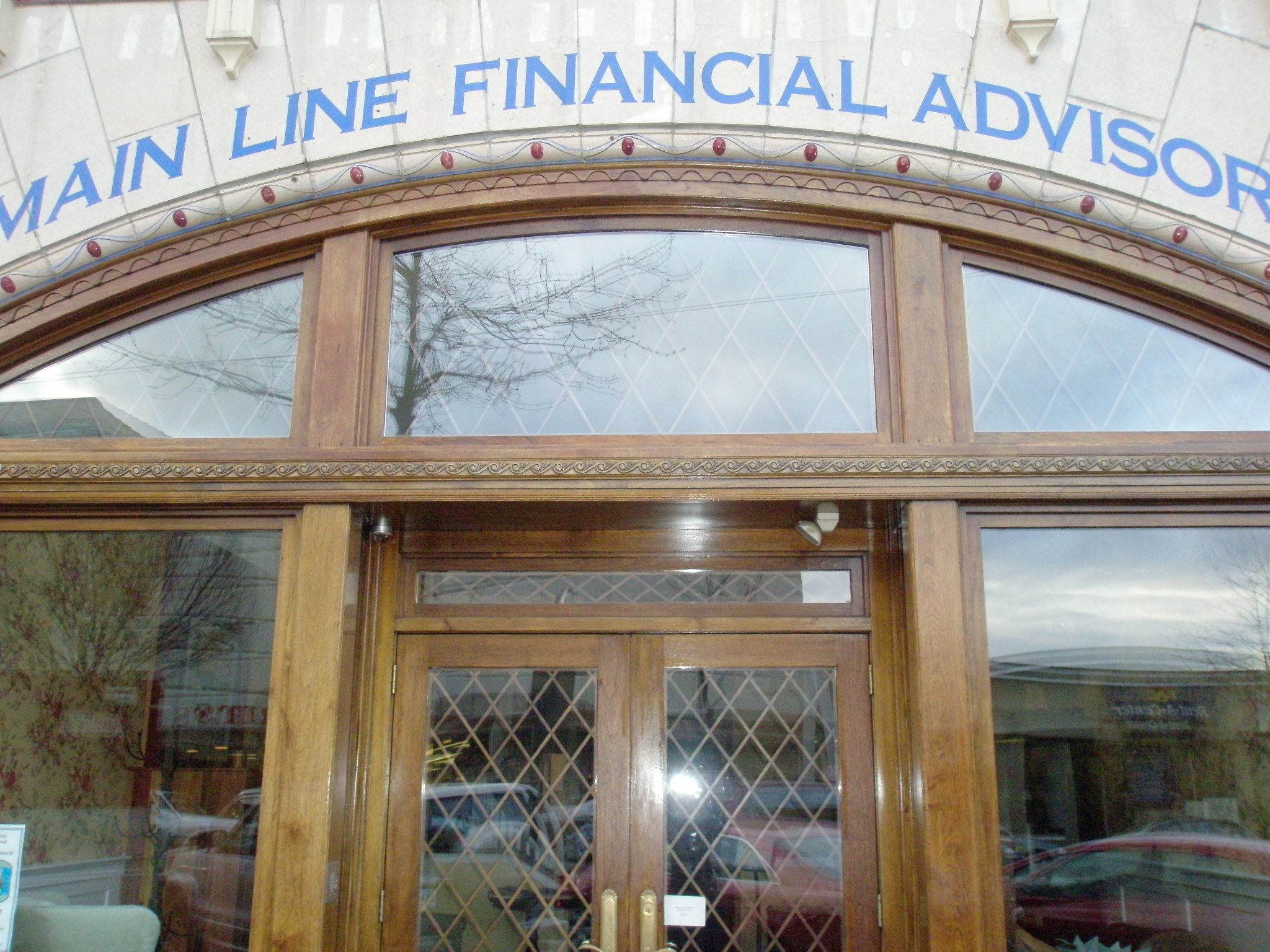
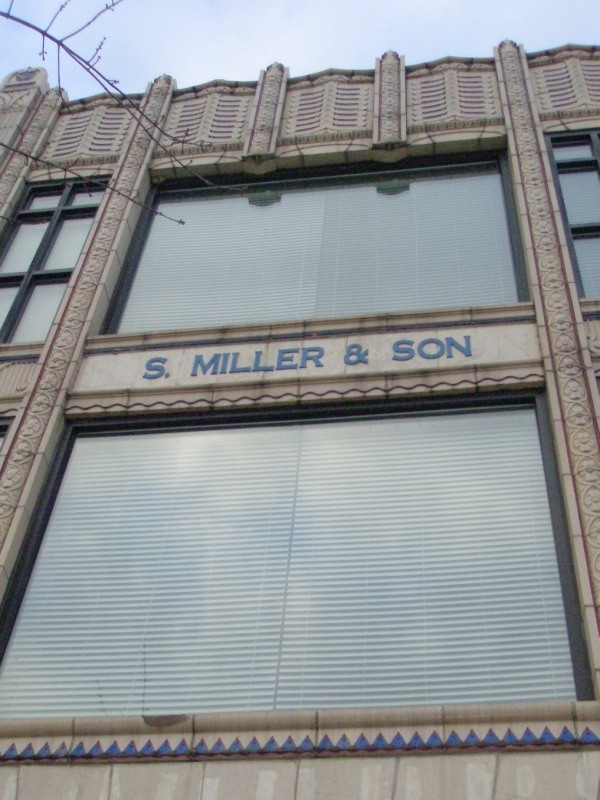
Main Line Financial Advisors occupy the former S. Miller & Son building at 211 East High Street. The image in the Positively!Pottstown header was taken from a photo of their front doorway. In addition to the intricate woodwork, I liked the blue of the letters and tried to mimic it in my header. Then I went for the Curlz MT font to mimic the woodwork. Totally amateur design sensibility!

S. Miller & Sons was a men’s clothing shop. The Millers were a German-Jewish family that came to Pottstown in the 1880s according to a story about a small Jewish cemetery on State Road in an Upper Pottsgrove newsletter from April 2009. (Unfortunately, the direct link to that newsletter seems to be broken now.)

There are just so many funky factoids out there in cyberspace. Check out this link from a publication called “The Clothier and Furnisher, A Monthly Journal Devoted to the Interests of Men’s Apparel,” established in 1872 and published out of New York City. On page 50 of their February 1895 issue, it says, “As soon as their alterations are completed, S. Miller and Son, clothiers, Pottstown, Pa., will occupy the store at 211 High Street.”

S. Miller & Son Facade

In another publication called The Railroad Trainman, Vol. 25 from 1908, S. Miller & Son is listed as being located at 221 High Street. Maybe that was a typo? Apparently, the Brotherhood of Railroad Trainmen allowed members to list businesses in their towns, encouraging other members to patronize them. Hmmm… my paternal grandfather spent his whole career working for the Reading Railroad out of Pottstown. Wonder if he was a member…

Main Line Financial Advisors does financial planning for individuals, families, businesses and institutions, along with integrated accounting and tax planning. The company was founded by Alfred “Fred” F. Matarazzo; his son Alfred “Al” F. Matarazzo, Jr. is the managing partner. In 2005 they expanded and developed their Pottstown office. They also have offices in Narberth and Malvern.

Main Line Financial Advisors
211 East High Street
Pottstown, Pennsylvania 19464
P: 610.323.5860
F: 610.323.5861

Cool architecture, financial planning, Jewish immigrants, trainmen and massage – you never know what you’re going to run into at Positively!Pottstown…

ANOTHER HINT!

ANOTHER HINT TO HELP THE DETECTIVES “SEE” IT: There’s a pattern on the windows above the woodwork. You have to look at the image on the blog. It’s not visible on the Facebook icon. If you’re walking in the 200-400 blocks of High Street, try to find the pattern on the windows and you will be led to the woodwork. (Hope the glass still looks like that…)

UPDATE: Inspiration – it’s in the details CONTEST!

There were a few comments on the Positively!Pottstown facebook page. So far we’ve got Positively Pasta and the Elks Lodge as guesses — but no winners.

Some great news: Barbara Kosiewicz of High Street Yoga has offered a 30-minute massage to the winner! Check out her blog here.

Okay, here’s a hint to narrow it down, so everyone can go out to High Street after work and solve this mystery: The building is in the 200-400 blocks of High Street.

SEE THE COMMENT BELOW FOR THE RUNNING LIST OF GUESSES!

Blog at WordPress.com.

Up ↑