Maple Street Park: Vibrant neighborhood spot in the East End

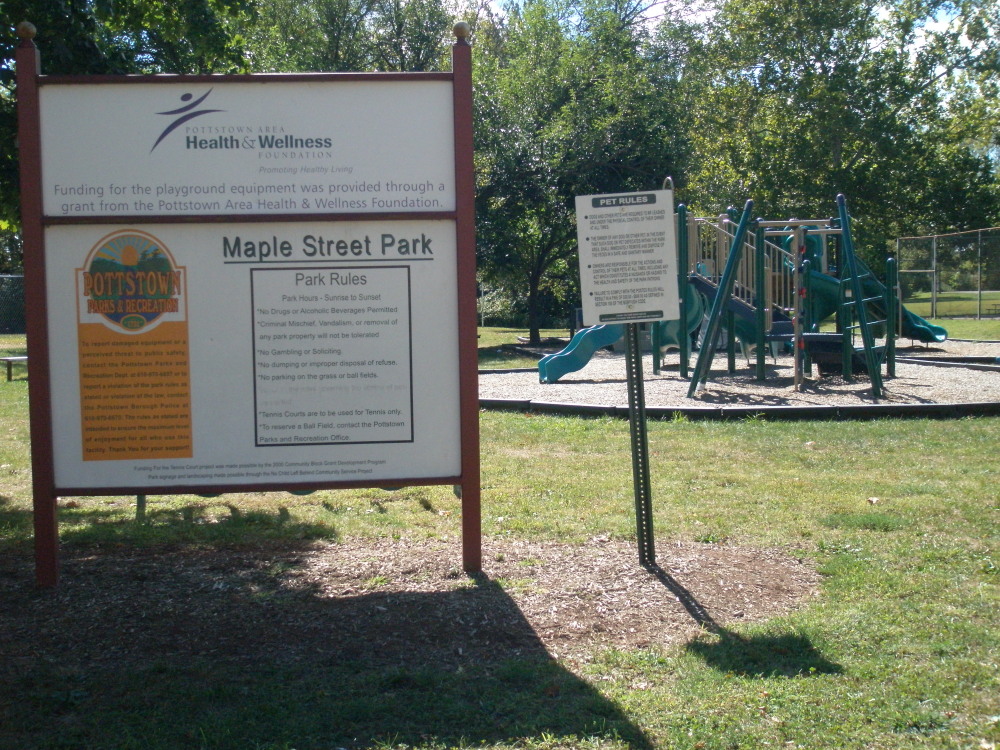
Health & Wellness Foundation Sign

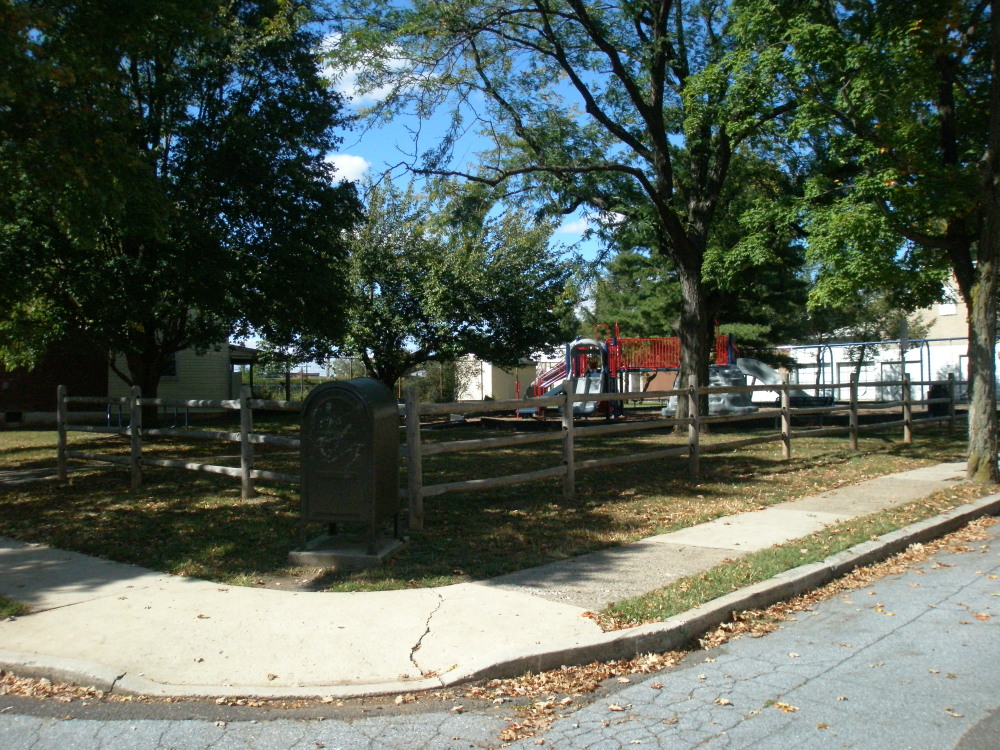
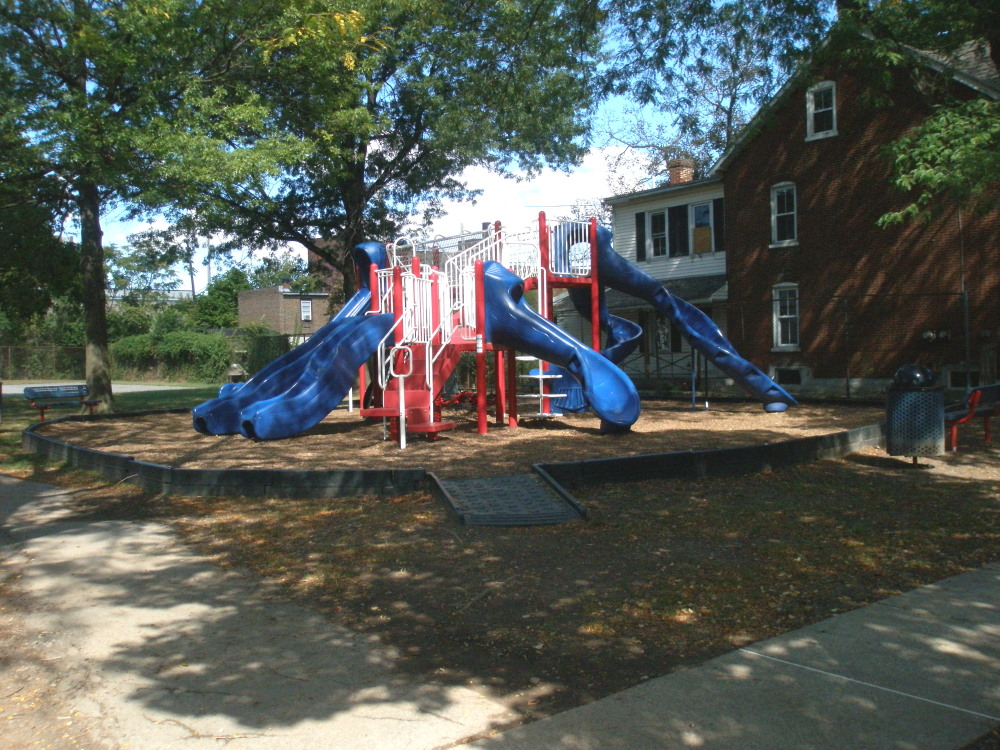
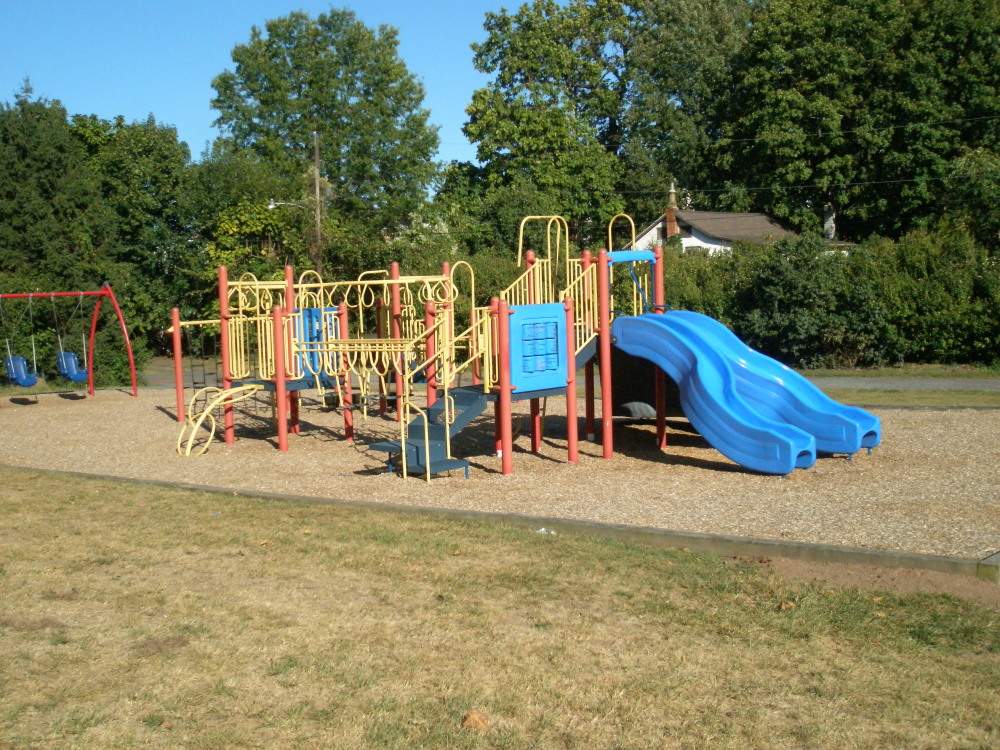
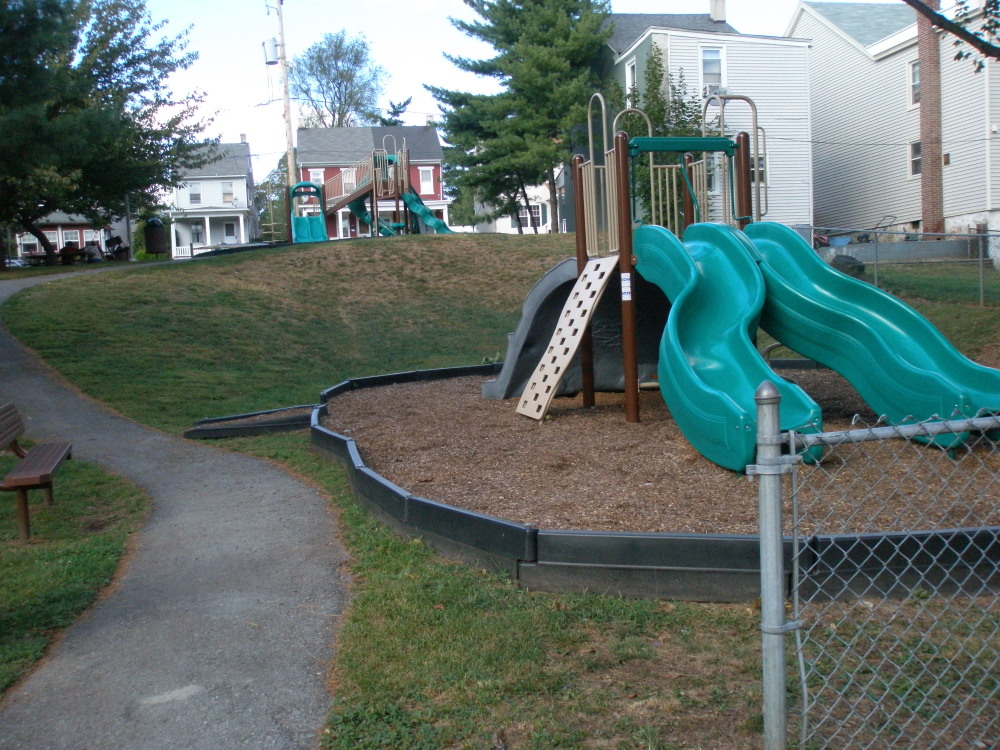
After Riverfront Park and Memorial Park, Pottstown’s next biggest recreational space is Maple Street Park, which encompasses 6.3 acres in the East End. The facilities are in excellent condition and offer a good mix of active and passive recreation for all ages. As seen in the sign to the left, the Health & Wellness Foundation, the sponsor of this blog series, also funded the playground equipment at Maple Street Park through their grant program.

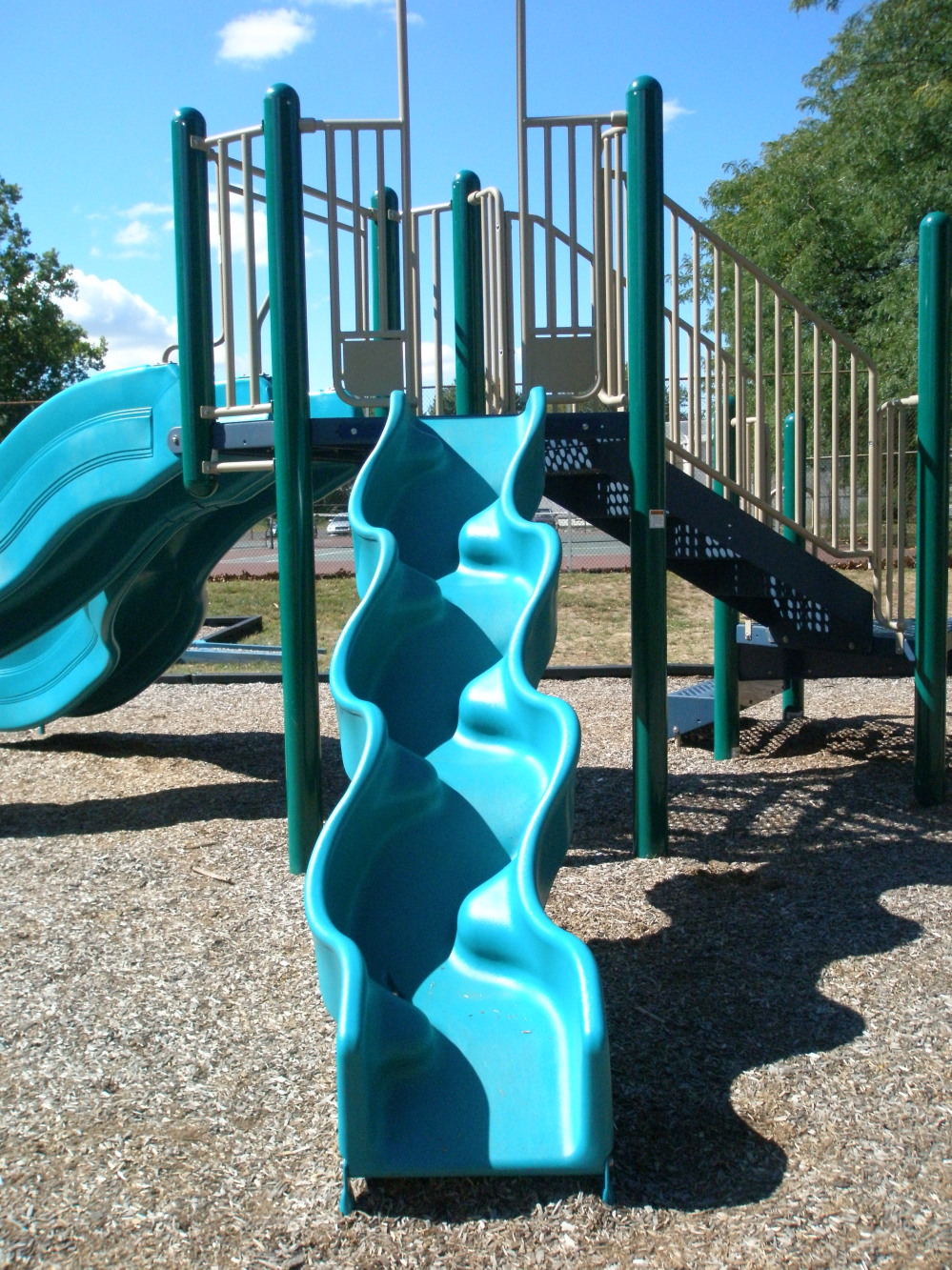
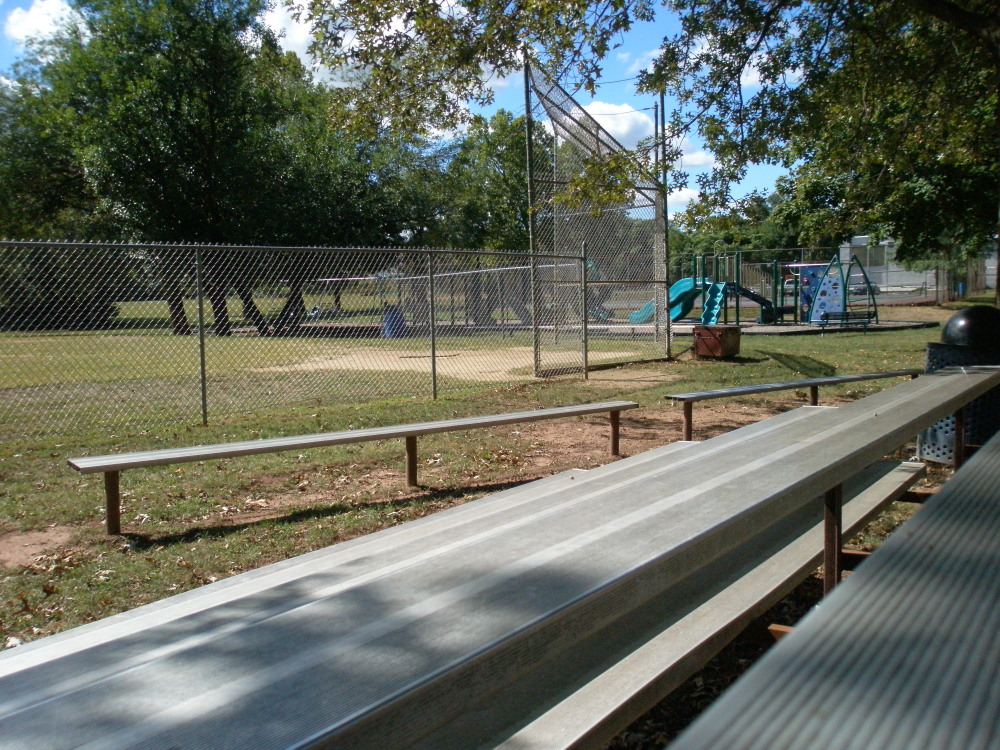
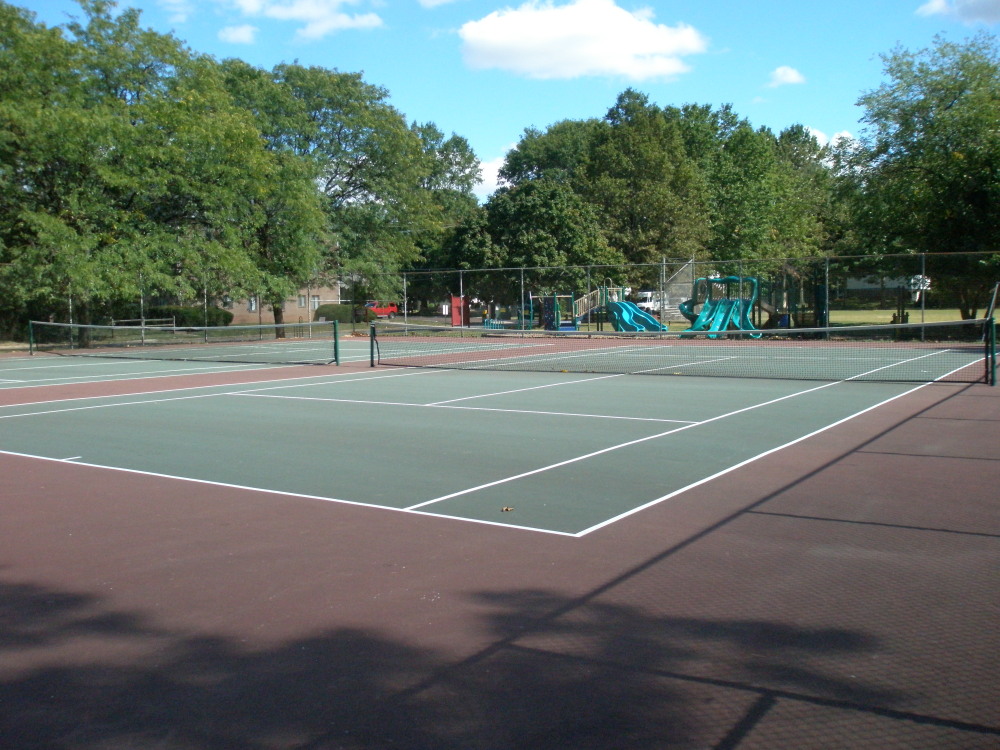
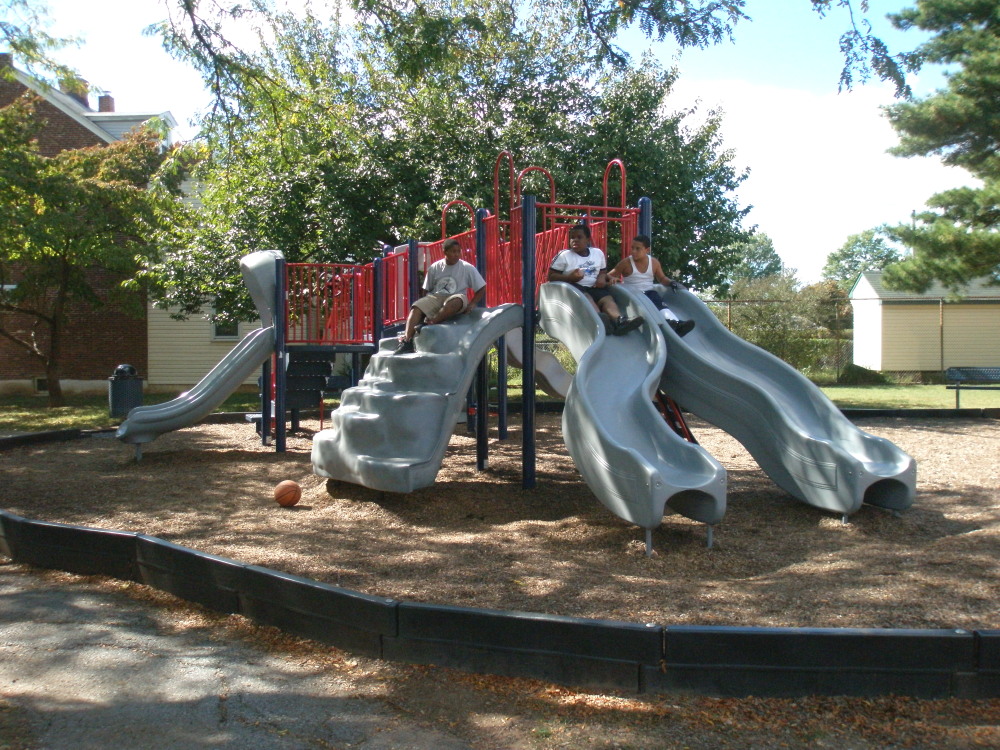
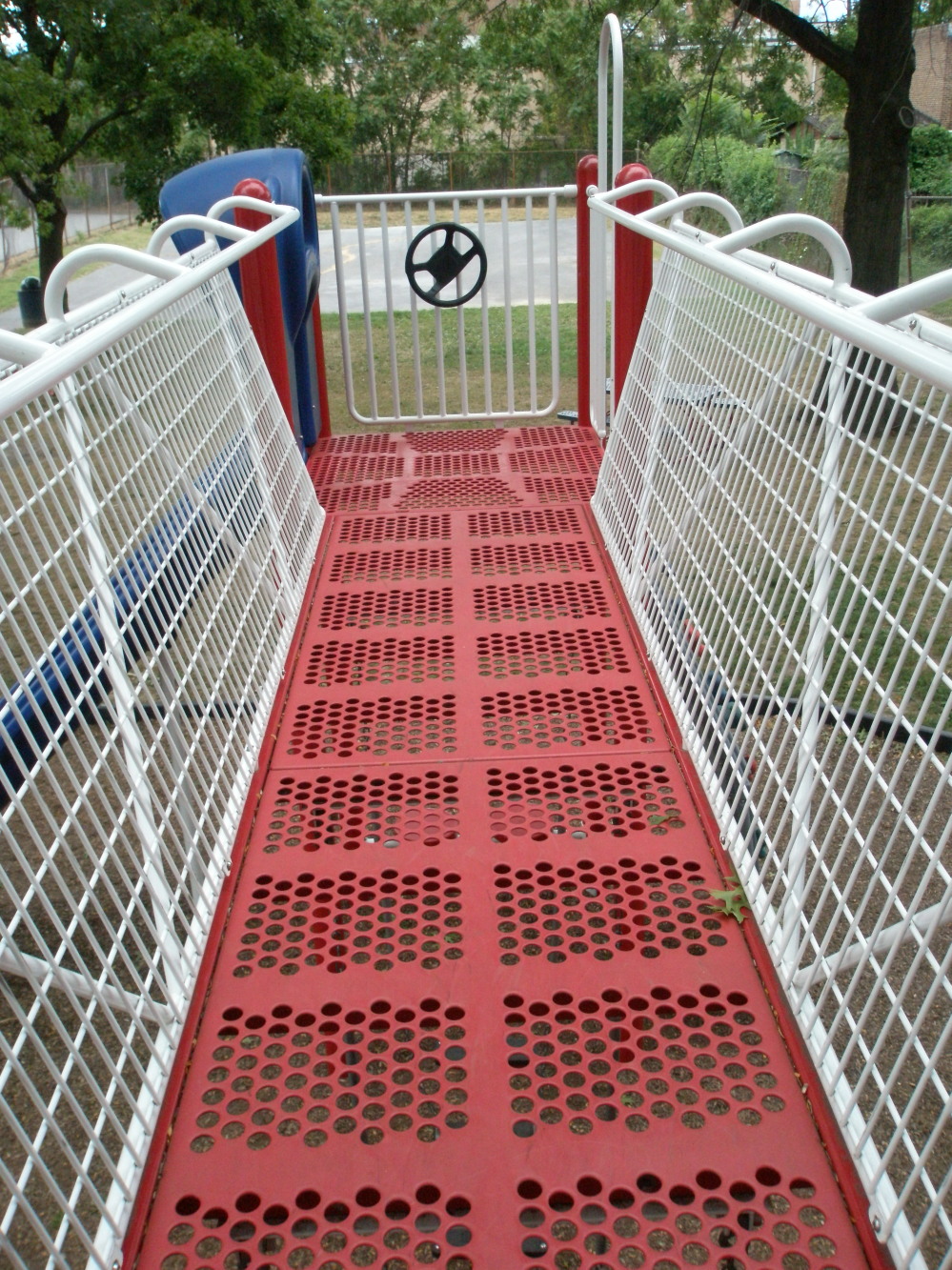
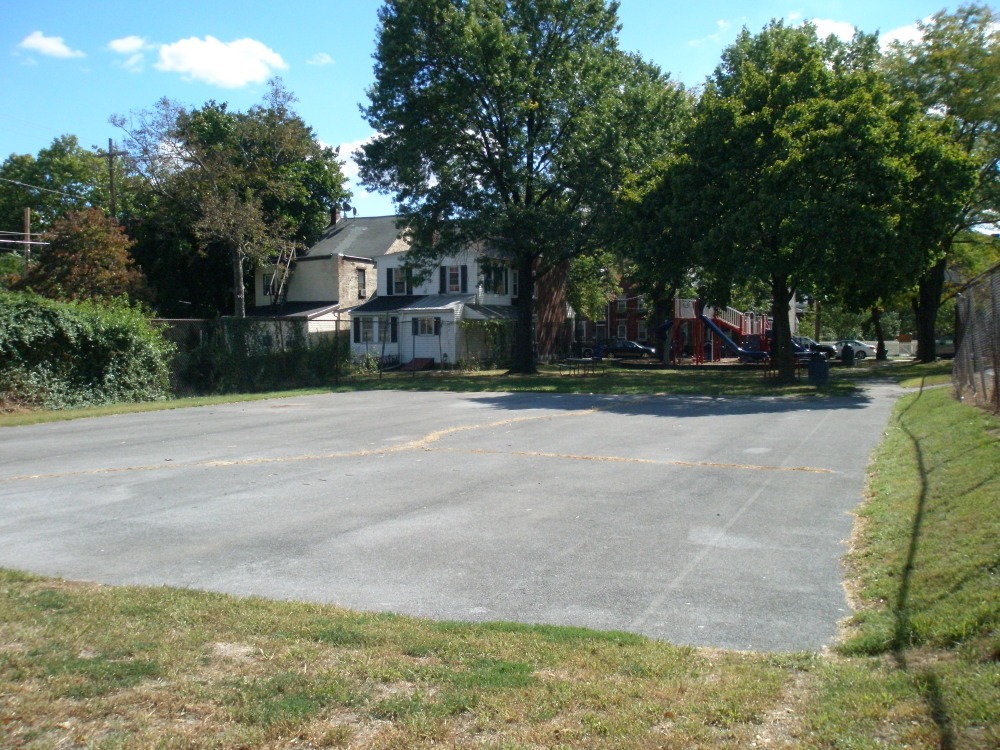
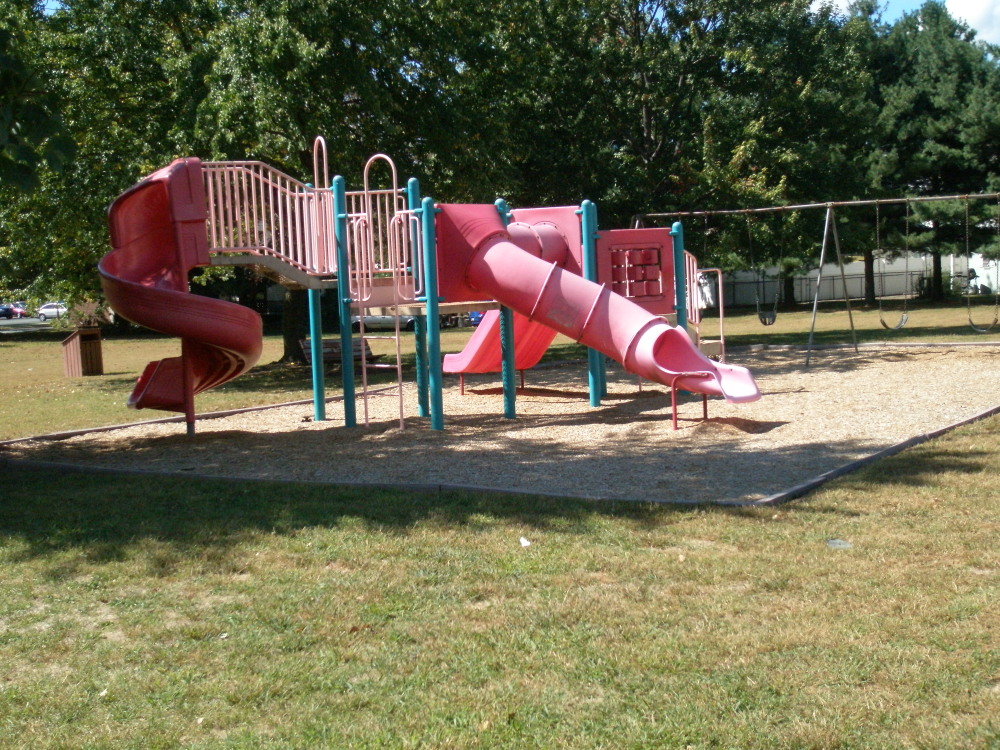
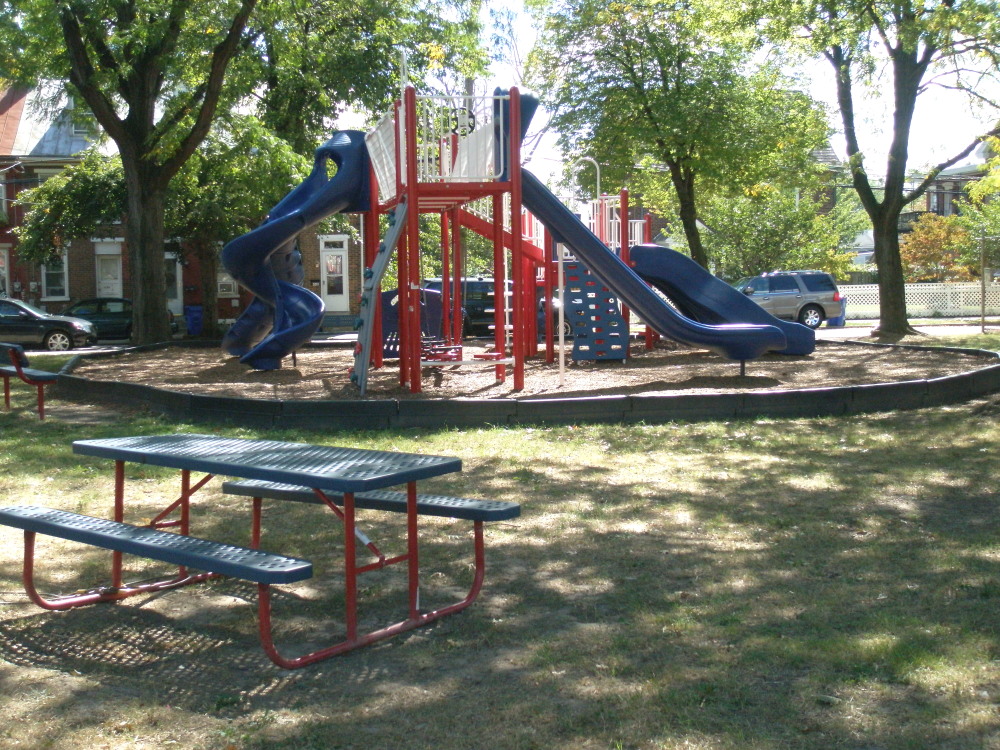
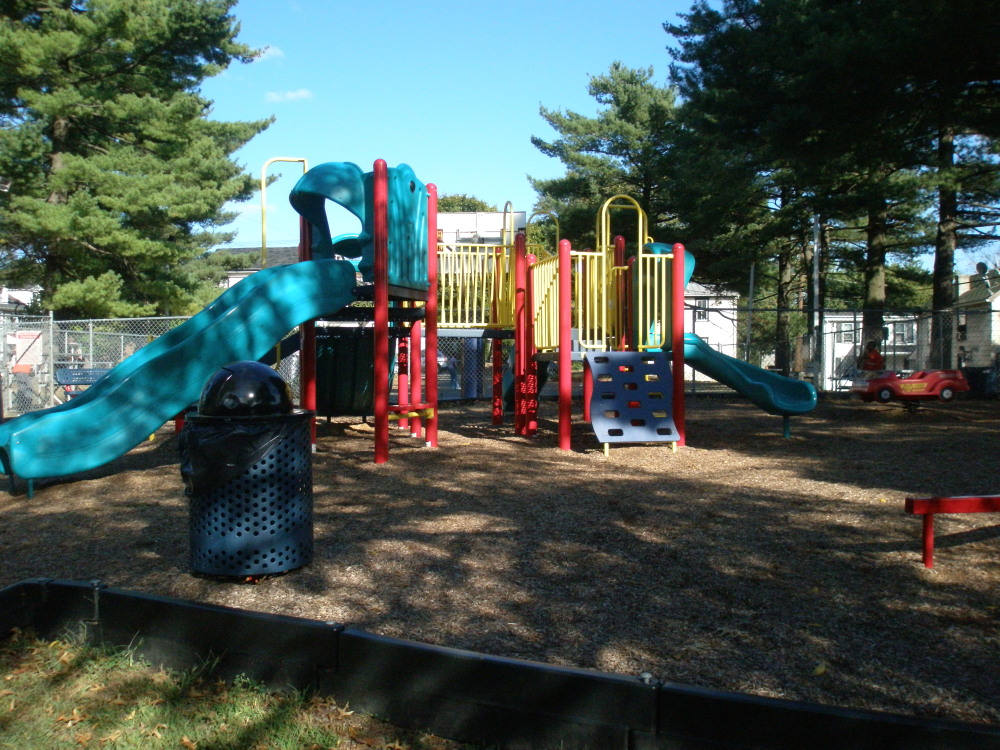
The two ball fields are used by the Pottstown Little League for baseball and softball. In addition, there are bike racks, two tennis courts, picnic tables set amidst large trees, and a large playground area that has all kinds of equipment for swinging, climbing, crawling and sliding. I did NOT try this slide. When I call 9-1-1, it’s going to be for a good reason!

Children only!

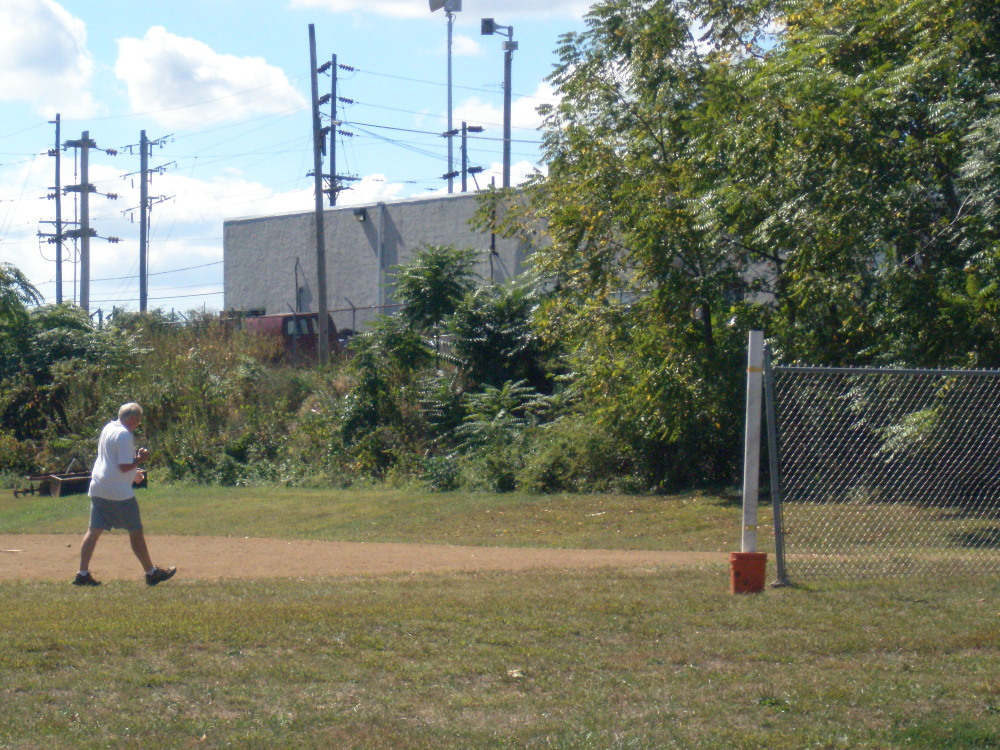
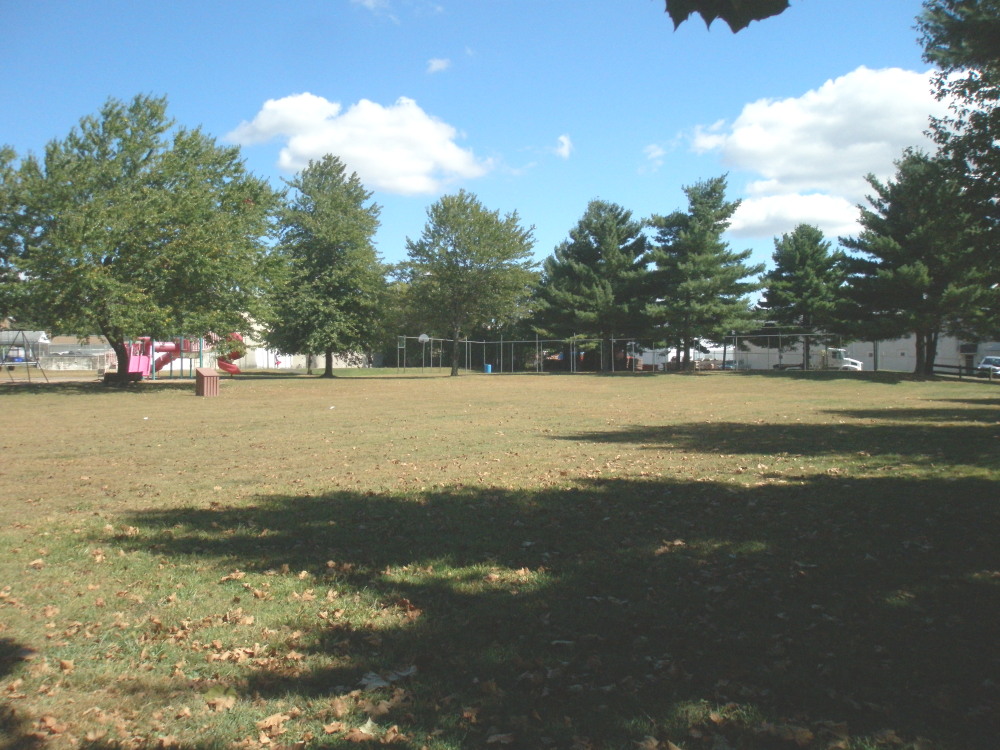
On one of my visits to Maple Street Park, it was the early afternoon and the man in this photo could be seen doing lap after lap of moderately-paced walking around one of the ball fields. It just goes to show that you can make a workout happen anywhere if you’re determined to do it.

Mid-day Walker

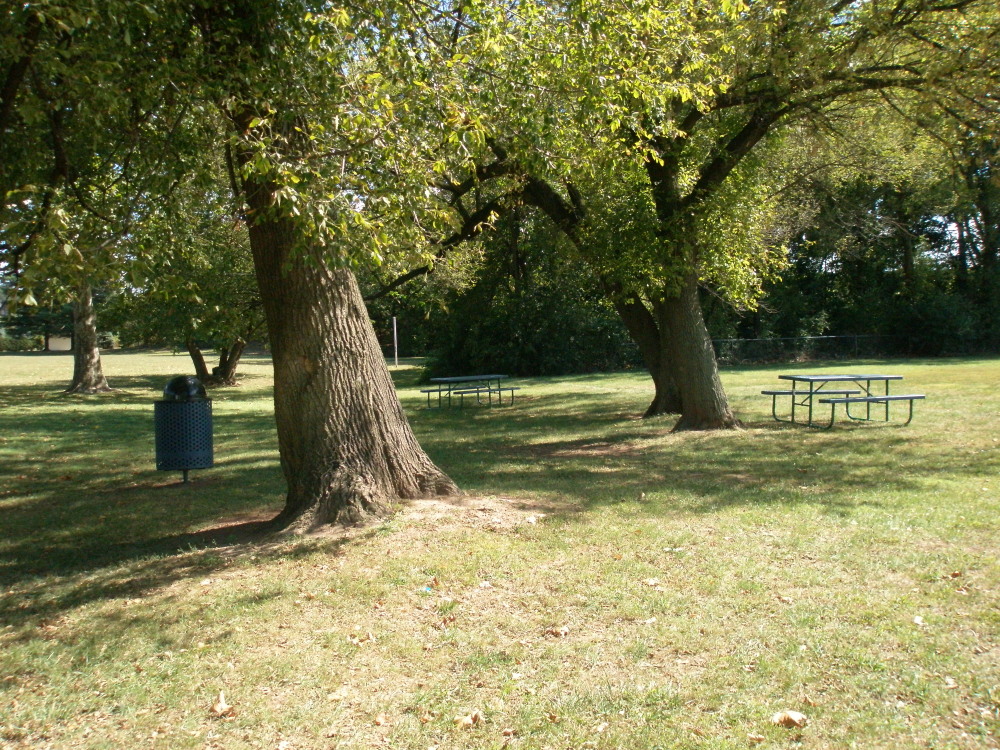
Inside sources tell me that Maple Street Park is truly a neighborhood, family hang-out. Across the street are the Maple Court Apartments, and its residents, who don’t really have backyards, can be found using the park for exercise, dinner and relaxing. On summer evenings, the park is filled with adults and children of all ages. And the Walking Club at nearby Rupert School holds their end-of-year picnic there, making this East End gem the kind of place that just about does it all, giving residents of all ages opportunities for physical activity, social connections and contact with nature.

Maple Street grove

MAPLE STREET PARK
Location: On Maple Street near the intersection with St. Clair St. Use 1431 Maple Street, Pottstown, PA 19464 if you want to find it on a GPS. That’s the address of Maple Court Apartments, which are across the street.
Size: 6.3 acres
Suitability: Active and passive recreation for all ages.
Facilities: 2 Little League fields, 2 well-maintained tennis courts, playground, swings, small and large multi-purpose open space, benches/sitting areas, picnic tables, mature trees in park and along edges.
Activities + tips: To see this neighborhood park come alive, check it out on a summer evening.
Hours: Dawn until dusk.

Contact regarding any park rentals:
Pottstown Parks & Recreation Department
Borough Hall, 100 E. High Street, Pottstown, PA 19464
610-970-6500
Click on the Department’s “Special Events” tab to learn more about upcoming events.

Follow the parks series at Mission: Healthy Living, Positively!Pottstown, Twitter (PositivelyPtown), Facebook, and The Mercury.

PHOTO GALLERY

Maple Street Ballfield
Maple Street Tennis Courts

Meet the Parks & Rec Director and take a trip to the South End

When I met Eileen Schlegel, the Director of Pottstown Parks and Recreation Department, in her new digs at Borough Hall, her office was a bit chaotic. The Department had recently moved from longtime quarters provided by the School District, and they were still in transition. While they made the move, though, they still had ongoing park maintenance and lots of events to support.

“Parks and Rec. is basically part of every activity that happens in town,” she said. “We’re behind the scenes providing tables, chairs, sound system, dunk tank, pop-up tents, you name it.”

As this series is unfolding, it should be obvious by now that Pottstown’s Parks and Recreation Department manages many acres and all kinds of equipment. Ms. Schlegel could not say enough good things about the four-man crew that maintains all of it.

“I have absolutely the best crew,” she said. “They’re in Riverfront Park right now, getting it ready for the Schuylkill River Festival. They’re trained. One has a construction background, another a landscaping background, another a degree in landscape design, and another is experienced with heavy equipment. For any given project, the one with the right experience takes the lead.”

Time-out

I had already visited the mini-parks in the South End of Pottstown – Cherry Street, South Street and Pollock Park – and had a few questions for Ms. Schlegel.

Cherry Street Park is at the corner of Cherry and South Evans Street. It is mostly shaded and has a split rail fence around it to delineate boundaries for younger visitors. At just a quarter-acre in size, it offers a playground, table, benches and some open space, similar to the pocket parks we visited in central Pottstown yesterday. At Cherry Street, I met up with a group of guys with a basketball, in search of a hoop. They took a few minutes to pose for a photo instead.

South St. Park playset

Just a few blocks away, South Street Park is tucked into a quarter-acre lot on South Street near the intersection with South Washington Street, between the Holy Trinity Social Club and some row houses. The red, white and blue playset made me feel very patriotic and vaguely maritime. It has also got a doozy of a slide that gives a fast, bumpy ride!

An additional feature of South Street Park would be a full-court for basketball. I say “would be” because right now there are no poles or hoops on the large blacktop beyond the playground.

In talking with Ms. Schlegel, I learned that they already have the posts and hoops for basketball courts at South Street and at Terrace Lane Park in the North End (we’ll visit there tomorrow), and funds are available for re-surfacing. Right now the Department is locating the right equipment to properly set the posts. So, keep your fingers crossed that these projects can be done, and the blacktop spread, before the cold weather sets in.

South St. court

Now, continuing eastward, let’s head to Pollock Park. Although Pollock sits in a triangle bordered by South and Cross Streets, you can’t go directly from South Street Park over to Pollock. You can go up to High Street, turn right to head east, turn right at the Post Office onto Madison Street, and then bear to the left at Cross Street. In another block, you can either go left onto South Street or stay to the right on Cross Street. The park will be up ahead. There’s a small parking lot on the Cross Street side.

Pollock Park field

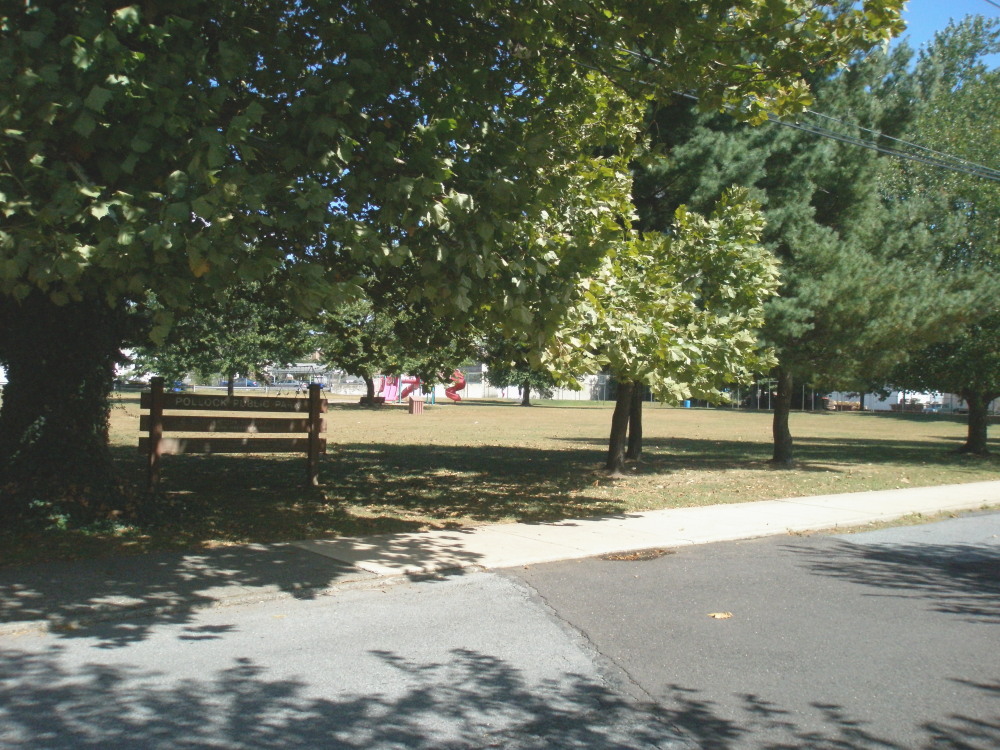
The one-acre Pollock Park has large, grassy fields and has been the site of P.A.L. soccer for years. Like the other mini-parks, Pollock has got good play equipment, swings and mature trees that let visitors connect with nature in what is otherwise a predominantly industrial landscape. Unfortunately, there are some drawbacks to the rest of the park, the only one in the whole Pottstown system. There’s a tennis court with no net, no fence and large posts ringing the court; the fence around the basketball court could be repaired in a couple spots; and the parking area and fence need work. The reality is that the funding for the mini-parks has run out, and it’s not yet clear what would be the best use of this park if/when funds become available.

Pollock Park playset

Borough Manager Jason Bobst said, “The Economic Development Sub-committee of Borough Council will soon be taking a look at the future of Pollock Park. This may eventually involve a design charrette process to figure out what the neighborhood wants,” he said.

It would also include a look at the current demographics of potential users of the park. Are they young children, or skateboarders, or soccer players? On my visit to Pollock, I asked a couple guys who were shooting around, if this was a good place to find a game.

“Nah,” they said. “Spruce Street is the place. There’s not even that many kids around here.”

According to Mr. Bobst, the Borough is using the Penn State parks study commissioned by the Pottstown Area Health and Wellness Foundation(sponsor of this series) to influence their decision-making as they go forward.

“We’re analyzing what we already offer in all our pocket parks, and looking at what’s missing and what else we could offer,” he added.

During the course of the Trail Town Conference held last week in Pottstown, Pollock Park was mentioned as a possible trailhead or information area for bikers coming off the Schuylkill River Trail and entering Pottstown. It is not known exactly what facilities or how much parking might be needed for that kind of use. All possibilities need to be looked at in context and discussed with the neighborhood and other stakeholders in the course of coming up with an agreed-upon plan. And then considered again in light of available funding.
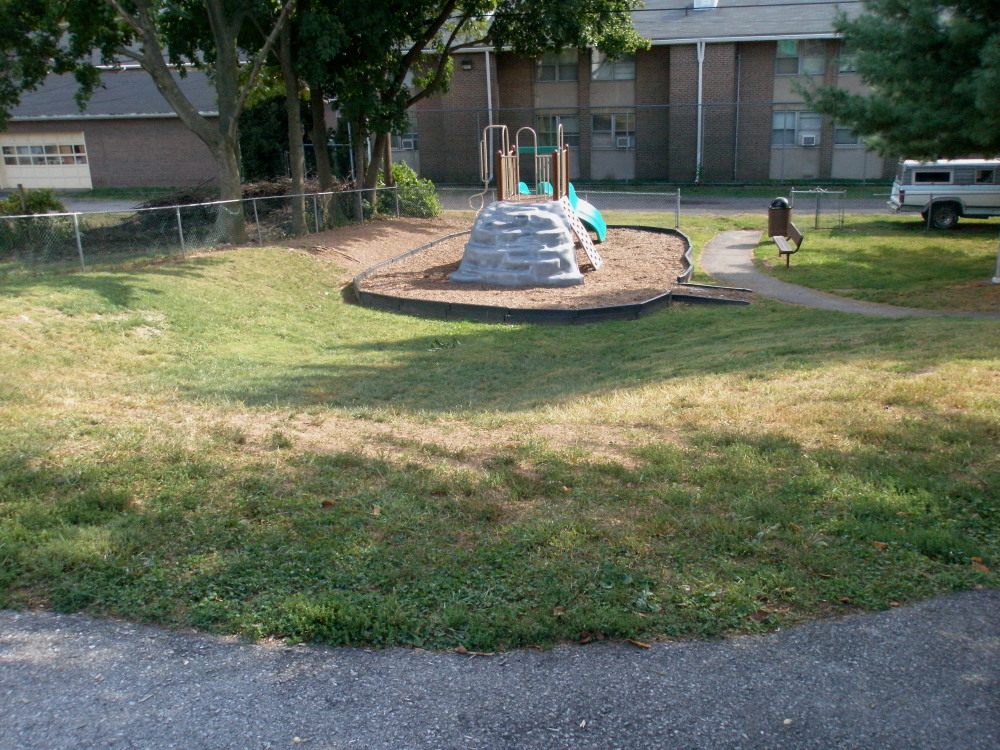
Contact regarding any park rentals:
Pottstown Parks & Recreation Department
Borough Hall, 100 E. High Street, Pottstown, PA 19464
610-970-6500
Click on the Department’s “Special Events” tab to learn more about upcoming events.

Follow the parks series at Mission: Healthy Living, Positively!Pottstown, Twitter (PositivelyPtown), Facebook, and The Mercury.

PHOTO GALLERY


Cherry St. Park at Cherry & S. Evans Streets
View from South Street
View from inside South St. park
View of Pollock from Cross St.

The Richard J. Ricketts Center: The heart of a community

Richard J. Ricketts Center, since 1971
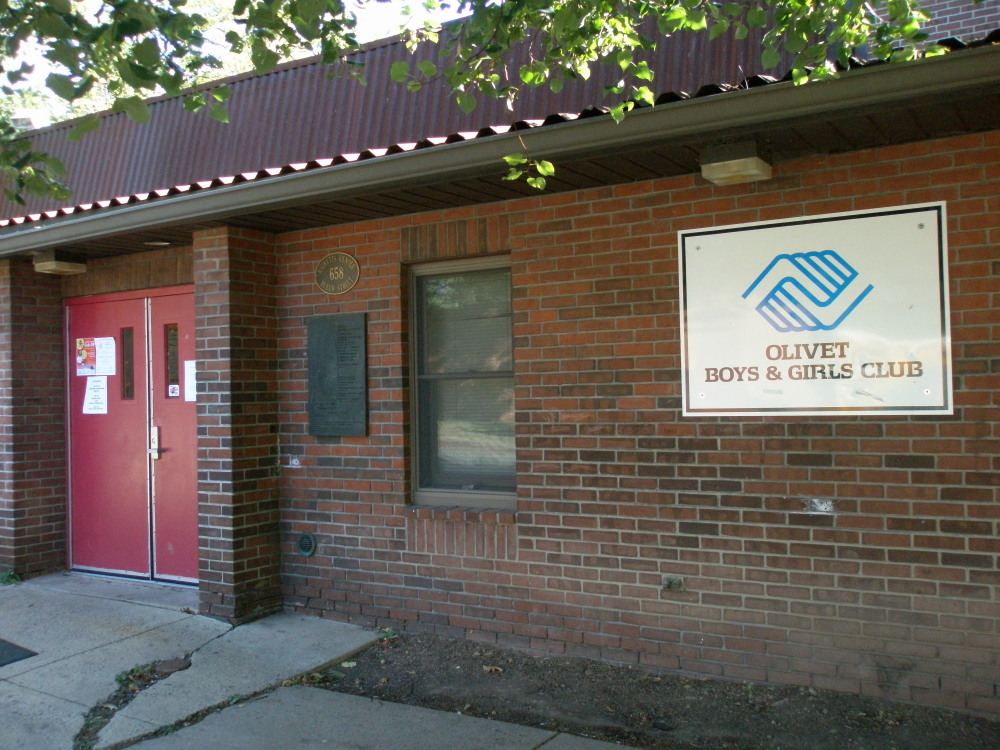
The Richard J. Ricketts Center has been a hub of athletic, educational and wellness programming for nearly thirty years, and the Borough of Pottstown contributes substantially to its operations even though it became an official club of Olivet Boys & Girls Club of Reading and Berks County in January 2009. The Pottstown Area Health and Wellness Foundation, sponsor of this blog series, has awarded a grant to the Club in support of the Foundation’s “Reduce Behavioral Risks” goal.

Olivet Boys & Girls Club started in 1898 and is one of the original founding members of the Boys & Girls Clubs of America movement. It serves thousands of youth in Reading and Berks County and operates in four locations in Pottstown. In addition to its activities at The Ricketts Center, the Club partners with the Pottstown School District’s 21st Century Program to offer afterschool programming at Edgewood, Franklin and Lincoln Elementary Schools.
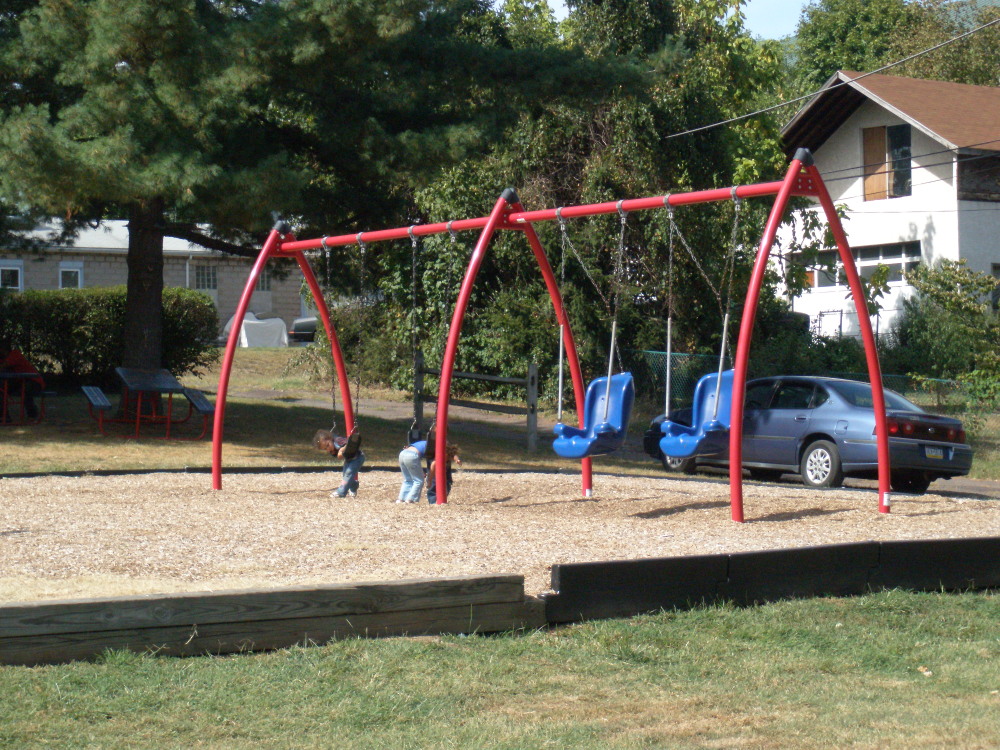
On a recent visit to the Ricketts Center – my first ever – I was surprised at the breadth of the programming offered by the Club. It was hard to keep it all straight! In general, the Club serves youth ages 6-18. Annual memberships, which coincide with the school calendar, are $15 per child.

The Club runs indoor basketball leagues, in-house flag football, VILLA Blacktop Basketball League in the summer, a “Smart Girls” program and “Passport to Manhood” program. They provide an afterschool “Power Hour,” which includes homework help in their computer center and a healthy “Super Snack,” which has been provided by the Archdiocese of Philadelphia. Students from the nearby Hill School are volunteer tutors at the Center on Monday – Thursday afternoons.

Olivet Boys & Girls Club summer camp runs for 8 weeks, from 8 a.m.-4 p.m., costs just $25/week in Pottstown, and includes breakfast and lunch, one swim outing and one field trip each week.

The Club also offers fitness programs for adults. Adult membership for the Fitness Center and gym allows access Monday-Friday, 11 a.m. to 2:30 p.m. and Tuesday and Thursday evenings from 7:30-9:30 p.m. Adults (with guts!) are welcome to join certified personal trainer and weight-loss coach Paul Winterbottom in his “Boot Camp,” a program to get you in shape in no time. They’ve got a well-stocked weight room, and the indoor basketball court had just been re-finished, so it was all shiny, and had that brand-new, shellacked smell that all of us ballers love! For $10/month or $100/year, this deal can’t be beat.

THE RICHARD J. RICKETTS CENTER
Location: 640 Beech Street, Pottstown, PA 19464 (at the corner of Grant & Beech Streets)
Size: 0.5 acres
Suitability: Membership required for youth 6-18 years old and adults (fitness only.)
Facilities: Fenced-in tot lot & outdoor basketball court; indoor gym, teen center, weight room, community rooms
Activities + tips: Ricketts Center is home to Head Start & Olivet Boys & Girls Club, which provides varied year-round programming for children, teens and adults.
Hours: Open daily, includes after-school & evening programming.
Membership Fees: Youth & Teen – $15 for Sept.-June; Adults – $10/month or $100/year.
Contact: Jannie Harrison, Unit Director (484-945-1020)
Website: Olivet Boys & Girls Club at The Ricketts Center, Pottstown

Follow the parks series at Mission: Healthy Living, Positively!Pottstown, Twitter (PositivelyPtown), Facebook, and The Mercury.

PHOTO GALLERY

The pocket parks of central Pottstown

The Penn State researchers categorize parks that are less than 1 acre in size as mini-parks or pocket parks. Pottstown has many such parks scattered throughout the Borough. While it is desirable for every park to offer a range of opportunities for physical activity, social connections, contact with nature and elements that strengthen a sense of place, these mini-parks cater to children and typically include playground equipment set in mulch, perhaps a bike rack and some benches or picnic tables.

In general, Pottstown’s pocket parks are clean and have an open feeling to them with good visibility from the street. The equipment is practically new, colorful and cheery, providing active play space in neighborhoods that have fairly dense housing, narrow lots and small backyards that are not adequate for the personal play equipment that can be found on large, suburban lots. These spaces serve as neighborhood gathering spots for independent children as well as for parents and children together.

In central Pottstown, there are two parks that fit this description and one, New Chestnut Street Park, which offers even more possibilities for social connections.

Walnut Street Park is on Walnut between Grant and N. Adams Streets.

Walnut St. Park
The interesting feature of this park is the dramatic slope between the two play areas, creating lower and upper playgrounds. From the street, it looks like there’s just one play area, but if you go inside the park just a few steps, you’ll see another play area down below, which can also be accessed from Rowan Alley. Some local residents in the park the day I visited said it’s the best sledding in Pottstown!

The slide closest to Walnut Street will also give a good jolt to a middle-aged spine! I will here admit that I have done some testing of the sliding boards at some of these pocket parks. In my defense:

(1) I had promised the Health and Wellness Foundation that we would try out important features of each park.
(2) When I was growing up, the high slide at the Franklin School playground was metal and, unless weather conditions were perfect and there was no humidity, it was hard to get in a good run. These new plastic slides send you flying!
(3) I guess I just refuse to grow up. 🙂

Moving on…

Washington St. Park

Washington Street Park actually lives on East Street, right at the “T” where that leg of Washington Street ends. It also offers new, fun equipment and plenty of space for running around. A new chain link fence prevents the youngest children from dashing off the playground into the street. I took a few moments at the end of the afternoon to just swing, something I hadn’t done in a very long time. I’d forgotten how meditative it can be. Adults: swinging is not just for kids!

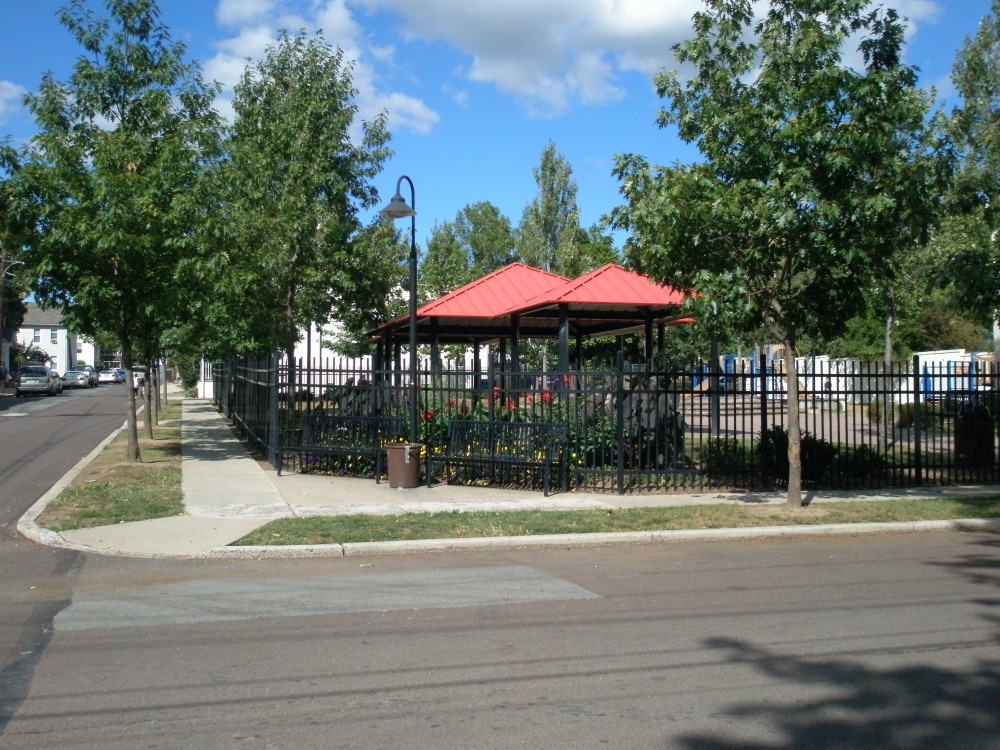
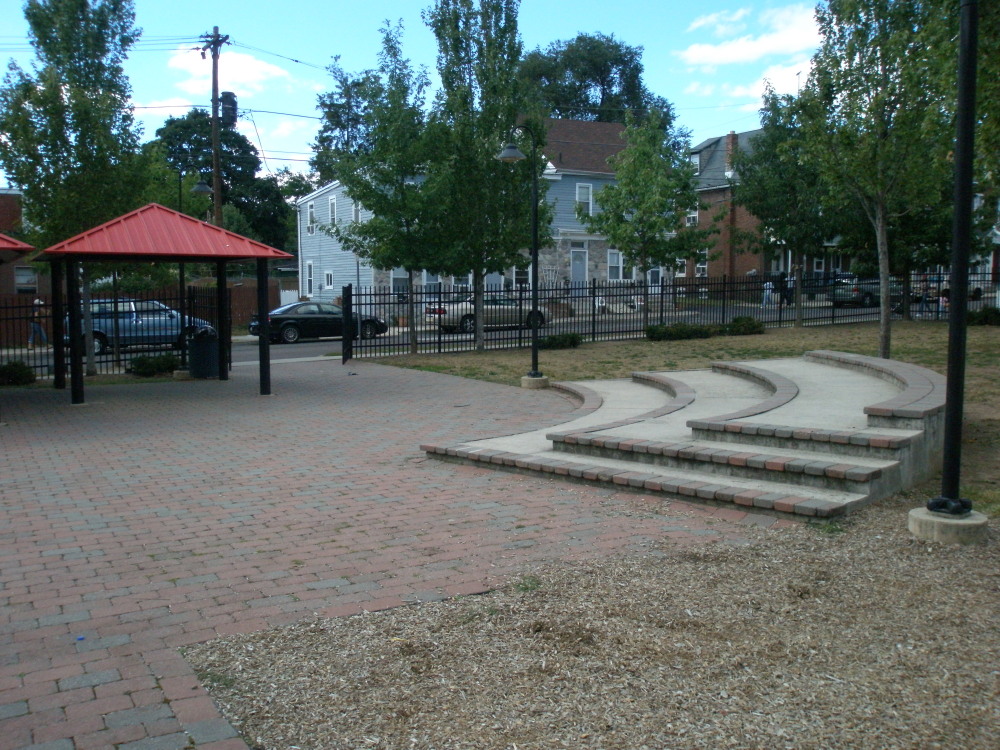
Heading down Washington Street, to the intersection with Chestnut, brings you to the New Chestnut Street Park. This very attractive, practically brand-new, fenced park has become a popular venue for community-wide events such as National Night Out, as well as for a local community gardening day and private parties.

New Chestnut Street Park

A few resident elders can usually be found on a bench right on the corner, keeping an eye on things. Because the park has a pavilion with access to electricity, it appeals to and serves a broad range of residents, not just children. It’s remarkable how the addition of that kind of equipment, which isn’t all that elaborate, can inspire wider and more frequent use of a pocket park. Something to think about if/when there’s funding for renovations or upgrades to other pocket parks in town.

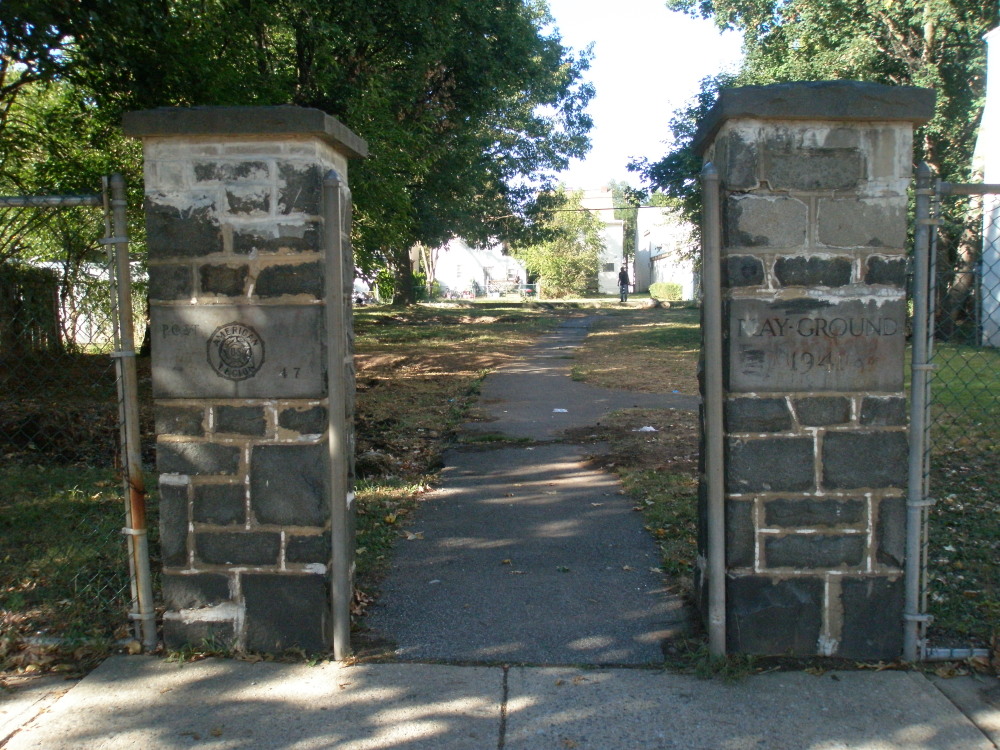
Now I just have to say a few words about the Old Chestnut Street Park, which appeared in the Penn State study but is now vacant. This quarter-acre park, which is on the north side of Chestnut Street, between Franklin and Washington Streets, is actually owned by the School District. This will be a site to keep your eye on as the School District conducts their facilities analysis because the idea of a community garden at this location has been floated out there by some neighborhood residents.

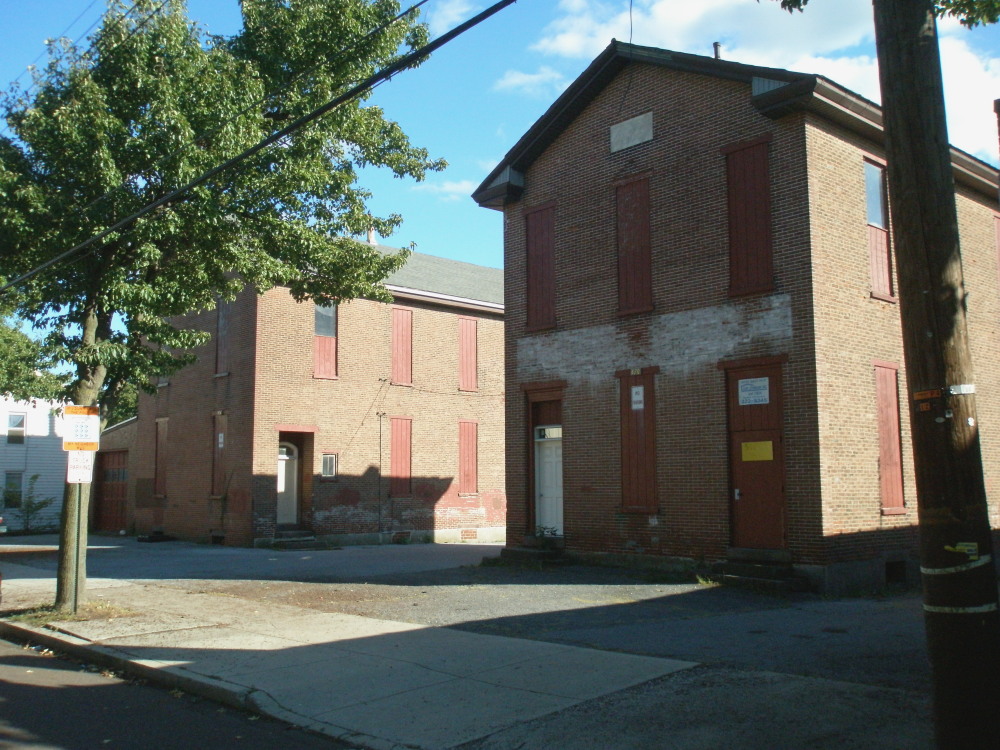
This property also has an interesting history. As you stand at the park entrance and look across the street, you’ll see two really cool, brick buildings that used to be public schools; they’ve got red boards over the windows. The one on the left was Hamilton School, built in 1881 (424 Chestnut), and the one on the right was Adams School, built in 1887 (420 Chestnut). While there are some clues on the buildings themselves, I consulted my handy Pottstown School Directory from 1892-93 that came in a small batch of things I won on eBay a while back. (I’ll eventually give this stuff to the Historical Society or the District, but I’m still working my way through it.) Anyway, this little book is filled with all sorts of interesting tidbits about the District, including the fact that there was a school called “Franklin” on the empty park site, way back in the 1890s. It seems to have had two second-grade classes, taught by Sue B. Fritz and Libbie Krause.

Former Hamilton & Adams Schools

Isn’t it kind of wild to imagine how every piece of land has its own history and its own stories to tell?

WALNUT STREET PARK
Location: Walnut Street between Grant & N. Adams Streets, Pottstown, PA 19464
Size: 0.5 acres
Suitability: Approximately 5-12 years old.
Facilities: Two play areas, picnic tables, benches; shady and sunny areas.
Activities + tips: Lower playground seems more appropriate for younger children. Locals report excellent sledding conditions on the hill!
Hours: Dawn until dusk.

WASHINGTON STREET PARK
Location: Intersection of East and Washington Streets, Pottstown, PA 19464
Size: 0.5 acres
Suitability: Approximately 5-12 years old.
Facilities: Playground, swings, picnic tables, benches; shady and sunny areas; small, grassy multi-purpose open space with slight downward slope.
Activities + tips: New fencing along East Street prevents younger children from running into the street.
Hours: Dawn until dusk.

NEW CHESTNUT STREET PARK
Location: Corner of Chestnut and N. Washington Streets, Pottstown, PA 19464
Size: 0.5 acres
Suitability: All ages.
Facilities: 2 sets of play equipment; multi-purpose, grassy space; paved area and pavilion with electricity; mini-amphitheater; community flower gardens & lovely landscaping.
Activities + tips: Call the rec. dept. for information on rentals. Pitch in if there’s a community gardening day next spring!
Hours: Dawn to dusk; sometimes later for groups with event permit from Rec. Dept.

OLD CHESTNUT STREET PARK
Location: In between 417-427 Chestnut Street, Pottstown, PA 19464
Size: 0.25 acres
Suitability: All ages.
Facilities & Activities: Paved path, open space; seems to be used mainly as a pedestrian pass-through.
Tips: Small site owned by Pottstown School District, which is currently doing District-wide facilities analysis. Check out the cool former school buildings across the street!
Hours: Dawn to dusk.

Contact regarding any park rentals:
Pottstown Parks & Recreation Department
Borough Hall, 100 E. High Street, Pottstown, PA 19464
610-970-6500
Click on the Department’s “Special Events” tab to learn more about upcoming events.

Follow the parks series at Mission: Healthy Living, Positively!Pottstown, Twitter (PositivelyPtown), Facebook, and The Mercury.

PHOTO GALLERY

Walnut St. lower playground

Walnut St. Hill

Washington St. swings

Washington St. grove

New Chestnut St. entrance

New Chestnut plaza

New Chestnut play area

Grumpy’s… anything but!

Pottstown's most charming grandpa?
Why did Sheila and Eugene Dugan pick a scowling, old guy to represent their new, hand-carved sandwich business in the Farmers’ Market building at 300 High Street?

“We were sitting around with our kids, trying to come up with a name and our oldest son Shane said, ‘Let’s name it after Dad and call it Grumpy’s.”

As it sunk in, the whole family cracked up. Eugene, who has been in the food industry practically his entire life and has a degree in culinary arts from Johnson & Wales University, had been out of work for a while. So maybe he had been a little grumpy until embarking on this new venture. But that good-natured family vibe won out, and that’s what Grumpy’s Handcarved Sandwiches is all about. And freshly-cooked and prepared sandwiches, of course.

My mom and I had the chance to sample their #2 Turkey Roseo with roasted red peppers, pesto mayo and sharp provolone cheese and found the creamy pesto mayo and hearty portions will leave you feeling satisfied for hours. They also offer many other chef-carved, all natural turkey, roast beef and pulled pork specialties. There’s even peanut butter & jelly, without the crust, for $1.50 for your little ones! Add to that homemade soups and sides, and you’ve got all the fixins for lunch, dinner, an office party, or any family or social gathering.

Grumpy’s offers catering and can customize a menu that works for any occasion and budget. They will be open whenever there are events downtown such as the Classic Car Shows and the Halloween Parade. They’re already dreaming up special hot chocolate drinks and s’mores for Halloween.

Their official grand opening will take place August 26-28, during which they will hold 3 raffles – no entry fee, just add your name & cross your fingers.
1. A catered party that includes sandwiches, sides and sodas for up to 5 people
2. Two meals & two sieds.
3. A Grumpy’s t-shirt & a meal

That t-shirt may become a collector’s item; people are already asking for them. Sheila’s brother, John McCafferty, of McCafferty & Company Advertising in Louisville, KY, designed the logo. Locally, Patrizi Designs made the sign. Leighton Wildrick, Pottstown’s Main Street Manager, helped smooth over some last-minute bumps in the road so they could open up in their storefront on High Street.

The Dugans are one of many families crossing my path these days, who have moved to Pottstown to be part of a walkable, small town community. They recently moved from a development home in Pottsgrove and bought an historic home on Hanover Street. “We’ve got 3,000 square feet, wonderful neighbors, and our kids can walk to school,” said Sheila. “We’re committed to Pottstown.”

Now, that’s what we like to hear!

Grumpy’s Handcarved Sandwiches
300 High Street (Farmers’ Market, entrance on High Street)
Pottstown, PA 19464
610-323-1232
Hours: Tuesday – Saturday, 11 am – 6 pm; open late for special events in town.
Some outdoor seating.

Visit Positively!Pottstown on Tuesday, when we’ll launch another “Name that Building” contest and give away two $10 gift certificates to Grumpy’s, donated by Grumpy’s.

HB 712 – PA Land Bank Legislation

This afternoon I sat in on an hour-long webinar on proposed legislation that would enable the creation and operation of land banks in PA. The ability to create land banks would give all municipalities and counties a tremendous tool against blight and property abandonment. I could see a Pottstown Land Bank working hand-in-hand with The Pottstown Partnership, Genesis Housing and even PACA, offering homes for sale or lease-purchase throughout the Borough, marketing & offering housing and work space to artists (similar to Paducah, KY), attracting homeowners, entrepreneurs and businesses, and getting properties back on the tax rolls. But I’m getting ahead of myself.

The Housing Alliance of Pennsylvania sponsored the webinar. The presenters were Cindy Daley, Policy Director of the Housing Alliance, and Irene McClaughlin, an attorney and mediator who has spent her career dealing with blight-related issues in the Pittsburgh area. From the Alliance website: “Anti-blight land banking legislation passed the House on Tuesday, June 29, 2010 by a majority vote of 190-8. HB 712 provides for the creation of land banks for the conversion of vacant or tax-delinquent properties into productive use. The Housing Alliance supports this bill, although we anticipate it will need some technical amendments in the Senate.”

Below are some key points about what this legislation would allow and how a land bank would function. There are still questions about the nitty-gritty details, but with such overwhelming support in the House, it seems like this legislation could very well get passed in some form pretty soon. It is enabling legislation, which means that it allows land banks to be created but it’s up to individual towns and counties. It is NOT mandatory.

There are an estimated 300,000 vacant properties statewide. Between population and job loss and sprawl, rural, inner ring suburbs and urban communities have been faced with blight and abandonment.

An abandoned house or lot reduces the value of all other surrounding houses by an average of $6,720.

There might be potential buyers for these properties, but an inability to find the property owner, the lack of clear title, and debt that exceeds the property’s value all prevent a property from getting a new owner. Existing tools are inadequate: uncertainty of tax foreclosure process; cost & difficulty of condemnation; and existing laws, which have been on the books for decades never anticipated people simply walking away from property.

Land banks are single purpose entities created by local government to manage properties that no reasonable purchaser otherwise wants.

Would allow for the clearing of existing liens and old debt; clearing of title; remediation; assembly of parcels for current market conditions; holding of property until a market emerges; disposal or transfer under terms and conditions driven by the market.

Land banks just a part of a larger picture. Still need tax collection and foreclosure reform along with clearer mechanisms for protecting low-income homeowners or owners who simply wait until the last possible minute before paying their taxes. This enabling legislation – HB 712 – is just the beginning of the process.

Details of HB 712
Defines a Land Bank as a public agency.
Jurisdiction: Cities or counties that are authorized by state law to create a redevelopment authority. Any city or boro with 10K or more population.
Formed by an ordinance subject to approval by a mayor or county executive.
Intergovernmental Cooperation Agreement (ICA) between 2 or more land bank jurisdictions.
Smaller jurisdiction could join an existing land bank.
If there’s a land bank in a city and in that county, the county can’t take real property in that city.

Board of Directors
5-11 members (odd number); can include public officials and municipal employees.
Must include at least one voting member who is a community resident and a member of a civic organization, but who is not a public official or employee.
Must have open meetings, a regular meeting schedule and follow Sunshine Laws.
Staff: may hire employees, or have crossover with city staff & municipal functions

General powers
Adopt, amend, repeal bylaws
Borrow money
Issue negotiable revenue bongds and notes
Enter into contracts
Collect rent
Design, develop, construct, demolish real property
Partnerships, joint ventures for development of real property.
Needs to have capacity to maintain the property according to existing codes.

Acquisition & Holding of Property: gift, transfer, exchange, foreclosure, purchase, from municipalities, from tax claim bureaus. At this point, these properties are undesired by anyone else.
Land bank’s real property, income and operations are exempt from state & local taxation.
Land banks may only acquire property within their jurisdiction, except by Intergovernmental Cooperation Agreement (ICA.) Except if property is leased out to 3rd party for more than 5 years, then income becomes taxable. Ideally, will stabilize and bring up values of surrounding properties.

Disposition: A land bank must create an inventory of its real property which is available to the public for inspection.
May sell, transfer, lease, or mortgage any real property of the land bank.
A land bank may establish priorities for the re-use of real property it conveys, including but not limited to uses for: purely public spaces and places, affordable housing, retail, commercial & industrial activities, conservation areas. These uses are not specified in the bill; it’s up to each particular Land Bank. Priorities don’t have to be uniform across the land bank area. Bill recognizes that land use is going to be specific to location. By-laws and any ICA would establish specifics and priorities.

Financing Land Bank operations:
Grants & loans from municipality, Commonwealth, Fed. Govt. & other public & private sources.
Payments for services rendered.
Rents and leasehold payments.
A practice adopted in Michigan that provides a regular funding source: an agreement is reached with the taxing jurisdictions – not more than 50% of real property taxes collected for 5 years after the transfer of property will go back to the land bank. As proposed in HB 712, this is optional, subject to agreement with municipality and school district.
Borrowing and issuance of bonds. Municipalities may but are not required to guarantee the bonds Bonds and income are tax-exempt.

Required to keep records of proceeding & subject to following state laws:Open meetings, Right To Know, Conflict of Interests, Ethical Standards Laws

Special Powers
Power to discharge & extinguish real property tax liens and claims, subject to the approval of the school district for school taxes.
May file a court action to quiet title in an expedited procedure. Multiple parcels of real property may be joined in a single complaint in action to quiet title.
Land banks do NOT have power of eminent domain.

Dissolution: There is a procedure for dissolution of the Land Bank.

Audits: Land bank income and expenses and a report will be submitted annually to DCED and to participating municipalities.

Land Banks and PA Real Estate Tax Collection & Foreclosure
Municipalities may assign tax claims and liens to the land bank. Municipality and a land bank may agree to a set bid price in advance of public auction (upset sale or judicial sale as well as at “single sale” allowed unter MCTLL (only for Phila and Allegh. Counties)) and transfer property to the Land Bank as purchaser in accordance with the agreement. Within 30 days of the purchase, the land bank must receive the deed transferring the property free and clear of all claims, liens and charges.

Next steps: HB712 is now in Senate Urban Affirs & Housing Committee. The Committee intends to hold a hearing on the bill – early Sept.? The Housing Alliance is convening a Working Group to review the bill & propose amendments. All interested stakeholders are invited to participate. And once the language of HB 712 is finalized, the group will begin working on mechanism for financing land banks and tax sale reform, including strong hardship waivers.

Pottstown’s Night Out a Big Success!

National Night Out in Pottstown was a lot of fun! I had a great time dribbling with the youngsters, catching up with Judy Memberg, Executive Director of Genesis Housing and Katy Jackson of CPR, and meeting Pastor Reggie of Victory Christian Life Center. Thanks to all the organizers and volunteers! For more coverage, check out The Mercury’s story here.

National Night Out

I’ll be at the Chestnut Street Park today from about 5-6:15 to have some fun and observe National Night Out before going to a local bloggers’ meeting. Although I tweaked my back at the gym yesterday, I’ll be bringing some basketballs — I think I’ll still be able to run a few dribbling games with the kids 🙂

National Night Out is in its 27th year. Their website describes the event as “an effective, inexpensive and enjoyable program to promote neighborhood spirit and police-community partnerships in our fight for a safer nation.” Locally, the event is being organized and sponsored by Genesis Housing Corp., Victory Christian Life Center and Citizens for Pottstown’s Revitalization. The park is at the corner of Chestnut and Washington Streets. See you there!

Pottstown’s Proposed Rental Rules

I posted this earlier today at The Mercury (as Number5). The Mercury/First Suburbs project asked for feedback about proposed changes to the rental registration/inspection ordinance.

” Even Keel has hit the nail on the head. The current ordinances were/are not being enforced. Maybe some combination of revisions to the current ordinances would be ideal, although I’m skeptical of yet more layers & tougher sanctions in an environment where the most basic enforcement hasn’t even been tried yet. And Meadowdeb makes a good point: there are existing laws regarding landlord/tenant rights. An understanding of these must be explicitly part of the discussion.

Bottom line: passing ordinances is not that hard. Enforcement is and that’s been the problem. There should be much more discussion about how enforcement would work. Notifying tenants & landlords, scheduling inspections, showing up for inspections, re-scheduling, collecting fees, procedures with the courts, setting up payment systems for each instance where money might change hands, etc. This should all be thought out before changing an ordinance. What will be the day-to-day reality of any ordinance, even the existing ones?

What is the current Codes Dept. capable of handling right now on top of current duties? I admit I have no idea, so I have to imagine… I’m picturing an inspector coming back to the office from a day of inspections and re-inspections. Did he/she record the inspection results in a handheld device? Does he/she sit at a computer and input the data into a database that’s been set up… by whom? Does he/she hand a pile of papers to an administrative assistant? Are there paper files and computer files? How long does it take to send out the letter telling the landlord what repairs need to be done? The next day or a week or a month? How many units are we talking about here? How much time does a landlord get to do repairs? Does the landlord call to schedule the re-inspection, or is it put in the violation letter? Do inspections start in different parts of town simultaneously? Is there one inspector assigned to each ward or do they work all over town? How do you track the data that’s being collected so that you know how many units/buildings you’ve been to and whether your program is succeeding so that you can report the numbers to the taxpayers on a quarterly basis on your website? Just going through this exercise makes me think annual inspections are too much. By the time you’ve closed a lot of files, it’ll almost be time to give 60-day notice for the next inspection. And does any governmental entity really want to be collecting/tracking security deposits??

I’m not ashamed of having been a bureaucrat in a previous life. As a planner, maybe it’s in my DNA. Bureaucracies can be set up efficiently to accomplish a public policy goal, or they can be an unworkable, expensive nightmare. “Good government” – Pottstown has to be going for that. So, what, EXACTLY, needs to be in place to make enforcement a reality? And can the program pay for itself – salaries, paper, postage, computer & database management? Has there been any discussion based on facts – like the number of rental units in town – to justify proposed fees or prove fiscal sustainability?

Is it possible that the current ordinances could get things moving in the right direction & allow the Borough to put the proper systems in place and then re-assess the program after a year or two of operation? In any event, why not take the time now, in a public roundtable setting, to vet any changes or even new enforcement of existing laws with the stakeholders (landlords, tenants, concerned homeowners)? Then allow for Council to have a public discussion and accept public comment over the course of several meetings. It’s good of The Mercury to do this, but it really should be happening face-to-face at Borough Hall, with civility a top priority.

Proceeding with caution & collaborating could avoid lawsuits, save tax dollars in the long run, and get everyone a program that mostly (nothing’s perfect) achieves the desired outcomes: safe & decent housing and neighborhoods, housing stock that maintains or increases in value, and more positive perceptions of the town, which actually have a basis in reality.

Sue
Positively!Pottstown ”

Community Gardens & First Suburbs – the start of a (long) conversation

This is the first in a series about First Suburbs of Southeastern PA.

This past Saturday a community gardening project took place at a corner park in the heart of Pottstown’s historically African-American neighborhood. The Washington Street corridor has faced its share of challenges over the years – challenges that many would characterize simply as “urban.” But by all accounts the gardening project was a huge success, bringing together a diverse array of children and adults, members of the broader community, and the energy of two organizations – Citizens for Pottstown’s Revitalization and Preservation Pottstown.
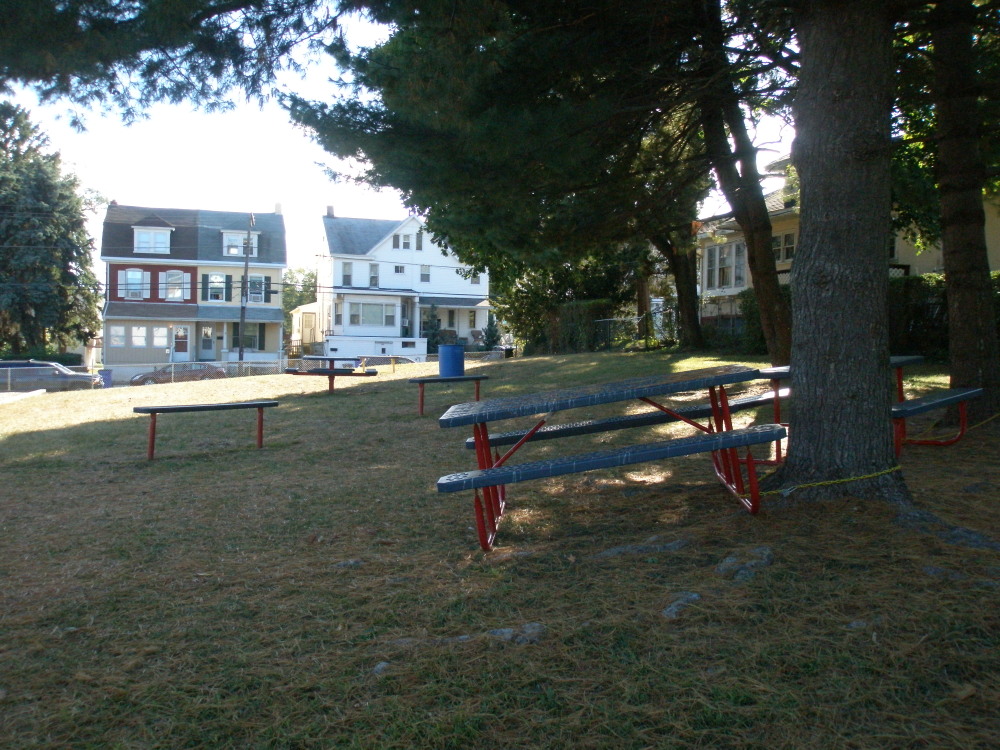
At The Mercury, this was news, before and after the event. Two local blogs, Code Blue and Save Pottstown!, promoted it ahead of time. And I certainly was thrilled to blog about it after the fact, thanks to the quick emailing of photos and updates from those in attendance.

To me, the fact that there was such a buzz is interesting in and of itself. What did this activity spark in individuals and the community? Can we try to define it, and in the process, become conscious of it, and try to do it again? There are all kinds of metaphors that spring forth from the gardening/growing process that are apt here. But I also think the actual process of growing food and flowers is good and vital… and not for just one neighborhood. Rather, it’s something for all of Pottstown and the school district to consider as a powerful tool for revitalization, which brings me to the First Suburbs Project.

According to their website, “The Southeastern Pennsylvania (SEPA) First Suburbs Project is a coalition of community organizations and institutions focused on solving common challenges facing the older, developed suburbs of Bucks, Chester, Delaware, and Montgomery Counties. These communities share conditions of diminishing economic investment, declining infrastructure, struggling school districts, and social services lagging behind the needs of their residents.” Older suburbs and towns, like Pottstown, now find themselves face-to-face with a host of public challenges that were once thought to be the province of larger cities.

These conditions are the result of a self-fulfilling syndrome that works something like this:

Over a long period of time, disinvestment occurs due to range of causes, usually a combination of public policy and “free market” forces. Businesses and homeowners with rising incomes leave for literally greener pastures, creating sprawl. The people and businesses that remain must pay more in taxes to maintain the infrastructure, level of municipal services and school system. But these tax increases are too much for some more people and businesses; they leave. Over time, in an attempt to rein in taxes, services are cut. Property values do not go up under these circumstances, making properties concentrated in these areas attractive to investors, and decreasing the percentage of homeowners in a community. This downward spiral picks up momentum, and the chances for an economic recovery diminish even further

The (SEPA) First Suburbs Project advocates “state policy changes and regional solutions” as the best way to tackle these common challenges.

There will be a regional public meeting of the First Suburbs Project this Thursday, June 10 from 7-8:30 pm at South Hall on the Western Campus of Montgomery County Community College in Pottstown. SEPA First Suburbs coalition members want to hear the concerns, ideas, and questions of area residents, organizations, businesses and government officials about their very real experiences in the kind of environment described above.
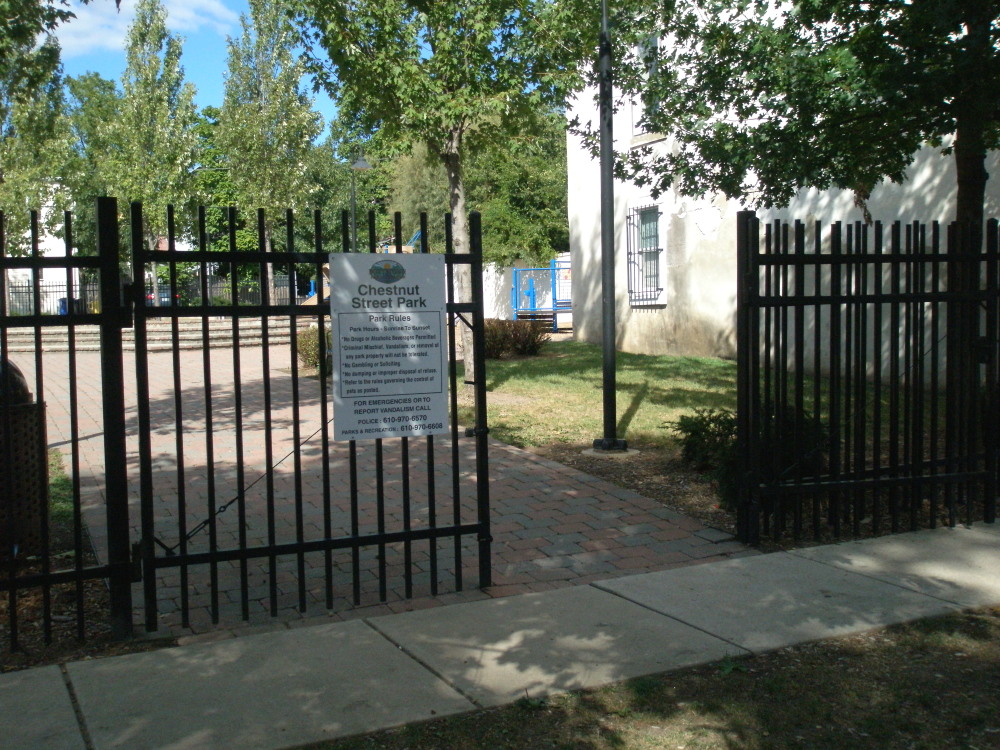
I’m a firm believer in the potential for regional planning and public policy to mitigate these problems, and I encourage everyone to get to this meeting, speak out, listen and learn more about the possibilities for changing some of the inequities in public policy at the regional, state and even federal levels.

That’s on the one hand.

On the other hand, Pottstown cannot afford to wait for larger, slow-moving, governmental/political behemoths to change their own deeply-entrenched fiscal and social policies. Pottstown must continue to try to define a new course for itself ASAP… while simultaneously pursuing broader changes with other communities that find themselves in the same boat.

And this is where I come back to community gardens.

Below is my quick list of what might have made that such a great experience for those who were involved, and why it brings a smile and hope to someone reading about it. Readers should feel free to add to the list.

What’s Great about Gardening

    – Getting hands dirty; being a kid (again)
    – Adding beauty to surroundings
    – Transformation before your very eyes
    – Having responsibility to care for something that’s your own
    – Being given the chance to nurture
    – Anticipating wholesome food
    – Being around cheerful adults
    – Being pro-active; feeling of taking control, being in charge
    – Sharing snacks/food with other human beings after a job well done
    – Feeling that you are part of a caring community, not alone

    As I’ve blogged before: Community gardens are growing in popularity, especially in places where wholesome foods, such as fresh fruits and vegetables, are not available or are too expensive. Basically, an available lot is divided up among interested residents and/or groups/clubs. Someone who knows something about gardening coordinates and teaches, so that participants end up with a steady flow of food and flowers. Of course, donations of tools, plants, seeds, soil are sought to make it all happen. Community gardens get people outside, get neighbors working together, provide better food at a lower price, raise awareness about nutrition and food production, and put an empty or nuisance lot to good use.

    During World Wars I and II, Victory Gardens in private yards and public parks were considered one’s patriotic duty to ease pressure on the food supply.

    So, what does this have to do with Pottstown’s revitalization on a larger scale?

    Private gardens were very much a part of my growing up. Just about everyone grew tomatoes. Picking apples and making applesauce were, and still are, an early fall tradition for my mom. These were traditions enjoyed by many immigrant, hard-working families that came to Pottstown to work, raise a family and improve their standard of living. Small-scale gardening is part of Pottstown’s past, and in these fiscally-challenging times, it makes a whole lot of economic sense to think about how to bring it back… but with a modern take.

    What if Pottstown became known as a place with a strong private and community gardening movement in its neighborhoods and the schools?

    As a non-resident, I don’t know the extent to which any of the items on the brainstorming list below are possible or already in the works. My inclination is to always just put ideas out there to see if any of them resonate on the ground, where people live.

    Ideas for Extending the Washington/Chestnut Park Project

– Identify a few Borough- or District-owned lots throughout town that might be suitable
– Factor garden space into the District’s land/building planning process, right up there with other energy-saving/sustainability measures
– Seek out several individuals with expertise and enthusiasm to guide smaller, working groups & organizations around town and in the schools.
– Get Bud Heller, Director of Food Services for the School District, on the case. Heller is a tireless advocate who has testified before Congress on behalf of the Fresh Food Produce Association and the School Nutrition Organization.
– Incorporate student-grown produce into menus?
– Is the healthy food program at Edgewood still going strong? Expand to other schools?
– Incorporate organic, small-scale food-growing concepts into science curricula
– Highlight the natural world in fiction, poetry and non-fiction in the English curricula
– Have science & English classes periodically come together for joint projects
– Is there a sustainability club in the high school?
– Have there been quantifiable efforts to reduce waste – in the cafeteria, paper, lights in classrooms, etc.– that engage the kids? See The Green Cup Challenge, which the Hill School has participated in. Tap The Hill, Montgomery County Community College and the Pottstown Garden Club for advice. So many people and resources right in Pottstown!
– Gardening does not have to be expensive; built-in labor pool in schools. Knowledgeable and generous landscapers and suppliers are out there, such as Eric Schmidt of Colonial Gardens, who provided materials for Pottstown’s gardening project.
– The Pottstown Health & Wellness Foundation’s grant program and Mission Good Nutrition videos are additional, key local resources.

The community gardening concept could be a way for Pottstown – and other First Suburbs – to take a past practice that was sensible and sustainable and re-claim it in a way that will appeal to anyone who wants to live in an engaged, progressive-minded community today. The power of people working together on an activity so basic to human survival should not be underestimated. Last weekend’s project at Washington & Chestnut Streets has given a glimpse of the positive, communal energy in Pottstown that is looking for a meaningful outlet. In a time when so much in the world seems out of our control, gardening can put some kind of power back into the hands of the people.

Note: The Pottstown Health & Wellness Foundation’s grant program and Mission Good Nutrition videos are additional, key local resources, which were inadvertently omitted from the original post.

Sue Repko is a writer, licensed urban planner in New Jersey and a member of the American Institute of Certified Planners. She grew up in Pottstown and blogs at Positively!Pottstown.