Beyond the Borough’s Borders – Part 2

I’d like to pick up where we left off by pointing out an important distinction in the way local governments deal with county government. These inter-governmental relationships play out on at least two levels: the staff level and the political level. The local and county staff are often in the trenches together, working on grant applications, sharing information, preparing documents for public hearings, meeting deadlines, etc.

The politicians… well, that can be a whole other story, even in the cases where the staff are somewhat merrily chugging along, jointly getting things done. Politics is what we read about in the paper – the votes we don’t understand; the frustration that’s built up over years, perhaps decades; the public policy – and the whole tone of the discussion – that is ultimately set by the elected officials.

In some sense, the wheels of government at the staff level just keep turning. Ideally, though, the local elected officials would be on the same page with county/ regional planning policy in order to keep those wheels greased. (It’s a karma thing.)

On to outside resources…

1. Everyone should know a little bit about Pottstown’s Keystone Opportunity Zone or KOZ. These zones exist in select places throughout Pennsylvania and provide for the elimination of certain state and local taxes for a limited period in order to encourage the redevelopment of specific properties that have not been generating much in taxes anyway and where their redevelopment could increase taxable activity outside the zone. Pottstown’s KOZ parcels are listed here, via Montgomery County’s Economic and Workforce Development website. I believe Pottstown’s KOZ designation expires in 2013. I don’t see news anywhere that any properties have been developed to take advantage of these tax breaks. (There seems to have been a move by the School District in July 2009 to seek an extension of the KOZ zone to 2020. More info/clarification from any readers out there?)

2. The Main Street Program is a 5-year State program to support a Main Street Manager position and the creation of a local organization to manage downtown revitalization efforts. In Pottstown, that organization is the Pottstown Downtown Improvement District Authority or PDIDA. The members are listed here. A map of the PDIDA district is here.

The State Main Street Program provides $115,000 over the five years (with more money given in the early years) and requires a local match. The idea is that the position would become self-sustaining. There is also a Downtown Reinvestment and Anchor Building component to the program that could provide up to $250,000. I’m not sure if Pottstown has taken advantage of the latter, or what year their program is in… (I hope to interview Leighton Wilderick, current Main Street Manager, sometime in the next few weeks!) The State closed off new Main Street applications this past year. At any rate, it looks like this particular funding stream may not be available much longer.

3. Pottstown’s got “brownfields,” properties that contain or potentially contain a hazardous substance, contaminant or pollutant. The PA Dept. of Environmental Protection has an Office of Community Revitalization and Local Government Support to help towns deal with the redevelopment of these kinds of properties.

4. As August 2010 winds to a close, federal money is now available for planning grants that recognize the interrelatedness between housing, transportation and economic development. For the first time, the Department of Housing and Urban Development (HUD) and the Department of Transportation will be accepting applications at a single entry point for Community Challenge and TIGER II Planning Grants, and HUD is taking applications for their Sustainable Communities Regional Planning Grant Program. At least for now, with the current Administration in D.C., there’s a clear push for coordinated, regional planning that explicitly takes into consideration the connections between housing, transportation and economic development.

The Pottstown Partnership will have to keep in mind all of these possible funding sources and agencies, thinking creatively and collaboratively in order to tap into any possible funding immediately, as soon as it becomes available. The only way to pounce is to know what’s coming down the pike ahead of time and to have your partnerships in the non-profit, government and private sectors all on solid footing.

5. Last but not least, I’d like to spend a moment considering all the businesses, entrepreneurs, consumers, and large and small investors. This “funding stream,” if you will, includes anyone or any entity with capital to invest or spend in Pottstown, whether it’s for the purchase of a building or for dinner and theater tickets. They are constantly making choices between spending their money in Pottstown or elsewhere.

Pottstown’s been struggling for a long time. Many people are worn out. It hurts to see prosperity visiting nearby communities and bypassing one’s own. Every once in a while, there will be a burst of negative online comments about other people with real or imagined, greater wealth or education. These comments impart a suspicion about “outsiders.” They have appeared most noticeably in the discussions about rental housing. Yes, there are some very real, valid concerns that should be, and are being, addressed through enforcement and, I gather, small group discussions between the Borough Manager and the affected parties. My point here is that, after a while, these comments can come across as a general, negative community attitude about investors, period. And that’s not good for economic development.

The planning profession is specifically concerned about improving equity across the entire spectrum of human needs – housing, clean water and air, education, food, transportation, the list goes on. That was a huge reason I was drawn to it in the first place. I think it’s crucial to acknowledge the disparities and our own attitudes toward them, and then hold it all up to the light, especially if they might be getting in the way of the collective best interest. Where and how can public policy be equitable for the most participants AND get the community what it needs to move forward? The balancing act never stops.

As you may have figured out, we’ve basically been taking a rough inventory in order to get an overall sense of what we’re dealing with – the physical landscape, how Pottstown looks on various maps, the people and groups doing the work of the community, the key resources, relationships and perceptions from outside the Borough. Next, I’d like to take another pass at what’s happening inside the Borough, specifically looking at the regulatory framework that land developers and investors would have to navigate if they wanted to locate their businesses there. The problem is, not nearly enough of them do. What’s that all about?

Next up: The regulatory framework for land development in Pottstown.

Pottstown as fashion hub??

Alright, you can stop choking on your coffee now and hear me out.

This article in today’s New York Times talks about the zero-waste movement in the fashion industry. I just had to post it now even though it’s several leaps ahead of where I am in my planning series.

Back in June, I mentioned recycled fashion designs here in a laundry list of possibilities for a new “story” for Pottstown.

You’ve got empty buildings for workshop and retail space. You’ve got Moore College of Art & Design, the Art Institute of Philadelphia and Philadelphia University, all with fashion design programs, all turning out graduates looking to make their mark in a fast-paced, ever-evolving field. You’re not that far from NYC either.

Here’s something to think about as just one piece of an overall economic development plan with sustainability, arts and culture at its heart… Pottstown actively marketing green fashion design, manufacturing and retail incubator spaces, with some kind of short-term rent subsidy program for young designers just starting out.

Pottstown could still be a place that makes things… sustainable, hip, cutting-edge things instead of industrial revolution stuff.

Another fun First Saturday!

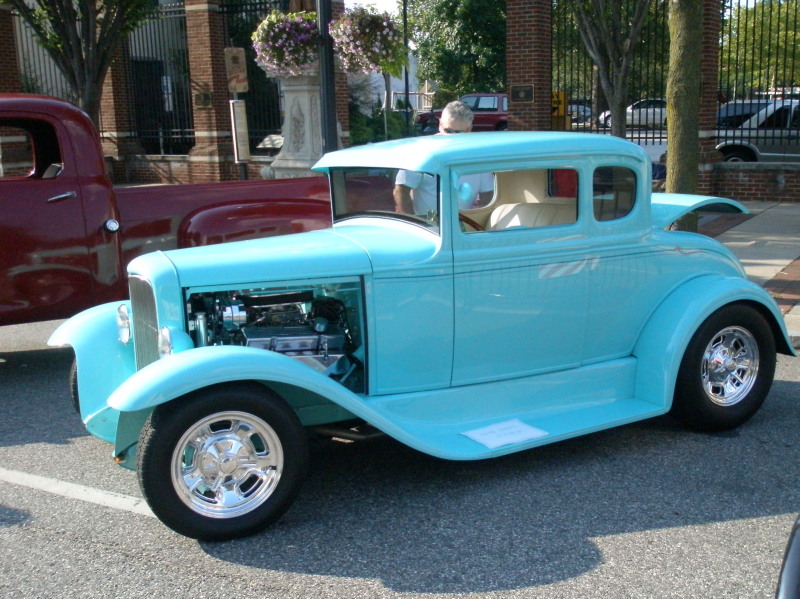
This past weekend, another First Saturday (brought to you by the Pottstown Arts & Cultural Alliance) brought the downtown to life with music, community-building and classic cars.

sweet!

This was the first time I set up a table, and I sure was grateful to get an iced mocha from Churchill and to get a spot under a canopy from Erica Hornburg-Cooper from The Gallery School. When kids stopped by to do art projects, they usually grabbed a bottle of bubbles and a Positively!Pottstown re-usable bag from my table.

It seemed like lots of people were getting great book bargains from the Pottstown Public Library sale. As they kept making their way to my table, it became obvious that I should just turn my bags over to the folks at the library so people could put their books directly into them there! Since the 4th of July, 250 Positively!Pottstown bags have infiltrated the community, bringing day-glo orange cheeriness to shopping carts throughout the region. Can a world dominated by positivity be far behind??

Another cool thing about hanging out at Smith Family Plaza on First Saturday is that the world comes to you, bringing ideas for future blog posts. I met Louis Rieger of High Street Music. And Ross Landy of WPAZ Preservation Association. And when lunchtime rolled around, my mom brought a delicious and filling sandwich from Grumpy’s, who will be featured in an article later this week.

Rounding out the music for the day was “Maggie Spike,” the duo of Eric and Peggy Gernerd. These Berks County natives play a very enjoyable, foot-tapping mix of acoustic folk, rock, jazz and reggae that has you humming along in no time.

Maggie Spike and Mike Holliday (courtesy of Maggie Spike)

And, finally, since I really had to get home, I could only glimpse the beginning of the Pottstown Classics Car Club Nostalgia Night and make plans to spend some more time there next month. The next First Saturday, which will be the final one for 2010, will take place on September 4th – hope to see you then!

Main Line Financial – 211 East High Street

211 E. High Street
After a mad flurry of guesses among several fierce competitors, our winner is Debby Weber of Pottstown! She gets a 30-minute massage from High Street Yoga. Thanks to Barbara of High Street Yoga for the donation!

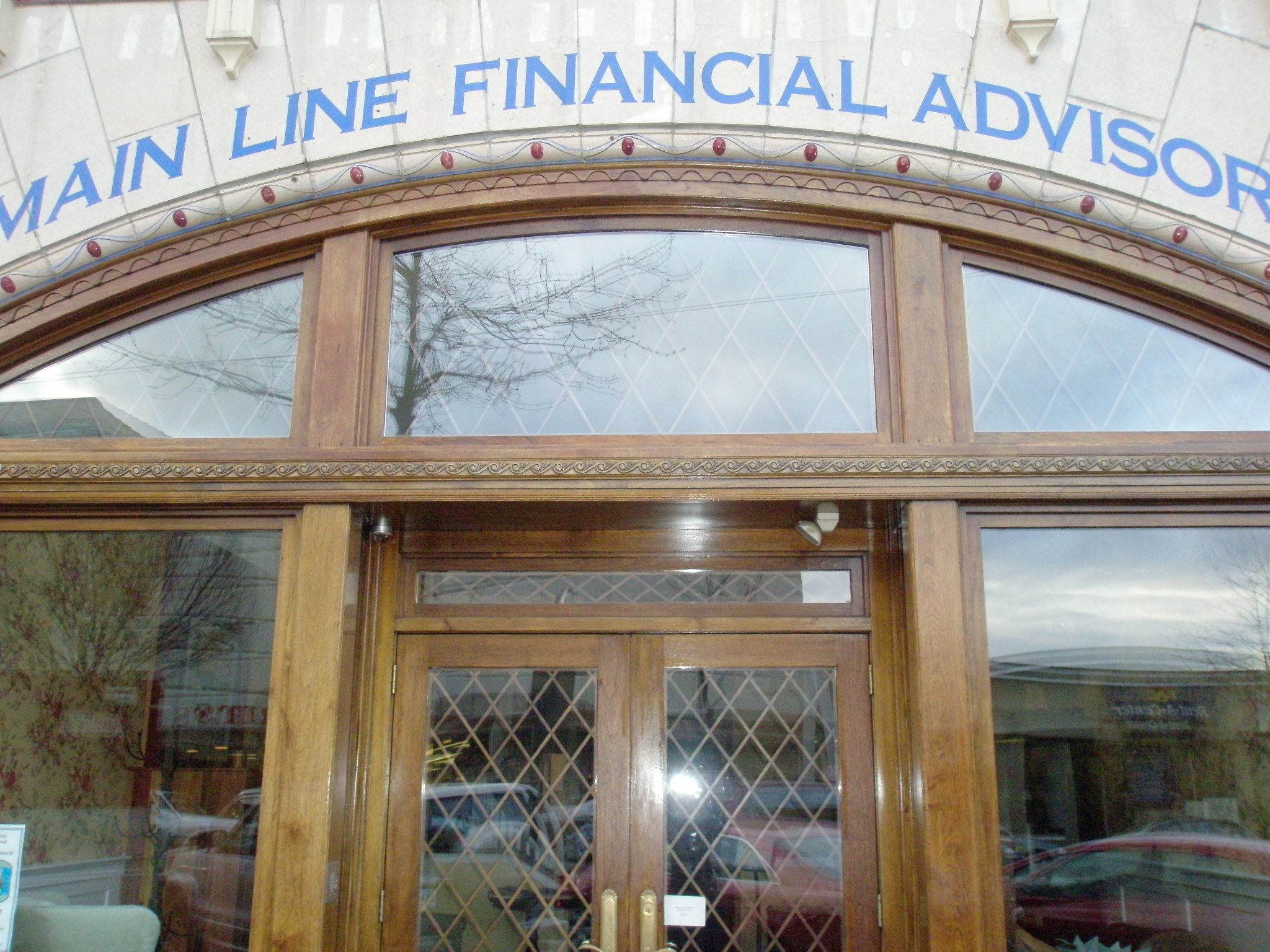
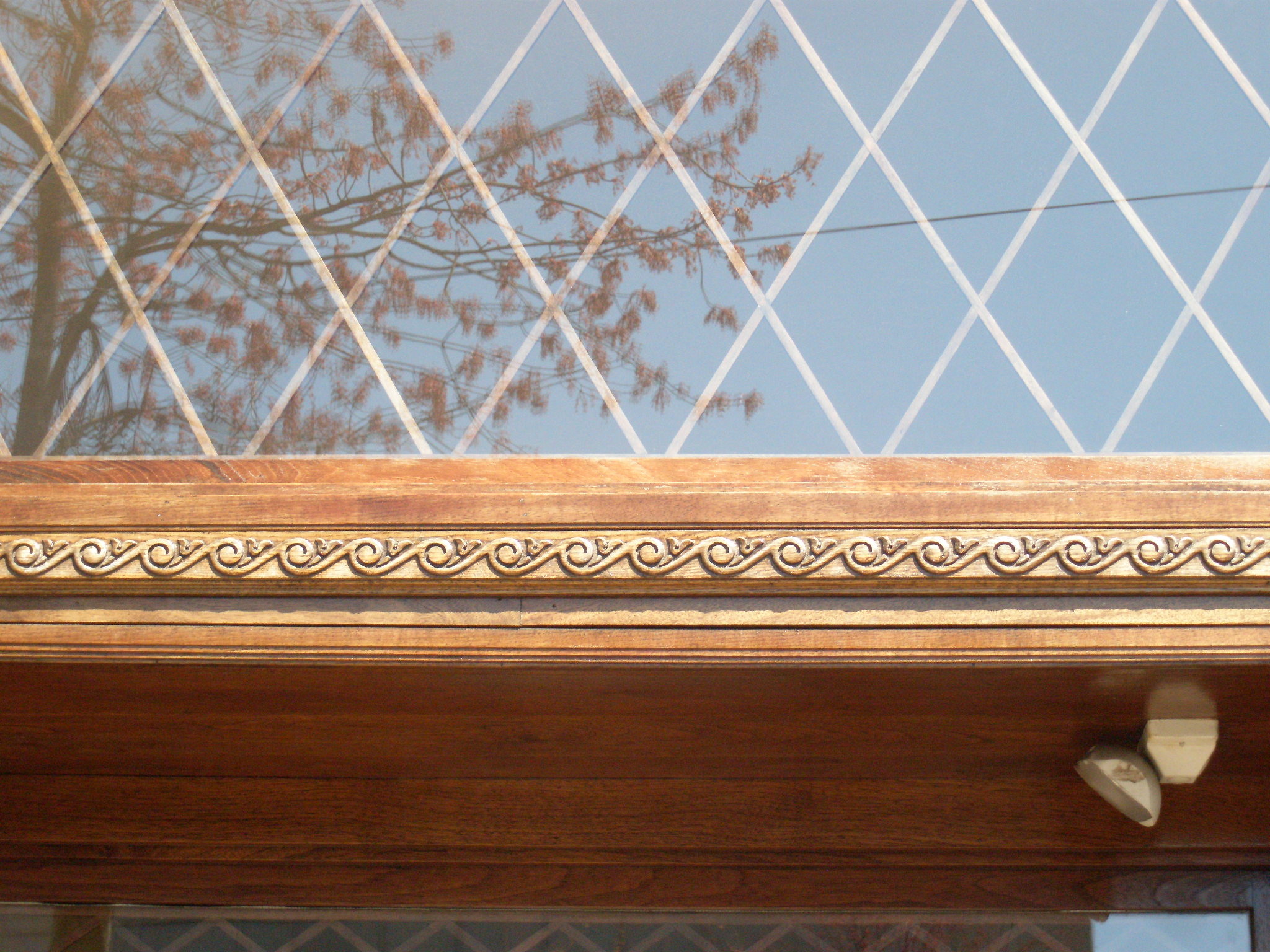
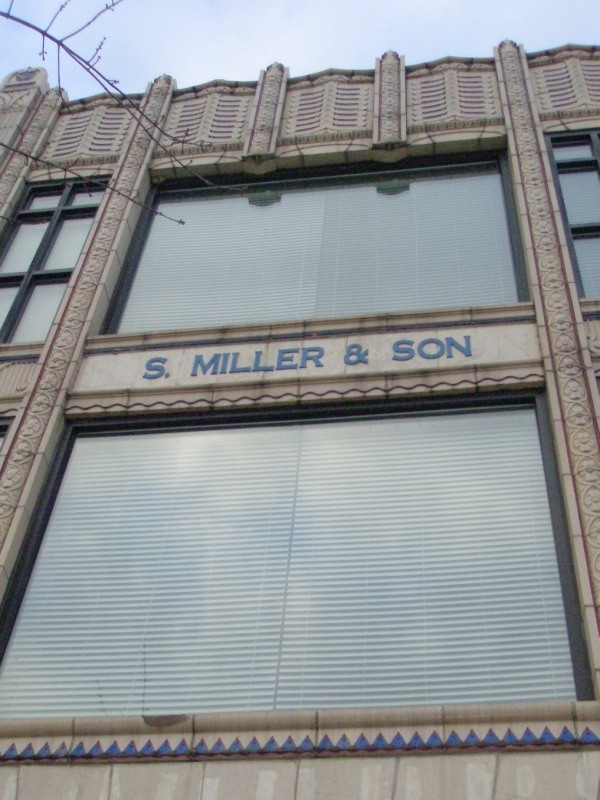
Main Line Financial Advisors occupy the former S. Miller & Son building at 211 East High Street. The image in the Positively!Pottstown header was taken from a photo of their front doorway. In addition to the intricate woodwork, I liked the blue of the letters and tried to mimic it in my header. Then I went for the Curlz MT font to mimic the woodwork. Totally amateur design sensibility!

S. Miller & Sons was a men’s clothing shop. The Millers were a German-Jewish family that came to Pottstown in the 1880s according to a story about a small Jewish cemetery on State Road in an Upper Pottsgrove newsletter from April 2009. (Unfortunately, the direct link to that newsletter seems to be broken now.)

There are just so many funky factoids out there in cyberspace. Check out this link from a publication called “The Clothier and Furnisher, A Monthly Journal Devoted to the Interests of Men’s Apparel,” established in 1872 and published out of New York City. On page 50 of their February 1895 issue, it says, “As soon as their alterations are completed, S. Miller and Son, clothiers, Pottstown, Pa., will occupy the store at 211 High Street.”

S. Miller & Son Facade

In another publication called The Railroad Trainman, Vol. 25 from 1908, S. Miller & Son is listed as being located at 221 High Street. Maybe that was a typo? Apparently, the Brotherhood of Railroad Trainmen allowed members to list businesses in their towns, encouraging other members to patronize them. Hmmm… my paternal grandfather spent his whole career working for the Reading Railroad out of Pottstown. Wonder if he was a member…

Main Line Financial Advisors does financial planning for individuals, families, businesses and institutions, along with integrated accounting and tax planning. The company was founded by Alfred “Fred” F. Matarazzo; his son Alfred “Al” F. Matarazzo, Jr. is the managing partner. In 2005 they expanded and developed their Pottstown office. They also have offices in Narberth and Malvern.

Main Line Financial Advisors
211 East High Street
Pottstown, Pennsylvania 19464
P: 610.323.5860
F: 610.323.5861

Cool architecture, financial planning, Jewish immigrants, trainmen and massage – you never know what you’re going to run into at Positively!Pottstown…

ANOTHER HINT!

ANOTHER HINT TO HELP THE DETECTIVES “SEE” IT: There’s a pattern on the windows above the woodwork. You have to look at the image on the blog. It’s not visible on the Facebook icon. If you’re walking in the 200-400 blocks of High Street, try to find the pattern on the windows and you will be led to the woodwork. (Hope the glass still looks like that…)

UPDATE: Inspiration – it’s in the details CONTEST!

There were a few comments on the Positively!Pottstown facebook page. So far we’ve got Positively Pasta and the Elks Lodge as guesses — but no winners.

Some great news: Barbara Kosiewicz of High Street Yoga has offered a 30-minute massage to the winner! Check out her blog here.

Okay, here’s a hint to narrow it down, so everyone can go out to High Street after work and solve this mystery: The building is in the 200-400 blocks of High Street.

SEE THE COMMENT BELOW FOR THE RUNNING LIST OF GUESSES!

Inspiration: it’s in the details

For a while now, I’ve wanted to talk about the image in the header of the Positively!Pottstown blog. I’ve thought about holding a contest to see if anyone can guess what building in town has the architectural detail shown in the photo. But, frankly, I worry that there might be a really long, cyberspace silence, and that’s not good for a blog’s business! Okay, what the heck? I’m a writer, I’ve endured plenty of rejections, let’s do it anyway!

Does anyone know where those little, carved wood curlicues live?

Hints:
They’re on High Street.
You do not need to trespass or climb a ladder or creep through alleyways to see them.
You do not need special glasses or binoculars, just an eye for detail.

I’m kinda hoping the people who own/use the building won’t give it away, although I’ll gladly post about the history of the building, its current use and some more photos once it’s identified.

I’ll scare up a gift certificate to somewhere for the first person who identifies the building. Let’s have a deadline of tomorrow at 3 pm.

Time to take a stroll!

First Suburbs, Keim Street Bridge & Keystone Blvd. extension

Exactly the kind of issue that would benefit from analysis and advocacy by the First Suburbs coalition is how PennDOT and the Delaware Valley Regional Planning Commission (DVRPC) set transportation funding priorities.

From their website: “The Southeastern Pennsylvania First Suburbs Project is a regional coalition of community leaders from developed suburbs that have joined together to harness their communities’ power by directly engaging citizens to affect policies and practices that will lead to the stabilization and revitalization of their communities.”

They’re holding the Building One Pennsylvania Summit tomorrow, Friday, July 16, 2010, 10:00am – 4:00pm (doors open at 9:00) at Thaddeus Stevens College of Technology, 750 E. King Street, Lancaster, PA.

I know a few Pottstown residents are going and I hope someone is going to officially represent the Borough.

In a recent presentation to Pottstown Borough Council, a representative of the DVRPC described how the funding for the repair/replacement of the historic Keim Street Bridge wouldn’t be available for approximately 6-8 more years, or completed for at least 10 years. See The Mercury’s video here. The issue was also discussed by Jeff Leflar on the Code Blue blog.

In the video, Council President Stephen Toroney notes that, ideally, the bridge would be re-aligned with Keim Street AND Keystone Boulevard would be extended to the Route 422 Stowe interchange, thus allowing Pottstown to be part of the 422 flow rather than cut off from it. Toroney rightly pointed out, “That’s the key to our Bethlehem Steel site. To get some businesses in there.” He asked about the possibility of fast-tracking and a public/private partnership to make those things happen. It wasn’t clear, due to the video editing, whether the DVRPC representative ever responded directly to those questions.

I would not let this go. And I don’t mean that in a confrontational way. I mean that there is a strong regional planning case to be made for addressing this root-cause, which is directly connected to jobs and fiscal stability, through recurring dialogue and a working relationship with these agencies specifically around this issue.

This problem is reminiscent of the ultimate effect on many of our nation’s cities of the Federal Highway Act of 1956, which funded the interstate highway system. Massive roadways and overpasses cut downtowns off from their rivers and diverted people, in their vehicles, away from city centers, opening up the countryside to housing and malls – what we now call “sprawl” – and leading to the disinvestment in urban cores.

On a smaller scale, that is what the current PennDOT/DVRPC transportation funding schedule perpetuates – the continued re-routing of traffic (and consumer dollars) around a town center/small city. This funding schedule, even if unintended, is in effect their public policy. It is a policy that, due to inadequate access for the movement of raw materials and finished goods, actually also hinders private sector economic development dollars from flowing into Pottstown.

For Pottstown’s former industrial sites ever to be re-used to their fullest, the newly formed Pottstown Partnership (which includes the County) will want to hit the ground running in talks with PennDOT and DVRPC to re-consider the current timeline on the Keim Street Bridge and to get the Keystone Boulevard extension on the table. The Partnership will also need to actively engage property owners, determining any clean-up and marketing strategies that will put these sites back in use. They are absolutely essential to Pottstown’s revitalization. None of these efforts toward the Pottstown Industrial Complex should be news. They are part of Goal #1 in the Action Plan of the Pottstown Economic Development Strategic Plan (March 2008).

There may be a history here (of inaction) such that funding agencies might be leery of directing resources where they’re skeptical about their ultimate benefit. Fair enough. That’s where the Borough – on its own and in the context of the Partnership – needs to step up and be pro-active with property owners, pro-active in seeking grants for brownfields redevelopment and putting together a package of other financing incentives, and leading the way in this kind of First Suburbs conversation.

Pottstown’s Proposed Rental Rules

I posted this earlier today at The Mercury (as Number5). The Mercury/First Suburbs project asked for feedback about proposed changes to the rental registration/inspection ordinance.

” Even Keel has hit the nail on the head. The current ordinances were/are not being enforced. Maybe some combination of revisions to the current ordinances would be ideal, although I’m skeptical of yet more layers & tougher sanctions in an environment where the most basic enforcement hasn’t even been tried yet. And Meadowdeb makes a good point: there are existing laws regarding landlord/tenant rights. An understanding of these must be explicitly part of the discussion.

Bottom line: passing ordinances is not that hard. Enforcement is and that’s been the problem. There should be much more discussion about how enforcement would work. Notifying tenants & landlords, scheduling inspections, showing up for inspections, re-scheduling, collecting fees, procedures with the courts, setting up payment systems for each instance where money might change hands, etc. This should all be thought out before changing an ordinance. What will be the day-to-day reality of any ordinance, even the existing ones?

What is the current Codes Dept. capable of handling right now on top of current duties? I admit I have no idea, so I have to imagine… I’m picturing an inspector coming back to the office from a day of inspections and re-inspections. Did he/she record the inspection results in a handheld device? Does he/she sit at a computer and input the data into a database that’s been set up… by whom? Does he/she hand a pile of papers to an administrative assistant? Are there paper files and computer files? How long does it take to send out the letter telling the landlord what repairs need to be done? The next day or a week or a month? How many units are we talking about here? How much time does a landlord get to do repairs? Does the landlord call to schedule the re-inspection, or is it put in the violation letter? Do inspections start in different parts of town simultaneously? Is there one inspector assigned to each ward or do they work all over town? How do you track the data that’s being collected so that you know how many units/buildings you’ve been to and whether your program is succeeding so that you can report the numbers to the taxpayers on a quarterly basis on your website? Just going through this exercise makes me think annual inspections are too much. By the time you’ve closed a lot of files, it’ll almost be time to give 60-day notice for the next inspection. And does any governmental entity really want to be collecting/tracking security deposits??

I’m not ashamed of having been a bureaucrat in a previous life. As a planner, maybe it’s in my DNA. Bureaucracies can be set up efficiently to accomplish a public policy goal, or they can be an unworkable, expensive nightmare. “Good government” – Pottstown has to be going for that. So, what, EXACTLY, needs to be in place to make enforcement a reality? And can the program pay for itself – salaries, paper, postage, computer & database management? Has there been any discussion based on facts – like the number of rental units in town – to justify proposed fees or prove fiscal sustainability?

Is it possible that the current ordinances could get things moving in the right direction & allow the Borough to put the proper systems in place and then re-assess the program after a year or two of operation? In any event, why not take the time now, in a public roundtable setting, to vet any changes or even new enforcement of existing laws with the stakeholders (landlords, tenants, concerned homeowners)? Then allow for Council to have a public discussion and accept public comment over the course of several meetings. It’s good of The Mercury to do this, but it really should be happening face-to-face at Borough Hall, with civility a top priority.

Proceeding with caution & collaborating could avoid lawsuits, save tax dollars in the long run, and get everyone a program that mostly (nothing’s perfect) achieves the desired outcomes: safe & decent housing and neighborhoods, housing stock that maintains or increases in value, and more positive perceptions of the town, which actually have a basis in reality.

Sue
Positively!Pottstown ”

Preservation Pottstown’s July 4th Activities

Preservation Pottstown is a non-profit group that undertakes a host of activities to support and celebrate what’s awesome about Pottstown.

One of their premier events is the Patriotic 5K Run, which will take place this year on Saturday, July 3rd. Parking is at The Hill School‘s Center for the Arts at Beech & Sheridan Streets, Pottstown, PA 19464.

Registration begins at 7 a.m. at The Hill School, and the gun goes off at 8 a.m. See the 5K Race page at the July 4th website or download an entry form here. For more information, call 610-970-6607/6608 or 610-970-6618.

Preservation Pottstown is also a sponsor of Bike Pottstown, the free bike program run by Tri-County Bicycles at 256 High Street. They are rallying a contingent of bikers for the July 4th Homecoming Parade. Tri-County Cycles has 3o bikes in their fleet, available to the first 30 riders who show up. Kids and adults are encouraged to bike into town or bring their bikes, if you’re from out of town, and meet up at the bike shop around 9:45. From there, all bikers will go together to High and Keim Streets to wait for their turn to join the parade, which starts at 10:15.

Bikers will get to see everyone in front of them and, then, when they reach the end of the parade route, they will get to see everyone behind them. Bikers will not miss a thing! So, tape a few streamers to your handlebars, put on your red, white & blue and bike over – I will see you there!

Blog at WordPress.com.

Up ↑