Open Doors 2010: Pottstown Feels the Love

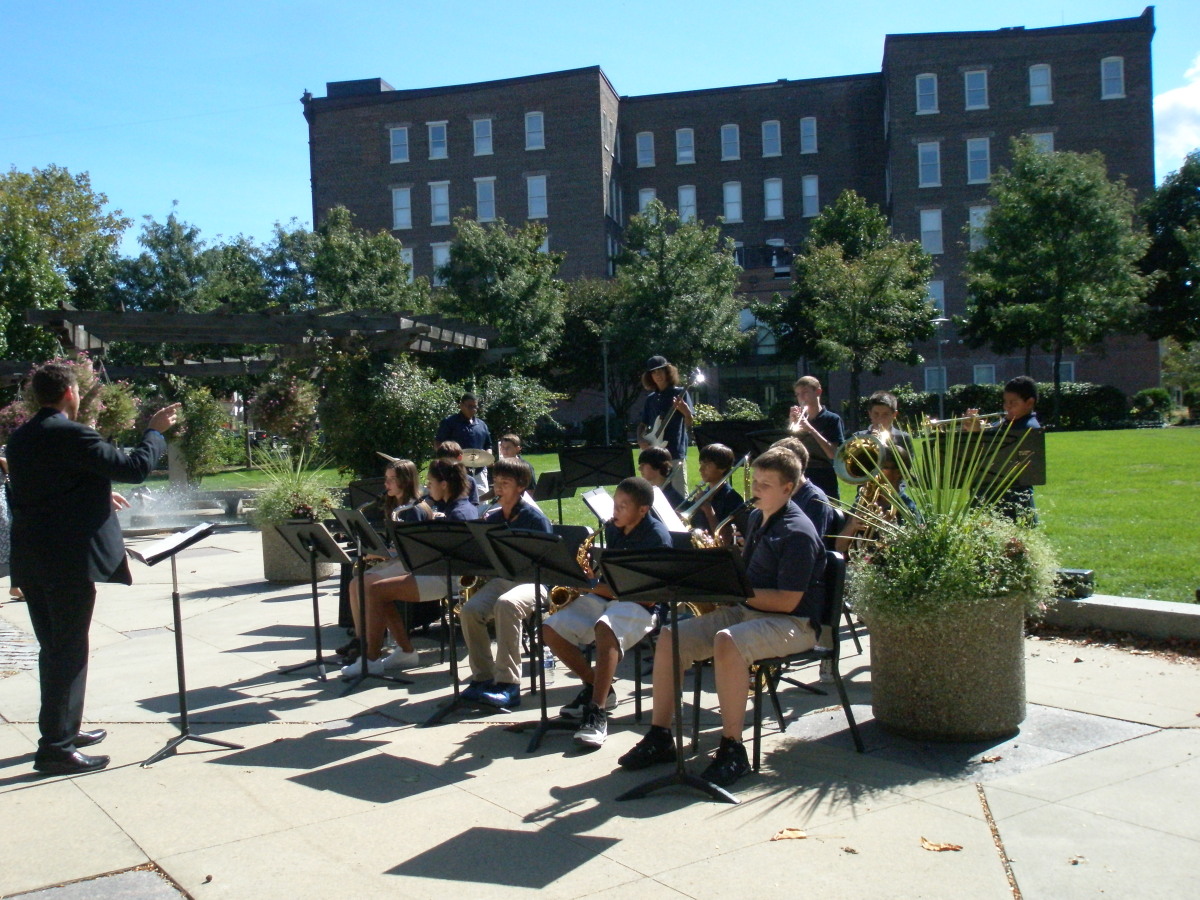
Jazzy tunes from the Middle School
I was kind of holding my breath as the commemorative service got underway in Smith Plaza yesterday morning. I’m sure I wasn’t the only one, scanning the good-sized crowd, trying to gauge how many were there, and whether their numbers would swell or dwindle as the daylong community events, spearheaded by the Pottstown School District and the Pottstown Arts and Cultural Alliance, played out.

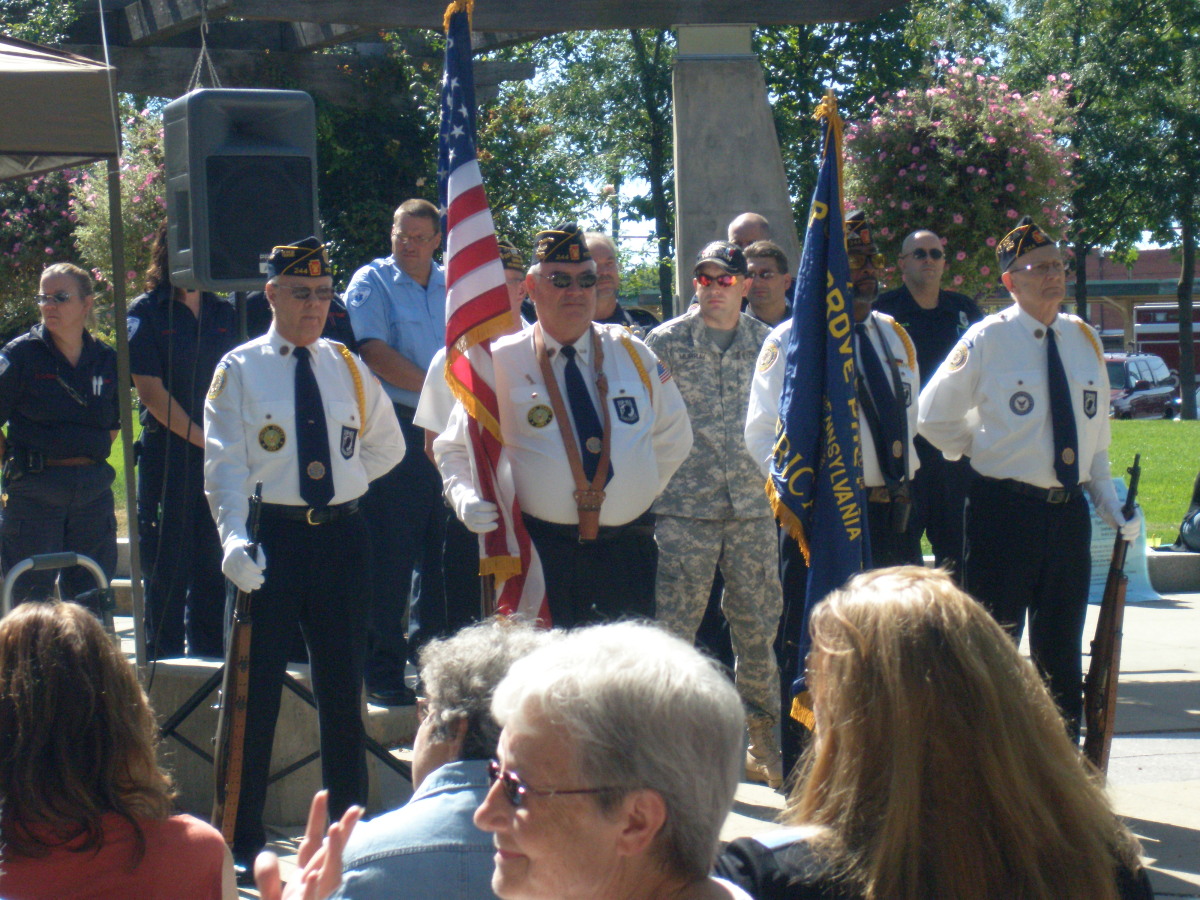
After heartfelt speeches, memories of that fateful day in 2001, the honoring of service and rescue personnel, and a moving poem by Ron Downie, I headed up High Street with fellow blogger, Mo Gallant, who writes Pottstown’s Blog. I’d already set up my puzzle- and community-building activity at the Pottstown Regional Public Library and we were going to finish setting up on the sidewalk in front of The Gallery School.

Honor & remembrance

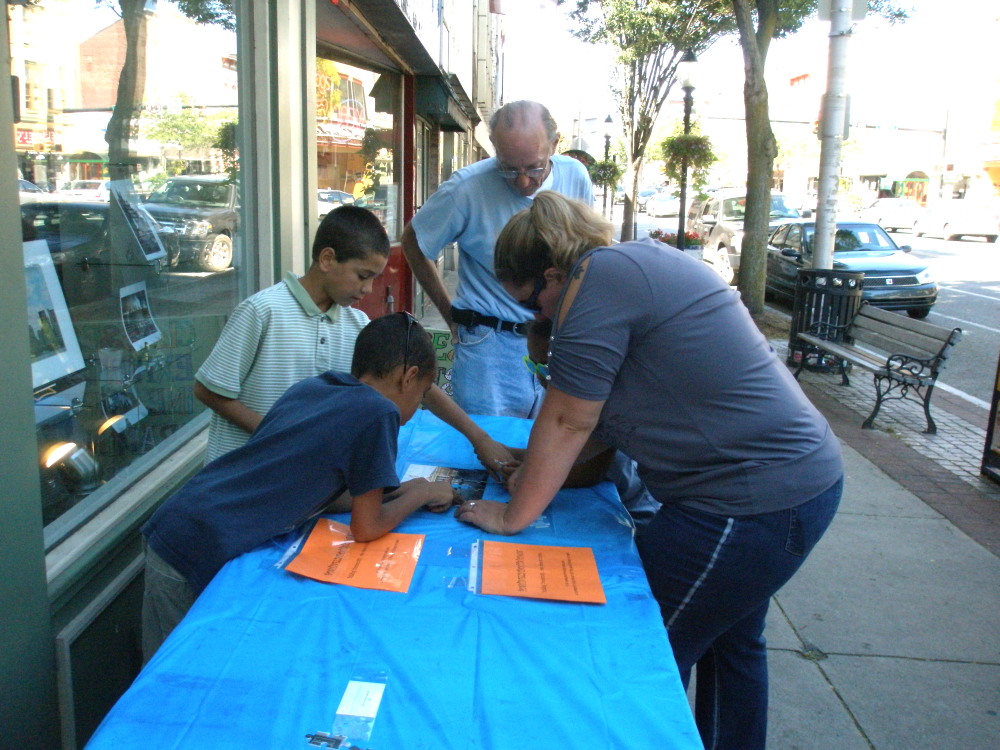
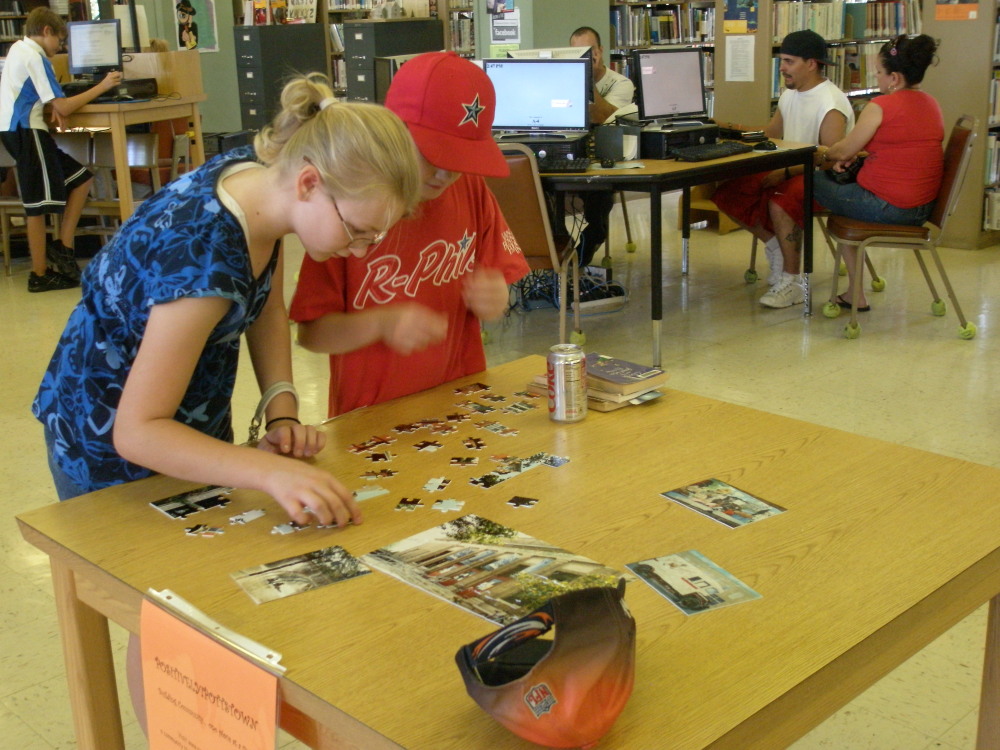
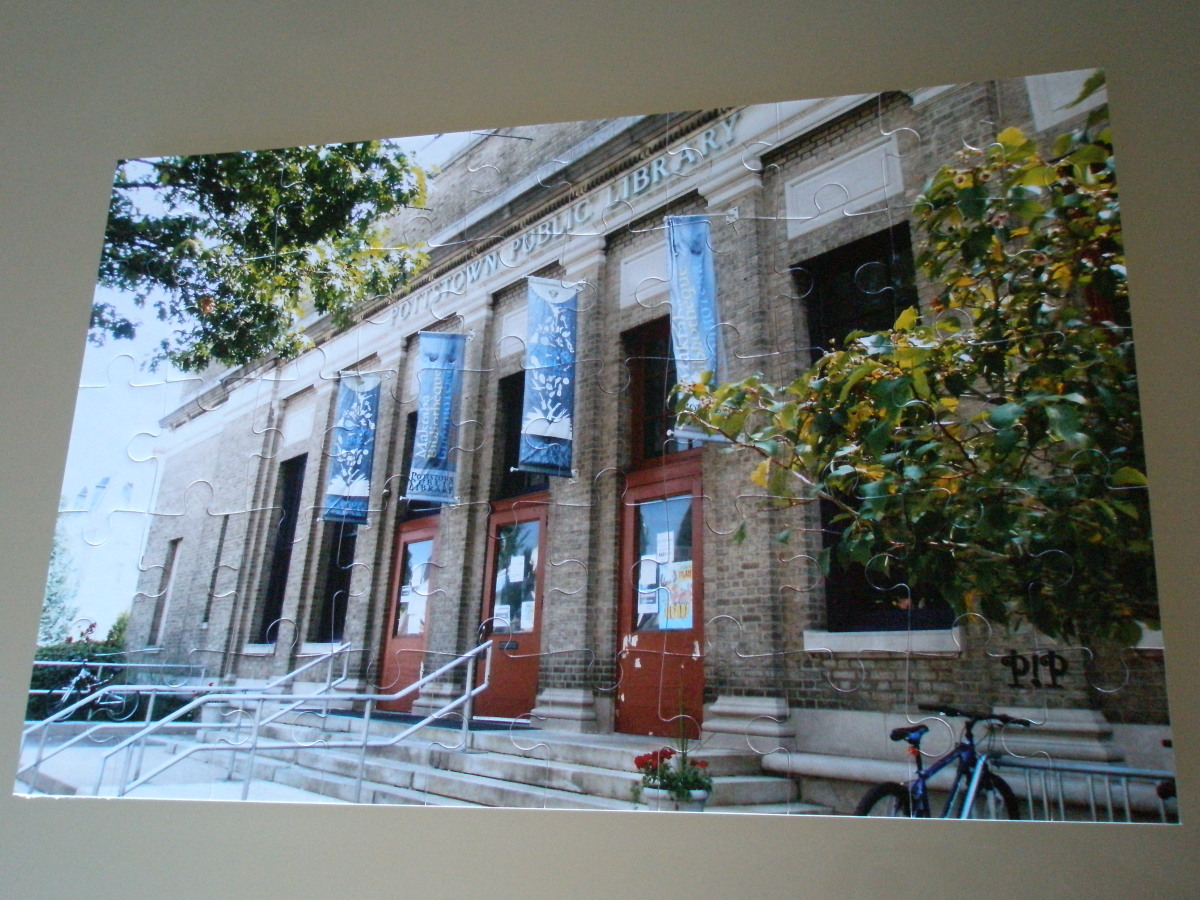
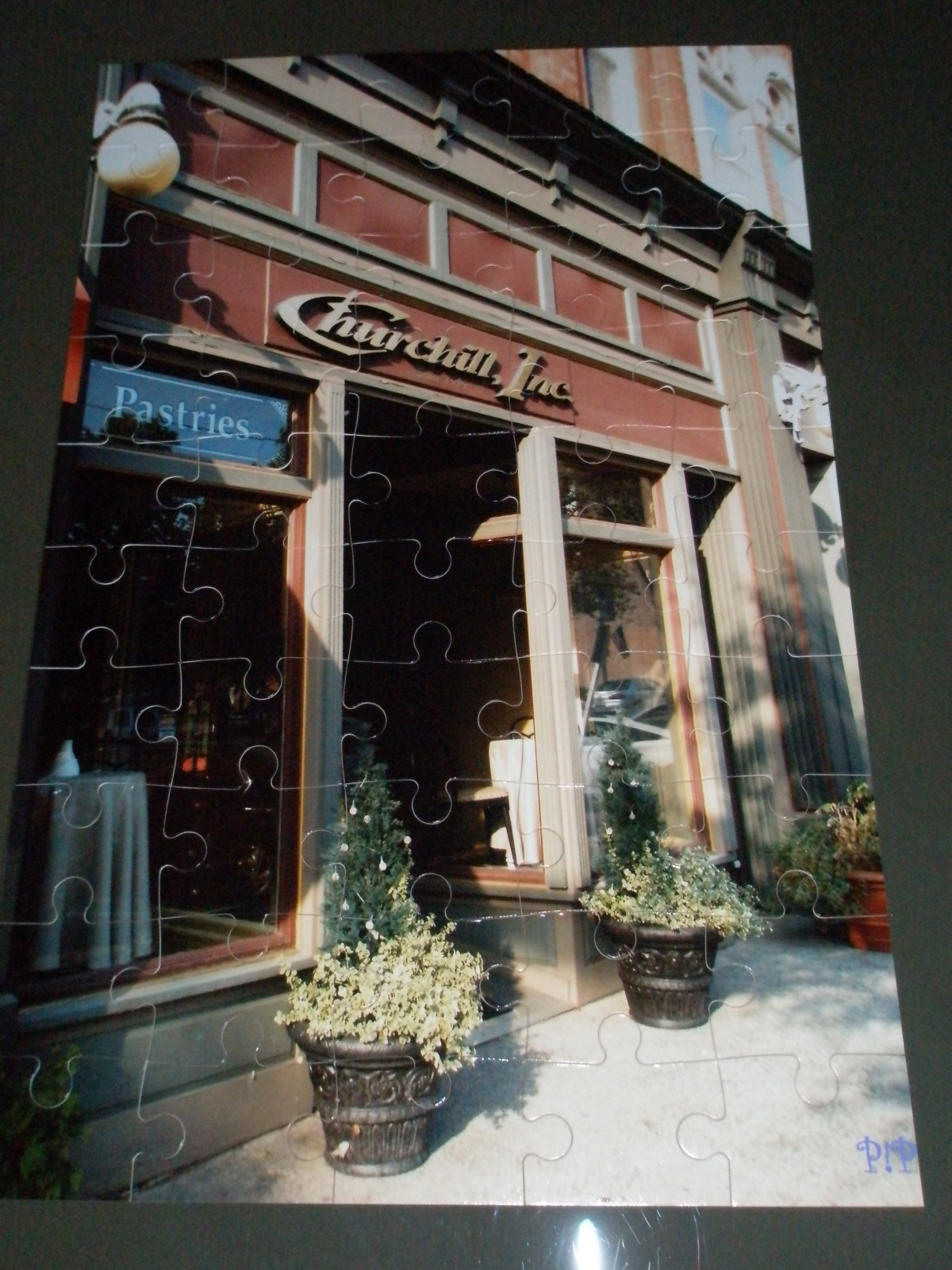
While School Board member Michele Pargeon coaxed passersby to check out the inside of The Gallery, a few determined puzzle-builders got busy with the first pass at puzzles of The Gallery, the Middle School, Borough Hall, Churchill’s and Smith Plaza. Bill Krause emerged from The Very Best next door and shot the breeze with us for a couple minutes. Council President Steve Toroney and his wife came by, so did Dave Kraybill, Executive Director of the Health and Wellness Foundation after picking up a free bike at Tri-County Bicycles through the Bike Pottstown program. Periodically, Mo and I would look up and down High Street and say, “They’re here. People are really here.”

That feeling of wonder only grew in strength as the day unfolded.

After putting some stuff in my car, which was parked for free all day in front of the Tri-County Performing Arts Center, Mo and I popped in for a quick hello to Executive Director Marta Kiesling. Then, at an outdoor table at Juan Carlos Fine Mexican Cuisine, we indulged in the sublime Mexican egg rolls with honey jalapeno dip and their spicy Mexican Caesar salad.

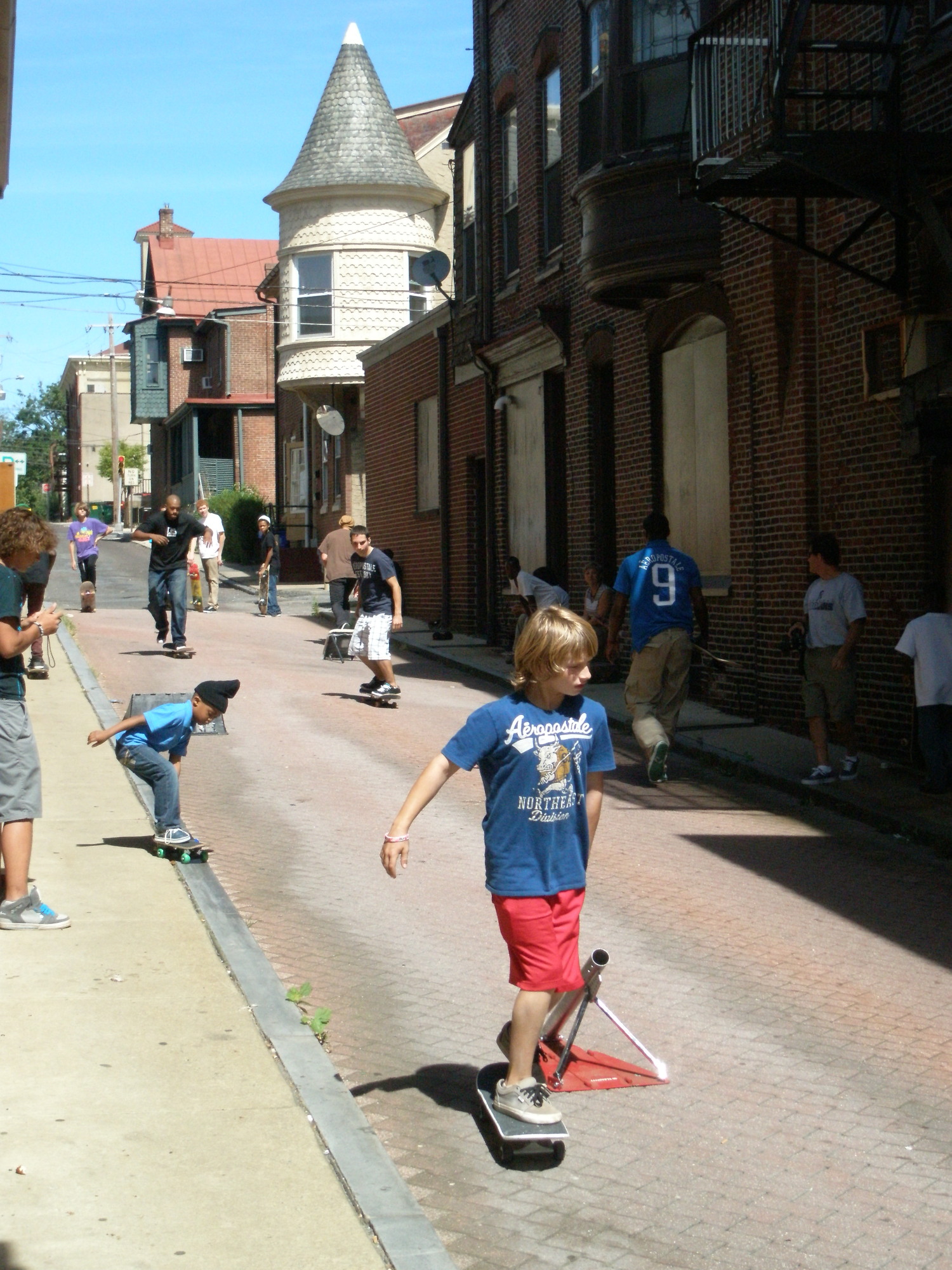
Penn Street skateboarders
Skateboarders from Bentley’s Boards Skate Shop kept us entertained on Penn Street. Mayor Bonnie Heath, her husband Mason Craig, Borough Manager Jason Bobst and Main Street Manager Leighton Wildrick were at a nearby table, and that outdoor spot was perfect for people-watching, saying “hi” and meeting new folks. As lunch was winding down, I realized that I was in the midst of a perfectly balanced, lively urban/small hometown experience. Great food, people of all ages on the street, full trolleys passing by, and outdoor dining in a place where “everybody knows your name.”

As it got closer to three o’clock, Mo and I bid farewell (Thanks, Mo! Thanks, Michele, for looking out for the puzzles!) Then I headed to the Library to make a quick stop and see how things had gone over there. On my way up High Street, I slowed down to take in the crowd and the thumping salsa beat in front of SwingKat and Grumpy’s Handcarved Sandwiches. Music! Joy! Dancing in the streets! This was Pottstown on September 11, 2010. Mark it on your calendar. Imprint it on your souls.

The puzzle report from Mike Packard at the Pottstown Regional Public Library was thumbs-up. If you haven’t been to the library recently, it’s got a whole new look inside, with the fiction downstairs and popular and current fiction on display. Check out the way-cool teen room downstairs. And there was popcorn! In the library! The smell was heavenly. If they keep this up, they’re going to give the big bookstores a run for their money.

Library puzzlers

I made my way to the high school where school district volunteers and staff had lined the cafeteria and halls with tables for any community and school group that wanted to participate. I set up my puzzles and free book raffle in the cafeteria and never got a chance to see the hallways filled with people, including elected officials from both Borough Council and the School Board. In addition to all the families and young puzzle fanatics who stopped by, there was Erica Weekley of the Borough’s economic development staff, and Tim Phelps of Tri-County Area Chamber of Commerce and his family.

John Armato, Director of Community Relations for the Pottstown School District and Superintendent Dr. Reed Lindley both stopped by to chat and thank me for being there. It wasn’t just me – they were talking to everyone. It’s obvious that these leaders are real people-persons and that they are “for real.”

In closing, I’d like to hearken back to my blog post of August 8 – The work of the community. From a community revitalization perspective, yesterday was a HUGE bump up to the next level. The community sees the positive and good things it’s capable of. You never know when that’s going to happen – that breakthrough – but once it has, in a lot of ways there’s no turning back.

While yesterday provided the community with a long moment of harmony, where the results of true teamwork were visible and palpable, every day isn’t going to be like this. But the more of these moments that you can string together, the better prepared you will be to get over the rough spots in between, together, with ultimate faith and trust in each other. Congratulations, Pottstown – you’re awesome!

Riverfront proposal: Tough decision

The post that follows was also submitted to The Mercury’s online comments for today’s article, “Senior housing proposed for Pottstown’s riverfront.” Some of the major parameters:
– the Borough would sell a 1.5 acre parcel on Industrial Highway to the developer at fair-market value
– the housing would be for seniors making no more than 62% of the area’s median income
– 55 rental units, all 1-2 bedrooms
– the developer would be getting tax credits to build the project
– the developer would pay property taxes

I sincerely hope Pottstown is in a transition toward becoming a community that works together, has public conversations about its future, and then acts on the vision that results from those conversations. This project proposal comes at a time when the town has not gotten its new system into place. This project is forcing the Borough into a corner because it has a fast-approaching deadline for tax credits. (How are tax credits not a government subsidy? Could anyone provide the name of the specific tax credit program the developer is applying to? Are they LIHTC?) Okay, though, sometimes that’s just the way the ball bounces… you gotta deal with what’s in front of you.

Let’s put this conversation into the context of other, very relevant issues that I heard/read were discussed at the same meeting.

(1) The Norfolk Southern line is not likely to disappear from the waterfront anytime soon. In fact, they will likely be increasing their usage of it. Now you’ve got a huge constraint on any waterfront planning. All the more reason to think through what you want at that gateway.

Typically, people with limited economic choices live on top of highways and railroad tracks. I hope that Council is engaging in dialogue with the railroad about its plans, or I fear for the future of the residential area that is being created in the vicinity. Will the current townhouses become investor-owned 10 years down the line? All the more reason to have an unhurried, public conversation about the future of that area and a plan & strategy to encourage more commercial uses.

For the past six months there’s been a lot of talk about the 44% rental housing stock in Pottstown. How does this project help reverse that particular bottom line? And how much new money will people at the projected income level inject into Pottstown’s economy? Property taxes are one part of the equation. Disposable income of the new residents is another. So is the perception that potential visitors, business and home owners have of Pottstown.

(2) A presentation was made by Main Street Manager Leighton Wildrick for the year-round lighting up of a few blocks of High Street. I wasn’t at the meeting but saw a preview of this when I happened to stop by Leighton’s office last week. This is a brilliant idea on so many levels. Relative to this housing proposal and all the naysayers who keep complaining about an empty High Street: if Leighton & the downtown property owners, arts organizations, a re-tooled Borough website & streamlined approvals are given half a chance, you will see High Street make a comeback. You haven’t even given yourselves a chance.

(3) “… and the PAID group was excited about it.” It would be nice if several members of PAID showed up at the next meeting to speak on the record in support of the project. And the School District, too, if that’s the case. Then, since the County Redevelopment Authority is already behind this proposal, the four entities of the new Pottstown Partnership would essentially be speaking with one voice, evidence of the new system of cooperation and unity in action.

I understand how $60-80K in taxes looks good. It would be nice to see some spreadsheets on the projected tax revenues. If the max. income is 60% of median, how many of those units will actually be rented in the lower end of that range? Would be nice to see a projected distribution of units by income/rent levels. How will property taxes be determined: based on final rent levels, building value, or a payment in lieu of taxes? I hope that’s covered in any sales agreement that might be drawn up.

Yes, you need to increase your tax base. On the other hand, I don’t think the Borough should be hasty in giving up even 1.5 acres because someone else is dragging them along their own timeline. I’ve got no problem with springing into action – based on previously-agreed upon strategies and plans – but rushed approval scenarios always raise a red flag for me. In this case, especially when the Pottstown Partnership is supposed to get started in just a few months, which makes me wonder: Will there be another round of funding for these particular tax credits? If so, when?

The Mayor was right – Council has a tough decision on its hands.

Sue Repko
Positively!Pottstown

Open Doors = Open Eyes + Open Minds + Open Hearts

This Saturday, September 11th, Pottstown will commemorate the tragic events of that day, nine years ago.

After opening ceremonies and remembrances at Smith Family Plaza at 11 am, the School District, businesses, arts and community groups, The Hill School, Genesis Housing, Pottsgrove Manor and more are publicly opening their doors for the rest of the day to encourage people to spend time together, get further acquainted with their downtown, and to strengthen community bonds. The School District initiated the event, which has come to be known as “Open Doors.” It’s got a contagious, positive vibe that’s almost magical, judging from today’s Mercury.

Churchill Cafe puzzle
The Mercury is running articles all week. For news stories and a schedule, check out the District’s website here, and the Pottstown Arts & Cultural Alliance blog here.

In general, downtown locations will have special events going on from 11-3.

From 3-6 pm, the High School will hold an open house – with a gazillion activities! – followed by a home football game at 7 pm vs. Upper Moreland.

Building community, one piece at a time…
From 11-2:30, Positively!Pottstown is offering puzzle-building at tables at The Gallery on High and the Pottstown Regional Public Library. Puzzles of various Pottstown buildings will be available for anyone to piece together at these locations. They can then be broken up and started all over again. Fun for adults and kids!

At 3 pm, the puzzle-building will continue over at the High School. There, students can also put their name into a free drawing for a book; there will be books for all grade levels. Buildings… books… what else do you expect from a planner and writer? 🙂

Building community... one piece at a time

Big shout-outs!
Much thanks to Mr. Armato at the High School, Mike Packard at the Library, and Erika Hornburg-Cooper of The Gallery School for providing space for the puzzles.

The regulatory framework– Part 2: Walking a half-mile in a property owner’s shoes

I am so sorry for writing really long posts! Please try to get through this one. I feel it’s getting to the heart of the question: Why is High Street empty?

In previous posts, we’ve done an overview of the various documents, ordinances, and maps that dictate land use in Pottstown. We have a sense of the outside agencies and funding sources that are available to help make development happen. We know that the private sector prefers to know exactly what it’s getting into. In this post, we’re walking a half-mile in a property owner’s shoes… into the Borough’s website.

Over the past nine months that I’ve gotten re-acquainted with my hometown, I’ve been to the Borough’s website hundreds of times (no exaggeration) to look at maps, regulations, etc. It’s taken me quite a while to even begin to figure out how the heck things work, and I admit I’m still unsure about a lot of things. It’s kind of a bummer to admit that I can’t get through the maze more easily. And it is a maze.

Being a writer/communicator, I’m really big on websites that serve their purpose. The Borough’s website is not only for current residents, it’s also the point of entry for outsiders who are considering becoming insiders, i.e., potential homeowners and the business community. The website, in and of itself, should be a user-friendly, logical “document.” The fact that it isn’t gives the first hint that the functioning of the government and the approval processes might not be user-friendly or logical either. If your land development systems can’t be communicated clearly for the average citizen, then there’s probably something wrong with your systems.

Let’s go to the Borough’s website now.

1. First thing, I want to know what this town is all about. I click “About Pottstown” and go to “History.” The town’s “story” stops in 1964. That’s a little scary right there, and stops me in my tracks. I want to know about Pottstown today, but I can’t really find it anywhere on the site. Also, it looks like there’s only one photo on the whole site. (Picture = 1,000 words.)

I here confess that I wrote a bunch of the web copy for the PACA website. On the home page, they come right out with their mission, give three sentences about history and then move into the vision of the arts community for the present & future of Pottstown. I like to think these words create an image, draw people in, and make them feel the potential old-school coolness of this place. The Borough can have more about its history on its website, but at some point it needs to bring visitors to the present day.

So now you’re thinking, “What does this have to do with land development?”

Everything the Borough does and how it presents itself to the larger world is part of its redevelopment efforts. Successful land development is all about telling the story, selling a dream, a vision. It’s about the Borough selling itself.

2. Again, we’re developers or potential home owners now. The Borough’s website is chock-full of information about its ordinances, maps, etc. There’s a lot there. But it’s not enough to say the information is all there. It has to be presented in chunks that help a user make sense of the land development process itself.

On the main navigation bar on the left of the home page, I click on “Departments,” to see if they have a planning or community development department. I’m drawn to “Inspections and Permits.” There’s a huge amount of useful information – what you need a permit for, which zoning & planning applications are relevant to specific kinds of projects, residential property transfer and rental registration/inspection requirements.

If you go in this order through the website, this is where you first run into mention of the Homeowners’ Initiative Program. I guess it’s under “Inspections & Permits” because it will involve an inspection and a permit. (Okay, but that seems kind of random.) “It” turns out to actually be two programs (homeowner loan and rental conversion loan). They are also mentioned on the Economic Development page.

Before we go there, though, click on the link to the “Redevelopment District Map” at the bottom of the “Inspections & Permits” page. If I’m a redeveloper or a business owner, my ears perk up: What is the “Redevelopment District”? What are the rules and incentives there? But, no, it’s just a link to a map, and I can’t find anything more about it. On the entire website.

(Out of the blue, in an email, someone recently mentioned a “Core District Redevelopment Plan” from 2003. Is this where the Redevelopment District Map came from? Why have I never seen this plan before? Is it still relevant to Borough land use policy and programs? I need to call someone at Borough Hall to get to the bottom of this.)

3.a. So, let’s jump over to the Economic Development “Information & Links” page. Scroll down under “Homeownership Initiative Program.” Click on “Click here for the Step-by-step application process and to view the Boundary Map” You end up here. Click on Homeownership Initiative Program – Boundary Map. You end up here. This Homeownership Initiative Program Boundary Map is not the same as the Redevelopment District Map.

So why is there a link to the Redevelopment District Map under the Homeownership Initiative information on the Inspection & Permits page?

Are you confused just reading that last sentence? Welcome to my world.

What I’m saying is that I really need the dots to be connected for me.

3.b. Go back to the Economic Development “Information & Links” page. At the very top – no heading, nothing to draw your eye to it – there’s a link to information for businesses in the Pottstown Downtown Improvement District. Up pops what is essentially a whole other website with its own logo. The text says it’s still part of the Borough… a Main Street Program… a special assessment district. I can’t find a map… would my property be in this district?? There’s the Pottstown Downtown Foundation to support their activities. They have funding for their own façade programs… or do they?

I start to wonder if this program is still operating… Under the “Business Opportunities” link, I’ve been reading the same message for nine months. This may be the only place you can find the name of Pottstown’s Main Street Manager… well, the former Main Street Manager. (The current Main Street Manager is Leighton Wildrick. Leighton & I had a great chat last week. I’m sure other people want to talk to him too!)

Eventually, I find the PDIDA map on the Borough Maps page, which is under “About Pottstown,” but not on the PDIDA pages… Did I miss it there?

… From what I can tell by toggling back and forth between the two maps, the PDIDA district is not the Core Redevelopment District… still curious about that…

3.c. Go back to the Economic Development “Information & Links” page. Okay, so there’s an economic development plan. That will tell me what I need to know. Oh… wait… the link goes right to the document. It’s 145 pages. I have to read a 145-page report just to find out what their economic development strategy is? Forget it! I just want to know what programs they have to help me NOW!

3.d. Go back to the Economic Development “Information & Links” page. Click on “View the Maps.” Up pops a map from the Economic Development Strategic Plan. The first map is: “Development Areas and Opportunity Sites.” What do those red and blue boundaries mean? Is there special funding programs for those areas? They don’t seem to match up with the other maps I’ve seen. Geez, I guess I have to dig into that report.

Let’s review:
– Redevelopment District Map
– Homeowner Initiative Program Boundary Map
– PDIDA Map
– Development Areas and Opportunity Sites (from Economic Development Strategic Plan)

And add a couple more:
– Keystone Opportunity Zone (does a map exist?)
Historic District
(We’ll talk about the Historic District and HARB in the next post.)

Why aren’t businesses coming to High Street?

I’m just trying to get a sense of what this town has to offer me and/or my business. I’m just trying to get my bearings. I didn’t even get to any of the actual development or building approval processes yet.

Look, who has time to do all this? Save staff time, residents’ time, business’ time by straightening out the message and getting it up on the website. The website is the entry point to your community and to your land development approval system. It has to be friendly, simple and clear to attract new people and businesses, not tearing their hair out and running in the opposite direction.

What is needed on the Borough website:
– A vision statement that inspires and tells potential homeowners and businesses what you’re all about and where you’re headed.
– Simple summaries of land use incentive programs and regulations, possibly sorted by specific user groups: current residents, potential home owners, potential business owners/landlords, potential developers.
– Examination of maps to see if they are all absolutely relevant. If they are, then there has to be some simple way to explain or graphically depict the overlaps. People purchasing real estate need to know what incentives they are eligible for and what regulations or special assessments apply to their property.
– Clear, logical visuals of the incentive programs, along with their funding sources, to show how they are related to each other.

For now, you could keep the same website design and just start consolidating and simplifying. (Simple is always better.) This could use the attention of a small, working committee of knowledgeable, local minds to sort this out. 🙂 I’d be glad to work on the writing and organization with them. This doesn’t have to take long. In the end, visitors to the Borough website should have a clear sense of what they have to do to become a home owner, business owner or developer in Pottstown and feel welcomed and inspired to check it out further.

Next up: The regulatory framework– Part 3: Walking another half-mile in a property owner’s shoes

Pottstown’s Riverfront: Creating a Place of Magic

There are several discussions taking place in the blogosphere around the possibilities for Pottstown’s riverfront, especially in the vicinity around the former Mrs. Smith’s site.

Save Pottstown! and The Pulse! brought to our attention a recent proposal that came before the Planning Commission for income-restricted, senior rental housing on some Borough-owned property on Industrial Highway. So far there’s a lot of concern about squandering a key asset (riverfront land) for such a use.

The conversation continues here and here.

A major highlight of these discussions was the comment of Dan Weand, Council member, quoted in part here:

“I do believe that whatever sets on South Hanover Street & Industrial Highway as our “Gateway to Pottstown” should be a ” W O W ” !!!

I would like to know what the other homeowners of Pottstown think the BEST USE for the riverfront land should be.

Perhaps Save Pottstown! would be cooperative with my question. Perhaps Save Pottstown! would conduct a survey and report the results to the Planning Commission and Borough Council.

Thank you in advance for your support,

Dan Weand
Borough Councilor”

I’ve been commenting at those sites and wanted to post my latest comment here, since all the links couldn’t get past the spam filter.

Posted at SP, today…

I agree with WhirledPeas, east1ender and BBQ Bill – there’s a new attitude and it’s really just getting warmed up.

kevins: point taken about the scale of the examples. The cities and their waterfronts are much bigger and so have more opportunities for really grand schemes.

Check out Paducah, KY. They have been the poster child for arts/economic revitalization for small to mid-sized downtowns. Here’s their Lower Town Artist Program.

Following up on that success, they have moved on to redeveloping their riverfront. A plan was approved in 2007, but I’m not sure of its status – whether it was a casualty of the 2008 downturn. Regardless, it can be really helpful to read through other towns’ plans, figure out the similarities or differences with Pottstown, see how they proposed to finance it, what roles were played by various non-profits, government & private sector partners. Can’t hurt to be well-versed in the possibilities.

I haven’t read through all this…it’s a lot of homework.

East1ender’s point about the flood plain is a good one. Before we go off in all directions on the riverfront, we should have an idea of the constraints: flood plain, wetlands, railroad tracks, streambanks, erosion, runoff, water quality, stormwater management. You’ll want these groups on your team: County Parks & Heritage, PA Dept. of Conservation and Resources, U.S. Army Corps of Engineers, and the folks from the Schuylkill River Heritage Area.

Check out this conference being held in Pottstown on Thurs. Sept. 23 by the Schuylkill River Heritage Area. It’s called “Building a Business Vision for Trail Town Communities.” I’m going to try to go to that.

Any takers?

Report from the road: Beacon, NY

I’d heard about Beacon, NY several times in recent years in the context of arts & cultural revitalization. I happen to go pretty close by when I take my oldest to and from college, so today I finally checked it out.

Beacon is a town of about 15,000 on the Hudson River. According to City-data.com, the town’s median income in 2008 was about $59,000; the median for New York State is $56,000. The median in 2000 was $45,000.

Check out their map on the home page of their website. When you hover over a peg and then click it, you get the name and location of a gallery, restaurant, or whatever. They have the pegs color-coded by category, too.

Beacon’s renaissance was aided by the opening of Dia: Beacon, one of the largest contemporary arts museums in the world. It’s located in a former Nabisco box-printing plant.

Their Main Street is interesting in that it’s got a stretch of just incredible red brick architecture, where virtually every storefront is occupied, then a stretch of 1950s architecture that is kind of rundown, and then another stretch of charming, upscale shops, which includes the Bank Square Coffee House. That’s where I am right now, taking advantage of the free WiFi. (I’ll have you know that I’m not a WiFi mooch! I did have a vegan chocolate, chocolate & cherry chip cookie that was melt-in-the-mouth crumbly and oh-so-chocolate-y, too)

Back at the other end of town, there are galleries, vintage clothing, several cafes, a wine bar, an Irish pub, real estate offices, antiques, and The Beacon Theater, which is in use while it’s being restored. (Why, oh why, can’t Pottstown still have the Hippodrome or the Strand??). Get this: In The Beacon’s window there’s a sign that says, “Thank you to the Planning Board for our facade approval!”

Along all of Main Street, right now there’s an exhibit called “2010 Windows on Main Street, Uniting Art & Commerce.” Local artists do installations in the windows of the shops. Stores & cafes have piles of large postcards with a map of Main Street, designating the locations of the installations. So you can see interesting stuff even when you’re just browsing. The exhibit runs from Aug. 14-Sept. 11. There are opening & closing receptions. The town is also having 4 different musical events on 9/11 at different times/venues in town.

Okay, I’ve got to get going to find their waterfront and then head home. I’ll update you on that tonight. I’m sorry I don’t have my camera with me!

Beacon’s Riverfront Park is separated from their dowtown by a few streets and the Metro-North Railroad‘s Hudson Line and station. It’s a pretty nice park that’s got a pier and a piece of land, with lawn and trees, that juts out into the river. It’s got a beautiful view of Newburgh across the river and of the Newburgh-Beacon Bridge. The park has a couple basketball courts, volleyball, grills, and playgrounds. It was filled with lots of people coming and going, as was the train station. The park seemed to be used mostly by locals, bringing big coolers, grilling and having fun. Apparently, I missed the river pool. It must be on the other side of the basketball courts, which is the northern tip of the park.

In the area of the pier is the Sloop Club, out of which the Woody Guthrie sails. It’s a replica of a Hudson River ferry sloop. Free sails are offered. From the website: “Launched in 1978, her purpose is to promote the beauty and wonder of the Hudson River by offering free sails to the public and sail training to volunteers. Only by experiencing the power, serenity and sheer glory of this American treasure will we as a people be inspired to cherish and protect it, and thereby ourselves.” The Club holds or participates in many festivals during the season to raise funds for their environmental programs.

Lessons to take away from Beacon, NY
– Main Street is home to many arts & cultural attractions, food/drink businesses & has kayak rentals.
– Waterfront is geographically separated from downtown, about a mile away, but accessible by foot, bike, car or Metro North railroad.
– Waterfront is not overtly commercial. Lots of opportunities for outdoor activities, which are generally free. – – There is a year-round Sunday Farmers Market.
– The Hudson River near Beacon is much wider than the Schuylkill River in the vicinity of Pottstown.
– Dia: Beacon museum, which is also not in the town center, draws large crowds that come downtown & help sustain businesses.
– I didn’t notice any lots, but the on-street parking was free!

Another First Saturday on tap!

If you’re in town for the holiday weekend, be sure to cruise over to Smith Family Plaza this Saturday from 10am – 2pm for the final First Saturday of the season, brought to you by the Pottstown Arts & Cultural Alliance.

Entertainment
10-11 am: Pottstown Dance Theatre – Hip-Hop performance
11am-12pm: High Street Music – Jazz
12-2 pm: Music by acoustic roots rocker Dina Hall

Men in Spikes fundraiser

Men: there’s still time to find two friends who will race in spikes to raise money for your favorite charity. The race starts at 1 pm.

Here’s how it works:
Pay a $200 entry fee, or get in touch with Mike Holliday at actone19464@aol.com regarding possible sponsorship.
Bring your own spikes or choose from the assortment at Smith Plaza.
Teeter and totter your heart out.
Cross the finish line.
It’s winner-take-all. If your team wins, you get all the proceeds donated to your favorite charity.

There will also be a 50/50 raffle going on. Tickets are $1, and purchasers get to cast a vote for their favorite team. The raffle proceeds will be split between the charity of the favorite team and the winning team’s charity. If you’re confused, don’t worry about it — all proceeds go to good causes! So… who will survive Men in Spikes?? Tune in for the action at Smith Plaza tomorrow!

The regulatory framework for land development – Part 1

Planning and land development take place within a regulatory framework. There are federal, state and local laws regulating a spectrum of issues, from environmental clean-up standards for a former industrial site to how high a fence can be in your front yard.

If there’s too little regulation, or not the right kind, consumers and communities suffer the consequences, most notably around issues of safety and the environment. If there’s too much regulation, the private sector goes elsewhere, or may selectively build where it can pass the additional costs of regulation onto well-to-do consumers who can afford it. For our purposes: the regulatory environment in any given state or locality plays a huge role in what kind of market activity happens there.

I’ve worked and volunteered largely in the public and not-for-profit sectors. However, I learned early on in my work in affordable housing that municipal and non-profit developers have to think and act like private sector developers if they want to achieve their mission. If a project fails, they may never get another chance. Also, they are not using their own money and have to carefully consider what level of risk is appropriate to assume on behalf of their public funders/taxpayers or private donors. But no matter what your end product, you have to be savvy if you’re getting in the game. Land development is not for the faint of heart.

When my kids were young and attending a small Montessori school in central New Jersey, I took a spot on the board as this 20-year-old organization was re-negotiating a lease and found itself with a healthy surplus. When faced with the question of how/if the school wanted to grow, we decided to consider all possibilities: renovate and continue to lease at the current location; purchase and renovate a building nearby; or look for land and build a new school. Within a 3-year period, I led the school – with a lot of help from staff and other parent volunteers! – through the analysis, planning and construction of a new 10,000 square foot facility just about a mile from the old location. It involved negotiations with the current landlord, working with a realtor, scouting properties and options, constantly running in-house financial analyses and income/expense projections, lining up an architect experienced in designing pre-schools, getting a land use lawyer, a builder, and securing construction financing and permanent tax-exempt bond financing through a local bank, with the services of a bond lawyer.

I tell you all this to establish some degree of “street cred” when I say: land development is a risky, expensive, gut-churning business, in which “time is money.”

Developers put money into escrow with a municipality when they put in an application for approval. The town’s engineers, codes staff and planners are all getting paid from that escrow account when they do their reviews of the application – all those nit-picky details that are supposed to ensure the “health, safety and welfare” of the eventual users of the buildings, roads, parking lots, etc. And every time a developer has to talk to his own lawyer, architect, planner or engineer, the meter is running.

Once the project starts, municipal inspections have to be timely; enforcement can’t be arbitrary. Because construction financing is typically at a higher interest rate than permanent financing, if a project’s timeline keeps getting extended, it could sink the project, or at least result in serious losses for the developer. A clear, streamlined set of regulations, consistently enforced in a timely manner, is critical for enticing the private sector to choose your town over another town for the location of their buildings and business.

The logic is similar for potential home buyers and small business owners, whose budgets have an even smaller margin for error. No one is going to put their hard-earned money into play – whether it’s for a home in the historic district or for retail space on High Street – if there’s a great deal of uncertainty and wasted time in the land use approval and enforcement processes. Who needs it, if things are likely to go smoother elsewhere?

Next up: The regulatory framework– Part 2: Walking a mile in a property owner’s shoes
Blog at WordPress.com.

Up ↑