Getting back on track

I don’t know about you, but I have not forgotten about the tail end of the planning series, which was started on August 5th with “How one planner thinks.”

Here’s what we’ve covered so far:

How one planner thinks
The work of the community
Beyond the Borough’s borders – Part 1
Beyond the Borough’s borders – Part 2
detour… US 422 Corridor Master Plan
The regulatory framework for land development – Part 1
The regulatory framework for land development – Part 2
detour… Process in the public sphere: It matters

Here’s how I would like to finish this series to bring us up to date:

The regulatory framework for land development – Part 3
(Land use ordinances, HARB, codes, approvals, inspections. The Borough already has a committee reviewing most of these; I just want to offer a quick explanation to readers who may not be familiar with some of the stumbling blocks.)

Current planning documents
(The reports that everyone needs in front of them if they want to talk about revitalization & development in the Borough.)

Here’s the thing: Positively!Pottstown is teaming up with the Pottstown Area Health & Wellness Foundation to run a 6-week series about parks & recreation opportunities in Pottstown and surrounding municipalities, and I am feverishly pulling that together. It launches this Sunday with links/coverage graciously provided by The Mercury.

So… I’ll be keeping the last two posts in the planning series short & sweet, and will try to get them up on Friday and Saturday. I’ll also be keeping my fingers crossed that we will all be (mostly) on the same page as we continue talking about what the future may hold for comprehensive planning, land use and economic development in the Borough. Thanks for coming along for the ride so far. 🙂

Camden, ME: Unique economic development initiative

The article below and also found here describes an interesting attempt by Camden, Maine to bring new, high-paying jobs to their community; put a brownfield, riverfront site back in use; and get a tax-foreclosed property back on the tax roll. And citizens were involved all along the way.

Note that the town will still be on the hook for the clean-up costs when all is said and done. It would be interesting to see the overall fiscal analysis and how the added jobs & property/income/business taxes collected might offset that.

I’m not suggesting that this is directly related to any Pottstown property or situation, but merely wanted to bring it to readers’ attention and add it to the Revitalization Library. It’s an innovative approach to jobs growth and brownfield re-use that’s worth watching to see if there are any takers.

Copyright 2010 Bangor Daily News

Bangor Daily News (Maine)
September 16, 2010 Thursday
All Editions
Pg. A1
567 words

Waterfront land for free in Camden;
The catch: New owner must provide good jobs

HEATHER STEEVES OF THE NEWS STAFF
CAMDEN

Free land, anyone? In an effort to attract business, to bring well-paying jobs for residents and to collect taxes, Camden is giving away 3.5 acres of riverside land to anyone who wants it – with a few caveats.

The future owner of the land will have to pay $200,000 up front. Then, for every eight workers hired, the owner will get a third of the purchase price refunded. The company will have five years to hit the 24 employee mark and get the full rebate of $200,000 before the offer expires.

The jobs also have to pay more than the average wage for Knox County – $45,165 including benefits, to be exact.

The land also will be challenging to build on. The site sits beside the Megunticook River, and used to house Apollo Tannery, which allowed tanning solvents to run into some of the land’s soil.

“With brownfield properties, it’s not unusual to negotiate zero-cost deals,” said Mathew Eddy, the interim development director for Camden. “You have to work around the environmental issues, so it costs more to build the project.”

The town took ownership of the old tannery in 2003 after the previous owner didn’t pay his 2001 taxes. The town is still paying for the property – the tannery needed to be torn down and some chemicals had to removed – which set residents back $836,000. Camden bonded the issue and still has $683,000 to pay off.

Eddy said the property is commercially zoned, but in a residential neighborhood and consists of a paved lot, the tannery solvent-contaminated area and open space. A future owner can build on the property, but may have to tiptoe around the contaminated area; although Eddy said sometimes government agencies allow property owners to build on top of the contaminated soils.

Eddy said that trying to sell the abandoned industrial slot this way and making it work for Camden is exciting.

“You had a property that is empty, it was an eyesore, it was an environmental problem,” Eddy said. “[Camden] is taking a brownfield property, cleaning it up and putting it back into production. This is new development. At the same time, the community has been involved every stage of the way – that is pretty special. That is the community taking the bull by the horns.”

The idea was originally brought up by a citizen group and then voted on by the whole town sometime around 2008, Town Manager Roberta Smith said. But the recession hit, so Camden held out on selling. Marketing for the property just started up this month.

“It is a way to say ‘We are open to business and we are willing to make you a deal,'” Smith said. “We were trying to set the bar to attract year-round, sustainable, good-paying jobs. So that was a marker that we thought was a good goal to reach for.”

There are other examples in Maine of communities giving away brownfields, according to Eddy.

“It’s not a brand-new concept in economic development, but it’s very new for Camden and the midcoast and it could prove to be a great model,” said Dan Bookham, executive director of the Camden-Rockport-Lincolnville Chamber of Commerce. “I think it’s a great example of community citizens taking an active role in determining their own future.”

There have been some calls on the property, but nothing serious yet, Eddy said.

There is no deadline for business owners to contact the town, according to Smith.

“Let us know when you want to buy it.”

For information, visit freelandinmaine.org.
hsteeves@bangordailynews.com
338-9546
September 16, 2010

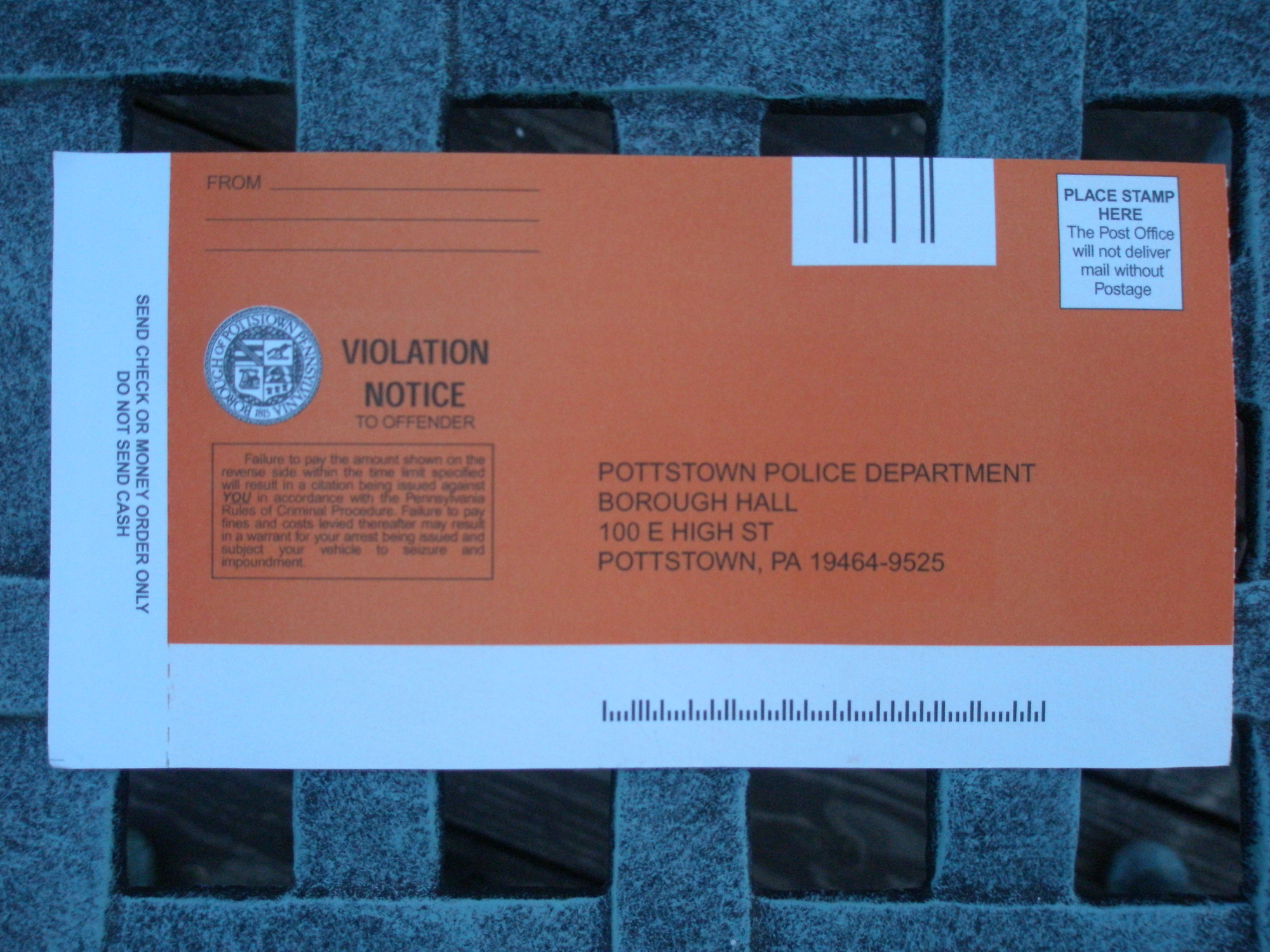
BUSTED!

Top 5 reasons why a parking ticket in Pottstown is a good thing:

#5 The free bicycle from Bike Pottstown and Tri-County Bicycles makes it easy to forget you even had a car.

#4 There’s a lot to explore in Memorial Park & Riverfront Park.

#3 Everyone is so darn friendly, you find yourself having long conversations with (formerly) complete strangers and even getting invited to a family celebration of an 8-year-old’s birthday party under the pavilion at Memorial Park.

#2 The dark roast coffee and conversation with John on the sidewalk in front of Churchill’s are worth lingering over.

#1 The fact that you were in a 3-hour parking spot, your tire was chalked at 10:45 a.m., and the ticket was written up at 1:49 p.m., reveals an efficient, local government & law enforcement system at work. Way to go, Pottstown – I’m proud of you! (I’m actually serious.)

Forgotten cats & the arts team up!

Yes, I know that’s a cryptic title, but this is a unique fundraiser, described below. If you’re a fan of Antiques Roadshow, this is your opportunity to find out that you might not need to play the lottery anymore, and you can help the local Forgotten Cats organization and The Gallery School of Pottstown at the same time.

Ever wondered if there might be treasure in your attic? Join us on Thursday, September 23 for an antique appraisal event and find out! This evening is a joint fundraiser for the Gallery School’s scholarship fund and Forgotten Cats, a local group dedicated to helping many of the stray and abandoned cats in our neighborhoods. Eileen Rhoads, of Rhoads Auction and Antiques, is generously donating her time and expertise for this event.

The event runs from 6:00-8:30pm at the Gallery on High, 254 High St. There is a $10 entrance fee, which entitles you to one free appraisal. Each additional appraisal is $5, with a maximum of 4 total items appraised per person. Light refreshments will be served.

Please RSVP to 610-326-2506 or by email.

We hope to see you there!

About the Gallery School of Pottstown
The Gallery School of Pottstown is a non-profit community art school dedicated to making the arts accessible to everyone. The proceeds from this fundraiser will go to our scholarship fund, which provides free and reduced cost art classes to children, teens and adults who demonstrate financial need.

About Forgotten Cats
Forgotten Cats helps many of the stray and abandoned cats in our neighborhoods. They help the animals receive needed medical care, get them spayed or neutered and find them a forever home.

About Rhoads Auction and Antiques
Ron and Eileen Rhoads Auction and Antiques can be found at 383 Ben Franklin Highway West, Douglassville, PA 19518. They have fifty years in the business and are the second generation serving the Delaware Valley.

(As an aside… I’m posting this from Smith Family Plaza, right in front of Borough Hall, where there’s free WiFi! I’ve been tooling around Memorial Park on a free bike from Bike Pottstown & Tri-County Bicycles. I’m about to try to find some dirt bike paths in Riverfront Park that some kids told me about over in Memorial Park. )

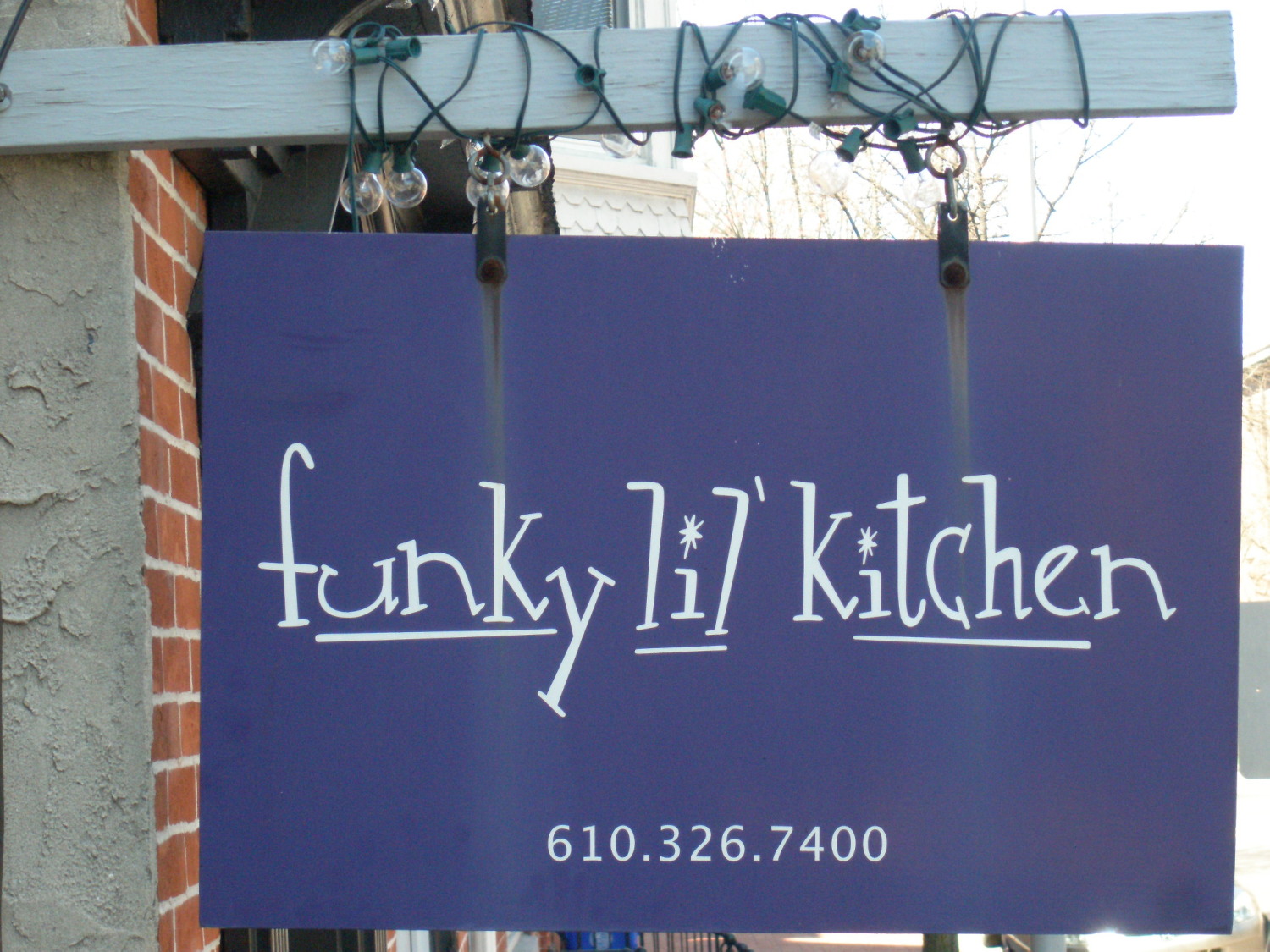
funky lil’ kitchen, funky lil’ life

I’d had a long day, arriving in town for a 9 a.m. meeting with another writer/blogger, and then it was on to Musikfest in Bethlehem with a contingent from Pottstown. By the time we got back into town, and I dropped someone off at their house and finally finished yakking (so much to talk about!), I was all talked out and needed a good, quiet meal to refresh me for the 90-minute drive back across the Delaware to New Jersey.

As I sat at the light at Penn and King Streets, there was practically an aura emanating from the Funky Lil’ Kitchen, and I figured the time was now: I was finally going to treat myself.

It was fairly early and there was just one couple there, sipping wine and chatting with the waiter. I got a table in the window, and the waiter must have sensed my hunger because he immediately brought over a small bowl of spicy peanuts, Funky Lil’ Kitchen’s own blend, and they took the edge off.

I took in the decor – decidedly Pottstown-chic, with Mrs. Smith pie tins on the walls, a very large utensil-clock on one wall, and a partial wall-sculpture of utensils that screens the kitchen from the dining room. I didn’t ask what music was coming through the speakers, but it was – absolutely – way funky cool. The waiter delivered my appetizer of white beans, celery, red onions and cherry tomatoes drizzled with balsamic vinegar on bruschetta, and my strength started to come back. If only I were there with my husband and a crowd of friends!

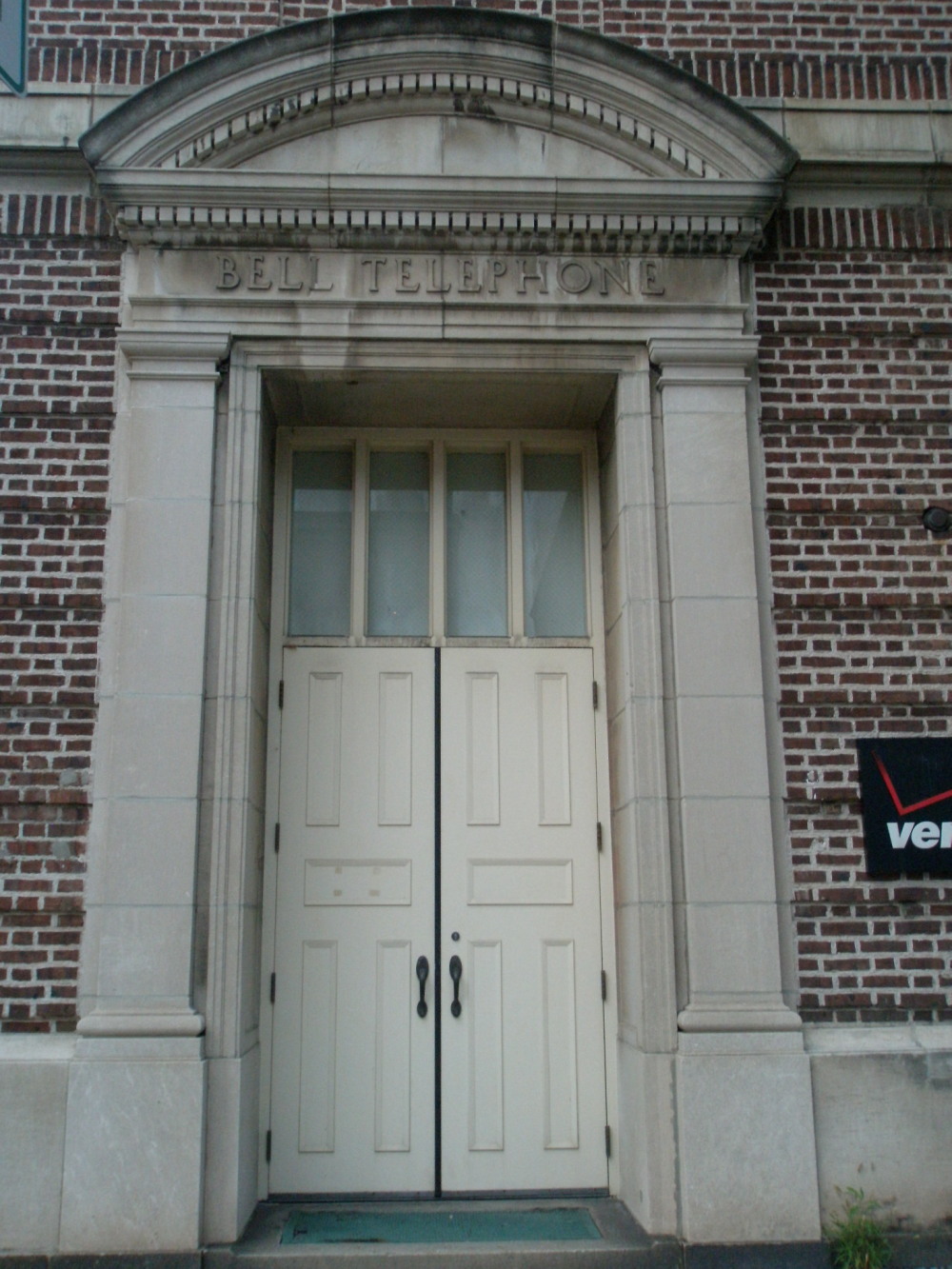
When I looked out the window then, I finally focused on what was directly across the street – a phone booth. A man was using the phone in the phone booth. Remember those? I hadn’t seen one in years. Then I zeroed in on the building – Bell Telephone – and immediately had a flashback…

Old Bell Telephone, now Verizon

My best friend from high school, Karen Brennan, and I were working for A.S.K. Cleaning Service in the summer of 1981, after our freshman years at college. I’d had an offer to be a nanny for a family on Martha’s Vineyard, but in the end, I chickened out without even asking my parents, and came home instead. None of us really knew anything about Martha’s Vineyard, not really. I had vague notions of extremely wealthy, idle people, who would only make me uncomfortable anyway. Besides, who would want to play with kids on a beach all day and get paid a boatload of money, when they could safely scrape gum off the bottoms of desks all summer?

Okay, so Karen and I had been assigned to clean the offices in the Bell Tel building before people got to work. I think we had to be there at 5:00 a.m. On the particular day I have in mind, no sooner did we get into the building than we ensconced ourselves on a sofa in the employee lounge, which had a T.V. It was July 29, 1981, and Lady Di was about to become Princess Di over in London within the hour. Young, beautiful Diana – only a year or two older than we were – was marrying into the Royal Family, in a real, live, televised fairytale. We watched in awe as the pomp unfolded, two American Cinderellas holding out hope for our own Prince Charmings, while literally clutching mops and dust rags. By 6:20, they were married, we watched for a few more minutes, and then went to swab the floors of the dark, eerie, windowless cable room downstairs.

But I digress… flash forward almost three decades…

Across the street from that episode of “character-building,” I was very fortunate on a recent evening in August 2010 to be able to indulge in Chef Michael Falcone’s sautéed salmon cake with pineapple salsa on a bed of basmati rice. It was an exquisitely refreshing summer combination. I had no room for dessert, although I was impressed with the dessert menu, which was written on a large green bottle that the waiter held in front of me (chalk up another point in the “funk factor” column.) But you know I will be going back soon for “Mom’s Chocolate Cake.” I opted instead for a milky-smooth cappuccino, which gave me the final boost I needed to propel me on my way.

I am so glad I didn’t wait any longer to try out this fun and inventive restaurant in downtown Pottstown. You don’t have to be royalty for your culinary dreams to come true!

Notes:
1) I just Googled “Pottstown-chic” and the phrase doesn’t seem to exist, so I want credit for coining it.
2) Thank you KBM for the details and the trip down memory lane!

About Funky
Hours: Dinner (Tuesday-Saturday) 5:00-9:00
Address: 232 King Street, Pottstown, PA
Voice: 610.326.7400
Email: funkylilkitchen@email.com
Reservations: Highly Recommended
Dress: Smart Casual
Credit Cards: Visa, MC, AMEX & Discover
Parking: Public lot & on street (the lot across the street is now privately owned! Thanks for the heads-up from reader Jeff Leflar!)

Wellsboro, PA: A place to stop in

The article and photo below were submitted by award-winning writer, editor, and photographer Joe Zlomek, who is the Managing Editor of The Post Publications. A hearty “thank you!” to Joe for contributing. With this article, I’m starting a “Revitalization Library” subject category at Positively!Pottstown. In it, you will be able to find revitalization stories and examples mentioned not only by me but by you, the readers and commenters. Together, we can discover the broad range of possibilities and acquire a kind of revitalization “vocabulary,” so we’re all speaking the same language as we write Pottstown’s revitalization story. 🙂

Wellsboro, PA – A place to stop in
by Joe Zlomek

Like Pottstown, Wellsboro PA (in Tioga County along Route 6 of Pennsylvania’s northern tier) was built on, and because of, industry. Early in the 20th Century it served as a shipping point and trade center, with businesses that included fruit processing, flour and woolen mills, and much more. But as they did in Pottstown, eventually those industries moved out.

The departures forced the borough to change. Because it is only 10 miles from Pine Creek Gorge, the natural wonder known as “the Grand Canyon of Pennsylvania,” two of Wellsboro’s thriving industries are now tourism and retailing.

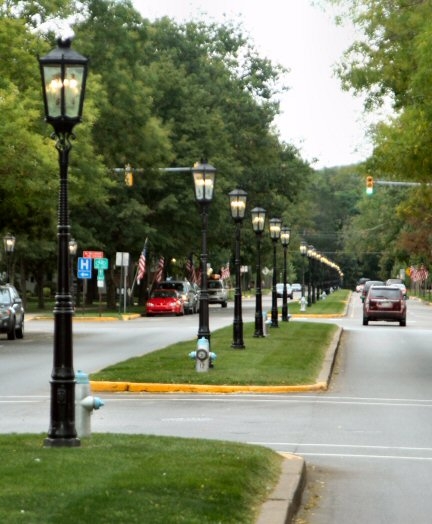
Lights on in Wellsboro, PA

The length of its downtown is small in comparison to Pottstown’s but, also in comparison, far more robust. Shops are well kept, busy, and open late. The merchandise selection is diverse. Several excellent restaurants can be found within a two-block walk. And the lanterns that became a fixture of the boulevard-like Main Street coursing from east to west through Wellsboro add to its ambiance. They burn from mid-afternoon long into the night.

Is a proposal by Pottstown Main Street Manager Leighton Wildrick for the year-’round lighting of High Street the sole or best solution to attracting more consumers downtown? Not by a long shot. However, it and other changes can be keys in creating an environment that, as in Wellsboro, changes the perception of downtown from “a place to pass though” to “a place to stop in.” ~

Photo by Joe Zlomek: Simulated gaslight lanterns burning Saturday (Sept. 4, 2010) at 4 p.m. on the west end of downtown Wellsboro PA.

Additional resources:
Wellsboro on a map
Wellsboro Chamber of Commerce
PA State Laurel Festival
Vacation in Wellsboro
The local paper, The Wellsboro Gazette
City-data.com

Process in the public sphere: It matters.

Last night Council unanimously pledged support for a low-income rental housing tax credit application tied to a 55-unit senior housing development on Borough land near the riverfront. In a kind of post-game analysis, here I step back from the project itself to talk a bit about process.

1) Ideally, a town would have adopted land use and economic development plans that spell out what they want in each area of their town. Then, when any authorized municipal representative is talking to any developers about that area, they are on the same page with what the community planned and agreed to.

2) Ideally, if a town is looking to develop land that it owns, it would put out a Request for Proposals and seek competitive proposals/bids. The RFP and this process would all be public. There would be no private conversations with any developers during this process.

3) Opening the bids: here’s where it gets sticky. In most places, negotiations involving land transactions and real estate development by governmental entities are not subject to right-to-know laws. All parties need to know that they can work out the financial end of a deal without the press & the public breathing down their necks. Confidentiality is paramount. Here’s where you have to have faith in your elected officials to agree to what’s in the best interests of the community and select the top bidder(s) accordingly.

4) If there are no clear frontrunners, in an ideal world, the top 2-3 bids/plans would be publicly presented and community input would be sought at that point.

Four necessary components:
• community-approved land use & economic development plans
• a clear & transparent RFP process
• time and timelines
• community input on selected proposals

Obviously, none of this protocol was followed in this case, which really is not unusual in many small towns and even larger towns where no one’s paying attention. Or where there’s an entrenched way of doing things: This is how we’ve always done it. But it has the whiff of a back-room deal that was foisted on the public pretty late in the game. All I’m saying is, there’s another way to do things, where leaders and the community are engaged in more meaningful ways througout the entire process.

Imagine this: 55 units of low-income, senior rental housing in the middle of a comprehensive waterfront plan that includes a few hundred upscale condos, commercial development and recreational uses. Then the low-income housing is a mere blip in the middle of that; no big deal. You wouldn’t have heard a peep outta me!

Imagine this: There are multiple economic development initiatives underway across town that involve County funding, and this housing is a trade-off in some way in the context of a larger plan that may not even specifically include the waterfront. That could be fine too. Trade-offs – compromise – that’s how things get done.

It’s the fact that you’re leading the way, selling off your own land, with no vision or plan, for what? Low-income rentals? That doesn’t compute.

My frustration comes out of the Borough not being in charge of its own destiny in the first place – not having a clue what the community wants, not having an economic development leader on your team, not doing your due diligence, not making people answer your questions straight-up, not demanding a printed handout of the project proposal & parameters — basically, not asserting yourself. And then being forced to settle. Settle for whoever shows up. It doesn’t have to be that way. It doesn’t.

Unearth your vision – plan – strategize – set goals – implement with a vengeance.

Low- vs. Moderate-Income Housing: Know what you’re voting on (the short version)

A vote in favor of the income-restricted, rental housing project proposed by the Partnership for Income Restricted Housing Leadership (PIRHL) on Borough-owned land is a vote for additional low-income rental housing for Pottstown.

– There is only one tax credit program deadline coming up at the PA Housing Finance Agency and it is Nov. 5th for the federal Low Income Housing Tax Credit Program (LIHTC), which spurs the development of LOW INCOME RENTAL HOUSING.

Jeffrey Paxson, vice president of development for PIRHL, has confirmed to a third party that they are applying for tax credits from the federal Low Income Housing Tax Credit Program, which is administered by the PA Housing Finance Agency.

– Rents in the $500-800 range for 1 & 2-bedrooms in Montgomery County are considered low income NOT moderate income.

– Section 8 certificate holders can NOT be denied housing in a LIHTC project.

That is all.

Low vs. Moderate-income Housing: Know what you’re voting on

Thanks to bikerowen, whose comment at the Mercury opinion page today caused me to make a phone call to the Pennsylvania Housing Finance Agency (717.780.3800).

I have heard that the Partnership for Income Restricted Housing Leadership (PIRHL), the developer of the proposed age-restricted, rental project near the river, has never directly answered the question in public, “What tax credit program is this?” Could it be that it is the Federal Low Income Housing Tax Credit Program and the name is not very attractive, especially for Pottstown’s efforts to change its image? It includes the term “Low Income” in its name because that’s who it serves. I am not aware of any moderate- or middle-income tax credit programs and would be glad to hear about them if they exist.

Here’s a program definition from an overview at the Pennsylvania Housing Agency’s website: “The Low-Income Housing Tax Credit Program (“Tax Credit Program”) is a federal program created by the 1986 Tax Reform Act and amended pursuant to several subsequent Budget Reconciliation Acts. The Pennsylvania Housing Finance Agency (“Agency”) is the Commonwealth agency responsible for the administration of the Tax Credit Program. The purpose of the Tax Credit Program is to assist in the creation and preservation of affordable housing for low-income households.” (my emphasis added)

Preliminary applications for the Federal Low Income Housing Tax Credit Program are due on or before Nov. 5, 2010. (The only deadline coming up for a tax credit application.) If the Preliminary Application is approved by the Agency, applicants may submit a full Underwriting Application for Tax Credit consideration on or before March 1, 2011. On the Agency’s Program Notices page, under the Multifamily Rental Housing Programs section, click on the Draft Housing Allocation Plan link to see the programs and guidelines for the Pennsylvania Housing Finance Agency Allocation Plan for Year 2011, Low Income Housing Tax Credit Program. (The Agency is using the Draft Plan until the final approval of the plan at its October meeting.)

The income and rent limits that apply to this program appear in this chart. Scroll down to Montgomery County.

The Montgomery County figures on this chart present a discrepancy among the $500-$800 estimated rents; the 60% of median income, which is what has been reported; and/or the one- and two-bedroom units being proposed.

One- and two-bedroom rents in the $500-$800 range coincide with persons at the 40-50% of median income levels. By virtually all affordable housing standards, this is considered “low income,” not “moderate income.” 60% of median income is the maximum allowed under the Federal Low Income Housing Tax Credit Program. I believe you get more tax credits if you elect to peg your rents below 50% of median rather than 60% of median.

According to the chart, if these 1- and 2-bedroom units are pegged for “moderate-income” seniors, you’d be looking at 60% of median income and the rents would be in the range of $800-$1000.

So, which is it?
1- and 2- bedroom low-income rentals at $500-$800
OR
1- and 2-bedroom moderate-income rentals at $800-$1,000

Please note on Page 7 of the Tax Credit Program General Overview Requirements that, “A prospective tenant may not be denied admission into a Tax Credit property because of holding a voucher or certificate of eligibility under Section 8 of the Housing Act of 1937; if they are otherwise eligible.”

All of PIRHL’s featured projects at their website have used Low Income Housing Tax Credits or LIHTCs. There shouldn’t be any confusion about the rent ranges for low-income vs. moderate-income, 1- and 2-bedroom rentals in Pottstown, unless The Mercury got it wrong twice. If that’s the case, then please accept my apology and disregard this post.

Having cut my teeth in affordable housing and still considering myself an advocate across the board for the less fortunate in society, I’m not usually on this side of this argument. But Pottstown is bearing more than its fair share of affordable housing in this region.

I know full well that no one ever asked me to be Pottstown’s “advocate,” but I feel strongly that “knowledge is power,” and Pottstown as a whole seems to operate at the mercy of those with more information or knowledge, whatever you want to call it, or to simply not engage with them. I’m simply urging Council and members of the public to ask questions and demand answers. In the meantime, I will keep putting my knowledge out there in service to the public as best I can.

Blog at WordPress.com.

Up ↑